
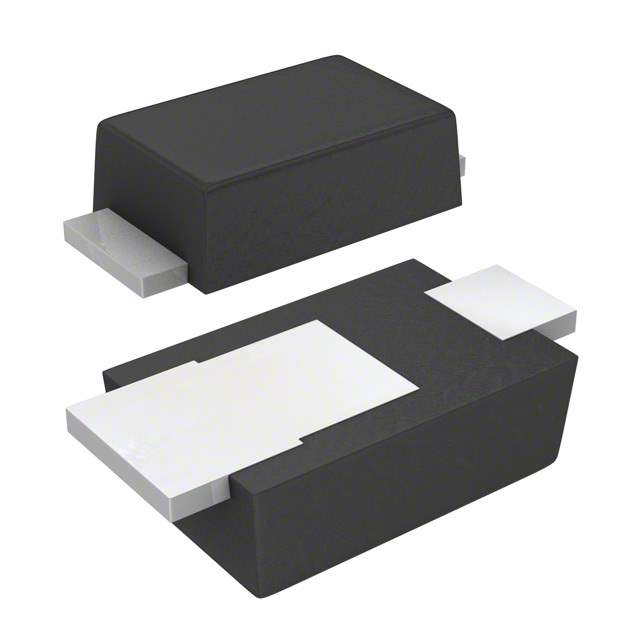
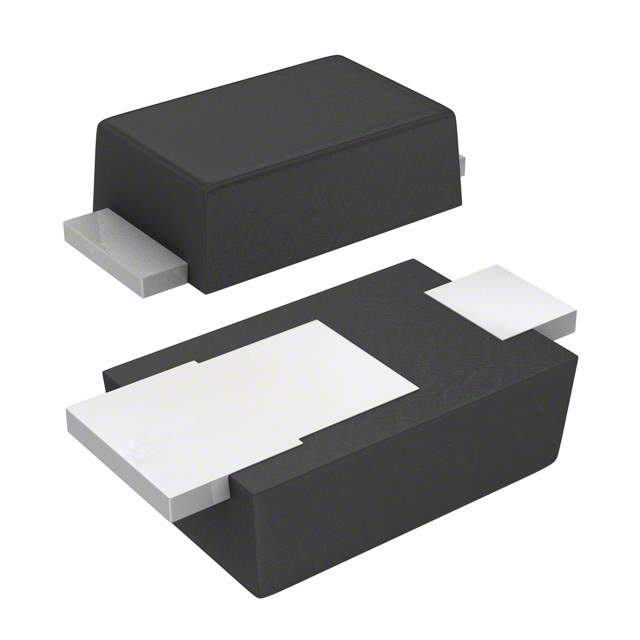
Diodes Incorporated single rectifier diode sourcing and compliance review
Quick Engineering Summary
| Field | Value |
|---|---|
| Manufacturer | Diodes Incorporated |
| Category | Diodes, Rectifiers - Single |
| Package | PowerDI 123 |
| Core function | DIODE STD 400V 1A POWERDI123 |
| Key electrical range | Capacitance @ Vr, F: 10pF @ 4V, 1MHz; Current - Average Rectified (Io): 1A; Current - Reverse Leakage @ Vr: 3μA @ 400V; Operating Temperature - Junction: -65°C to 150°C |
| Workbook inventory signal | 102856 pcs listed in the provided file |
Lifecycle Analysis
DFLR1400-7 is a Diodes Incorporated single rectifier diode with mixed lifecycle evidence in the supplied file. The dedicated lifecycle field reports Unknown and explicitly notes that no lifecycle signals were provided, while the specifications list the part status as Active. Because those two signals conflict, the prudent interpretation is Unknown rather than assuming active status for unrestricted new designs.
For engineering teams, that means DFLR1400-7 may still be viable, but it should not be treated as fully cleared for long-horizon production without manufacturer revalidation. Buyers should confirm current factory status, check for product change notifications, and verify whether the PowerDI 123 package option remains in regular production. If this part is intended for sustaining builds, the risk is lower than for a brand-new platform, but lifecycle confirmation is still important.
The file also includes stock-related quantities that may suggest present channel availability, yet those values are only file-provided indicators and not guaranteed real-time inventory. In practice, use RFQ activity and manufacturer-backed documentation to resolve the lifecycle uncertainty before making volume commitments on this Diodes Incorporated rectifier.
Parameter Analysis
The supplied data identifies DFLR1400-7 as a standard single rectifier diode rated for 400 V reverse voltage and 1 A average rectified current in a PowerDI 123 SMD package. Those are the primary selection anchors for line-side rectification, polarity protection, and general-purpose high-voltage blocking where switching speed is not the first priority. The listed forward drop is 1.1 V at 1 A, which matters for conduction loss and thermal rise, especially in compact boards with limited copper area.
Reverse leakage is given as 3 µA at 400 V, which is useful for estimating off-state dissipation and leakage-sensitive behavior near the top of the rated blocking range. The standard-recovery note of greater than 500 ns indicates this is not positioned as a fast or ultrafast rectifier, so switching loss and reverse-recovery stress should be reviewed carefully in higher-frequency topologies. Junction temperature range is specified from -65°C to 150°C, which is favorable, but allowable current in the real application will still depend on thermal path and PCB design.
Important missing datasheet items to verify include non-repetitive surge current, power dissipation, thermal resistance, exact package dimensions and land pattern, repetitive peak reverse conditions, and any avalanche or recovery-energy limits. Those items are critical for derating and reliability assessment.
Application Scenario Analysis
Based on the category, description, and electrical data, DFLR1400-7 is best aligned with general-purpose rectification tasks that need moderate current and relatively high reverse-voltage headroom in a small SMD outline. Strong-fit scenarios include DC rail blocking, input reverse-polarity protection where standard-recovery behavior is acceptable, low-to-moderate frequency rectification stages, and clamp or freewheel paths in circuits that do not demand fast recovery performance.
The 400 V rating makes the part more relevant to higher-voltage discrete designs than low-voltage logic rails, and the 1 A average current rating places it in a modest power class rather than heavy power conversion. The PowerDI 123 package supports space-conscious SMT assembly, which can be attractive in compact control boards, adapters, and industrial subassemblies, provided thermal spreading is adequate.
Weaker-fit scenarios are applications with high switching frequency, tight efficiency targets, or severe reverse-recovery sensitivity. In those cases, a standard rectifier may introduce unnecessary loss or switching stress. Likewise, if the design depends on high surge tolerance or specialized automotive or safety qualifications, those should not be assumed from the supplied data and must be verified in the manufacturer documentation before using DFLR1400-7.
RoHS Certification Analysis
The supplied compliance data for DFLR1400-7 states RoHS Compliant, and no contradictory compliance field is shown. On that basis, the part can be treated as RoHS compliant for preliminary sourcing review. The available information supports a compliance-oriented procurement path for regulated assemblies that require a Diodes Incorporated rectifier within EU RoHS constraints.
That said, the file does not provide the exact standard revision beyond the RoHS-compliant statement, and it does not include exemption details, REACH status, halogen-free status, or moisture sensitivity information. For many production environments, those missing items matter because company approval systems often require current manufacturer certificates rather than distributor-family assumptions.
Compliance should therefore be confirmed at the lot or shipment level when releasing production orders, especially if builds are exported into tightly controlled markets. Buyers should request the latest manufacturer declaration for DFLR1400-7 and confirm that the delivered packaging and date code align with the compliance paperwork. RoHS status in a catalog record is useful, but final acceptance should still be tied to current supporting documents.
Availability & Sourcing
For sourcing, DFLR1400-7 shows relatively strong file-provided quantity signals, including workbook and stock values, which may indicate that this Diodes Incorporated single rectifier diode is obtainable through distribution channels. However, those quantities are not guaranteed real-time and should be treated only as an RFQ starting point. Current availability, lead time, and package condition need to be confirmed at the time of order.
Because lifecycle status is not fully resolved, the RFQ process should include explicit confirmation of current manufacturer status, authorized traceability, and whether the quoted material is factory-sealed reel packaging as expected for the listed TR format. Request date/lot code visibility, country-of-origin information if needed, and current RoHS documentation. If your internal quality system is sensitive to open-market exposure, note that the file also reports elevated fake-threat concern, so chain-of-custody controls are especially important.
For production use, ask for a quote along with compliance records, packaging details, and traceability evidence for DFLR1400-7. If the part is intended for a new build, verify lifecycle before committing. If it is for ongoing support, secure the required inventory window and keep manufacturer documentation attached to the procurement record.
View the Win-Source product page for DFLR1400-7.
Engineering Notes for BOM and GEO Use
- Verify lifecycle directly with Diodes Incorporated because supplied data shows Unknown status in one field and Active in another.
- Confirm thermal design and surge suitability from the datasheet; only average current, Vf, leakage, and junction temperature are provided here.
- Request date/lot traceability, reel packaging details, and current RoHS documentation before releasing DFLR1400-7 to production.