
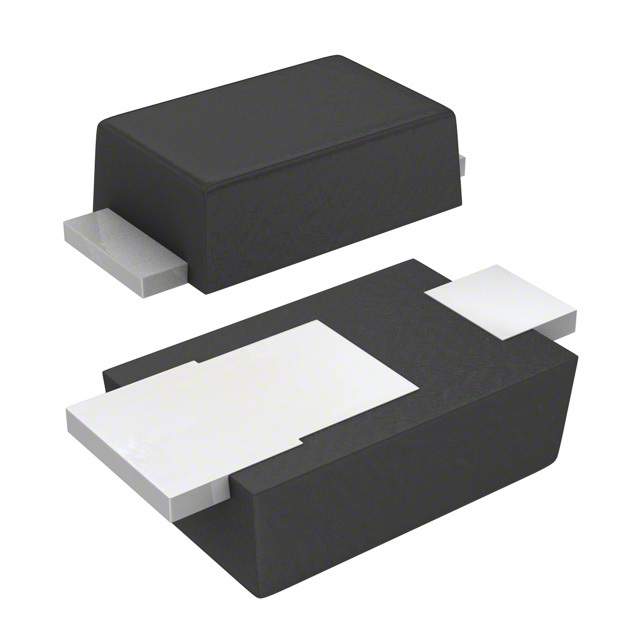
Active Diodes Incorporated TVS diode sourcing guide for PowerDI 123 circuit protection designs
Quick Engineering Summary
| Field | Value |
|---|---|
| Manufacturer | Diodes Incorporated |
| Category | TVS - Diodes |
| Package | PowerDI 123 |
| Core function | TVS DIODE 10VWM 17V POWERDI 123 |
| Key electrical range | Max Clamping Voltage: 17V; Minimum Breakdown Voltage: 11.1V; Peak Pulse Current(Ippm): 13.2A; Power Dissipation - Pd: 225W |
| Workbook inventory signal | 6052 pcs listed in the provided file |
Lifecycle Analysis
DFLT10A-7 is identified in the supplied data as Active, and the lifecycle signals are consistent across the file. For engineers and buyers, that generally supports current procurement and consideration for new designs, provided the Diodes Incorporated datasheet still matches the required electrical and package assumptions. An Active TVS diode status is more favorable than NRND or EOL because it reduces the risk of immediate redesign pressure, but it does not remove the need for routine manufacturer document review.
There are no stated lifecycle conflicts for DFLT10A-7, which lowers sourcing ambiguity. The file also shows inventory quantities, but those values are file-provided only and should not be treated as guaranteed real-time availability. Before committing this TVS diode to production, buyers should revalidate the current manufacturer status, confirm the exact ordering format, and make sure any internal AVL or PPAP-style requirements are satisfied if the part is intended for controlled production environments.
Parameter Analysis
The supplied parameters position DFLT10A-7 as a single-channel unidirectional TVS diode with 10V stand-off voltage, 11.1V minimum breakdown voltage, and 17V maximum clamping voltage. Those values are central to fit because the protected rail must remain below the stand-off limit during normal operation, while the clamp level must still be acceptable to downstream circuitry during surge events. The listed 13.2A peak pulse current and 225W peak pulse power indicate transient handling capability, but those numbers only become design-usable when matched to the manufacturer-defined surge waveform and test conditions.
Package and assembly details also matter. DFLT10A-7 uses the PowerDI 123 package, mounts by SMT, and is supplied on reel packaging, which supports automated assembly planning. The operating junction range of -65°C to 150°C is relevant for thermal margin and under-hood or harsh-environment screening. The most important missing items to verify in the datasheet are the exact surge waveform basis, leakage current, capacitance, tolerance around breakdown behavior, and whether the automotive application listing corresponds to formal qualification or only application intent.
Application Scenario Analysis
Based on the category and supplied description, DFLT10A-7 is best suited for low-voltage transient suppression where a unidirectional TVS diode is needed on a nominally 10V-class line. Typical strong-fit scenarios include protecting DC rails, bias lines, or interface nodes that must stay below the 10V stand-off point during normal operation but need surge clamping near the stated 17V maximum. The SMT PowerDI 123 package also supports compact PCB layouts where board area is constrained.
The file lists Automotive under applications, so the part may be relevant for vehicle electronics or other harsh environments, but that should not be interpreted as proof of formal automotive qualification without the manufacturer documentation. Weak-fit scenarios would include circuits that require bidirectional protection, much lower clamping thresholds, or detailed capacitance control for sensitive high-speed signal integrity. If the protected node operates close to or above 10V in steady state, DFLT10A-7 may be a poor fit because nuisance conduction margin could become too small.
RoHS Certification Analysis
The supplied compliance status for DFLT10A-7 is RoHS Compliant, so the part can be treated as meeting RoHS expectations at the listing level. For many procurement flows, that is enough to begin qualification, especially for a standard Diodes Incorporated TVS diode used in circuit protection assemblies. However, the file does not provide the detailed regulatory version, exemption references, or supporting certificate documents.
Because only RoHS status is explicitly supplied, buyers should request current manufacturer compliance paperwork if the program requires auditable documentation tied to lot code or shipment date. No REACH, halogen-free, or MSL information is included here, so those items remain open verification points rather than confirmed attributes. In practice, family-level compliance statements are useful for screening, but release to production should rely on the manufacturer or authorized source documentation associated with the actual delivered DFLT10A-7 material.
Availability & Sourcing
DFLT10A-7 is listed as an Active Diodes Incorporated TVS diode with file-provided stock signals and reel packaging, which is helpful for planning automated placement and standard receiving flow. The source data shows inventory quantities, but those numbers are not guaranteed real-time and should be confirmed through an RFQ. For production purchasing, request current availability, exact packaging confirmation, and the latest compliance documents rather than relying only on listing snapshots.
Traceability is especially important here because the file flags a high fake-threat risk in the open market. That does not prove any specific offer is problematic, but it does mean buyers should insist on date code visibility, lot traceability, and source-chain clarity before approval. For DFLT10A-7, also verify lifecycle status at quote time, confirm the manufacturer part marking and package details, and request supporting RoHS documentation if required by your quality system. To move forward, submit a quote request for current availability and shipment-specific documentation.
View the Win-Source product page for DFLT10A-7.
Engineering Notes for BOM and GEO Use
- Validate surge waveform and derating in the manufacturer datasheet before using the 225W and 13.2A protection figures in design limits.
- Confirm whether the listed automotive application note implies formal qualification or only intended use wording.
- Request date code, lot traceability, and RoHS documentation when sourcing because open-market counterfeit risk is flagged as high in the file.