
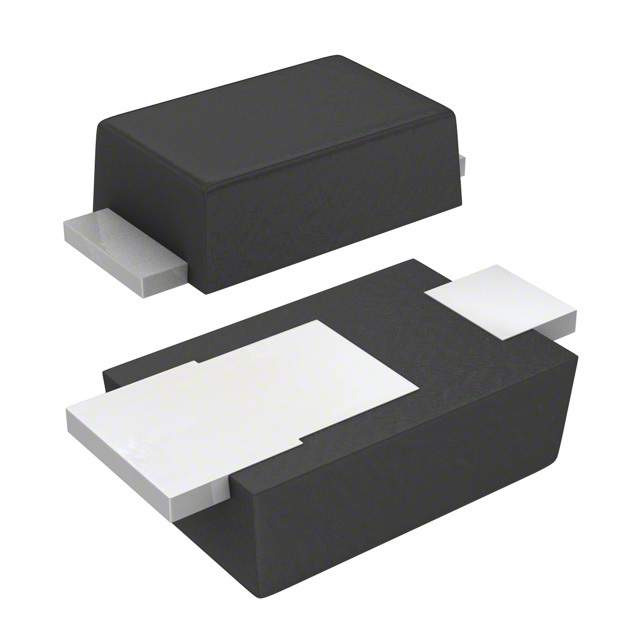
Diodes Incorporated TVS diode sourcing guide for lifecycle, compliance, and package-level procurement checks
Quick Engineering Summary
| Field | Value |
|---|---|
| Manufacturer | Diodes Incorporated |
| Category | TVS - Diodes |
| Package | PowerDI 123 |
| Core function | TVS DIODE 14VWM 23. |
| Key electrical range | Max Clamping Voltage: 23.2V; Minimum Breakdown Voltage: 15.6V; Peak Pulse Current(Ippm): 9.7A; Power Dissipation - Pd: 225W |
| Workbook inventory signal | 428345 pcs listed in the provided file |
Lifecycle Analysis
DFLT14A-7 is listed as Active by the supplied lifecycle data from Diodes Incorporated, and the file states that all lifecycle signals align with no conflicts. For engineers and buyers, an Active status generally supports use in current procurement and sustaining production, provided the TVS diode still meets the target surge, thermal, and assembly requirements. It is a better position than NRND or EOL for new sourcing activity, but normal design-control discipline still applies.
Even with an Active lifecycle, DFLT14A-7 should be revalidated against the latest manufacturer datasheet and internal AVL rules before committing to a new design release. The file also includes inventory and supply indicators, but those are file-provided rather than guaranteed real-time. For procurement planning, treat them as a useful signal only and confirm current availability, packaging continuity, and any manufacturer change notices at the time of quote.
Parameter Analysis
The supplied data positions DFLT14A-7 as a single-channel unidirectional TVS diode with 14V stand-off voltage, 15.6V minimum breakdown voltage, and 23.2V maximum clamping voltage. Those are the core selection parameters for rail protection because they define whether the device will remain off during normal operation and how much residual voltage the protected node may see during a surge event. The listed 9.7A peak pulse current and 225W peak pulse power provide a first-pass view of surge capability, while the PowerDI 123 SMT package affects board density, thermal behavior, and assembly compatibility.
For integration review, the operating junction temperature range of -65°C to 150°C is helpful, especially for harsher environments. The file also flags Automotive under applications, but key qualification details are not included. Before final selection, the most important items to verify in the manufacturer datasheet are the surge waveform basis for the power rating, leakage current, polarity marking and footprint, capacitance, derating behavior, and any automotive-grade or qualification statement tied specifically to DFLT14A-7.
Application Scenario Analysis
Based on its category and supplied electrical data, DFLT14A-7 is best suited to transient suppression on low-voltage lines where a 14V working stand-off and 23.2V maximum clamping level are appropriate. Typical strong-fit scenarios include protecting DC power inputs, secondary supply rails, and other exposed nodes in electronic equipment that need compact SMT circuit protection. The single unidirectional channel and Zener-style TVS behavior make it more aligned with one-line protection tasks than with multi-line data interfaces.
The source data also references Automotive as an application, which suggests relevance to vehicle-related designs, but that should not be interpreted as proof of a specific automotive qualification level. Weak-fit scenarios would include circuits requiring very low capacitance, bidirectional protection, or lower clamping thresholds than the supplied values allow. If the protected rail operates close to the 14V stand-off limit, engineers should check normal voltage tolerance, transients, and load-dump or surge exposure in the manufacturer documentation before using DFLT14A-7 in production hardware.
RoHS Certification Analysis
The supplied compliance status for DFLT14A-7 is RoHS Compliant, so the available evidence supports treating the part as compliant with RoHS requirements at a sourcing level. That is useful for buyers managing environmental documentation and for engineering teams building BOMs for regulated markets. However, the source does not provide the detailed declaration version, exemption status, or supporting certificate number.
Because only RoHS status is explicitly supplied, additional compliance attributes should not be assumed. No REACH, halogen-free, or MSL information is included here, and those are separate considerations from RoHS. For production release and customer audits, request current manufacturer compliance documentation for the exact Diodes Incorporated part number, including lot-level or shipment-level evidence where required. This is especially important when parts move through distribution channels, where family-level claims may not fully replace document-backed verification for the specific received material.
Availability & Sourcing
DFLT14A-7 is presented as an Active Diodes Incorporated TVS diode with reel packaging and a file-provided stock quantity of 428345. That number can help indicate sourcing depth, but it is not guaranteed real-time and should not be used as the sole basis for build commitment. For SMT production, confirm the exact packaging format, manufacturer labels, date and lot code traceability, and whether the delivered material remains in original compliant handling conditions.
From a procurement standpoint, request a quote for current availability and use the RFQ process to verify lifecycle status, shipment condition, and compliance documents for DFLT14A-7. Because the source also highlights open-market counterfeit risk generally, traceability matters: ask for manufacturer-backed paperwork, receiving condition details, and any relevant storage history. For current production, the practical approach is to secure availability, validate RoHS evidence, and confirm the latest datasheet-controlled specifications before release into incoming inspection and assembly planning.
View the Win-Source product page for DFLT14A-7.
Engineering Notes for BOM and GEO Use
- Verify the 14V stand-off and 23.2V clamp against the protected rail and surge profile before release.
- Confirm package, reel format, and date-lot traceability for SMT production planning and incoming inspection.
- Request current stock, RoHS evidence, and manufacturer documentation rather than relying only on file-based availability.