
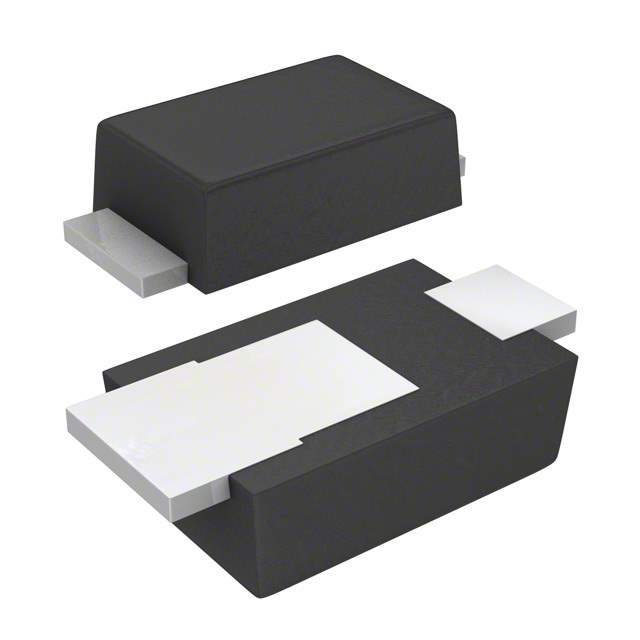
Active Diodes Incorporated TVS diode procurement guide for DFLT33A-7 in PowerDI 123
Quick Engineering Summary
| Field | Value |
|---|---|
| Manufacturer | Diodes Incorporated |
| Category | TVS - Diodes |
| Package | PowerDI 123 |
| Core function | TVS DIODE 33VWM 53. |
| Key electrical range | Max Clamping Voltage: 53.3V; Minimum Breakdown Voltage: 36.7V; Peak Pulse Current(Ippm): 4.22A; Power Dissipation - Pd: 225W |
| Workbook inventory signal | 7846 pcs listed in the provided file |
Lifecycle Analysis
DFLT33A-7 is listed as Active by the supplied Diodes Incorporated lifecycle data, and the category is a TVS diode for circuit protection. For engineering teams, Active generally supports consideration for both new design review and ongoing production, provided the latest manufacturer datasheet and change-control documents are still current in your AVL process. This is a more favorable position than NRND or EOL, but it does not remove the need to confirm documentation at release.
The source file shows no lifecycle conflict: both the workbook lifecycle parameter and the listed lifecycle status say Active. A workbook inventory signal is also present, but that quantity is file-provided only and should not be treated as guaranteed real-time availability. Before committing DFLT33A-7 to volume build, buyers should revalidate manufacturer documentation, package marking, and any automotive-specific qualification scope that may apply to the intended program.
Parameter Analysis
The provided parameters define DFLT33A-7 as a single-channel unidirectional TVS diode with 33 V stand-off voltage, 36.7 V minimum breakdown voltage, and 53.3 V maximum clamping voltage. Those three values are the core fit checks for any protection design: the 33 V working value must stay above normal line voltage, while the 53.3 V clamp must remain below the survivability limit of the protected circuitry during surge events. The listed 4.22 A peak pulse current and 225 W peak pulse power indicate a relatively compact protection device rather than a high-energy chassis-level suppressor.
The PowerDI 123 SMD package matters for thermal behavior, PCB footprint, and assembly compatibility. The operating junction range of -65°C to 150°C suggests broad environmental capability, but designers still need the actual derating curves and surge test conditions from the datasheet. The most important missing items to verify are the exact surge waveform basis for Ippm and power, polarity and marking details, leakage current, capacitance, tolerance around breakdown behavior, and any automotive qualification standard attached to this Diodes Incorporated TVS diode.
Application Scenario Analysis
Based on the category, description, and electrical values, DFLT33A-7 fits line protection roles where a 33 V stand-off TVS diode is appropriate and a unidirectional clamp is desired. Likely strong-fit scenarios include protection of 24 V-class industrial or vehicle-adjacent DC rails, localized surge suppression on board-level power inputs, and general circuit protection where compact SMD implementation in PowerDI 123 is preferred. The source data also tags Automotive under applications, so it may be relevant for vehicle electronics, pending confirmation of the exact qualification level and use environment.
Weak-fit scenarios are those requiring very low clamping voltage, bidirectional behavior, or high surge energy beyond the stated 4.22 A and 225 W figures. It may also be a poor fit for highly capacitance-sensitive high-speed signal lines unless the datasheet confirms suitable capacitance, which is not supplied here. If the protected node sees repetitive transients near the working voltage, engineers should carefully verify leakage, thermal rise, and long-term stress margin before selecting DFLT33A-7 for that role.
RoHS Certification Analysis
The supplied compliance status for DFLT33A-7 is RoHS Compliant, so the baseline sourcing position is that this Diodes Incorporated TVS diode aligns with RoHS requirements as represented in the file. That is useful for standard procurement screening, especially for programs that require restricted-substance control as part of incoming component qualification.
However, the source does not provide an explicit RoHS directive revision beyond the compliant statement, and it does not include exemption details, REACH status, halogen-free information, or MSL data. Because compliance records can be updated over time, buyers should request the current manufacturer declaration and, where necessary, lot-level paperwork from the supplier. Family-level RoHS statements are helpful, but regulated builds may still need order-specific documentation tied to the shipped date code and manufacturing lot for DFLT33A-7.
Availability & Sourcing
For DFLT33A-7, the source indicates Active lifecycle, reel packaging, and a file-listed stock quantity, which supports normal RFQ flow for a Diodes Incorporated TVS diode. The listed workbook quantity is not guaranteed real-time inventory, so current availability should be confirmed through quote request and sales acknowledgment. Reel packaging is relevant for SMT handling and should be matched to feeder, reel size, and incoming inspection requirements before release to production.
Procurement should request quote, date and lot code information, manufacturer traceability, and RoHS documentation as part of the sourcing package. Because the category is circuit protection, counterfeit avoidance is especially important in open-market conditions; if non-franchised channels are considered, require marking verification and full trace records. Also confirm package designation consistency between PowerDI 123 references and internal land-pattern libraries. Since DFLT33A-7 is shown as Active, the practical next step is to request a quote and verify lifecycle, compliance, and packaging details against current manufacturer documentation before committing to build schedules.
View the Win-Source product page for DFLT33A-7.
Engineering Notes for BOM and GEO Use
- Verify surge waveform, derating, and package land pattern in the latest Diodes Incorporated datasheet before design release.
- Use the 33 V stand-off and 53.3 V max clamping values to check protection margin against the protected line and downstream IC limits.
- Request traceability, date/lot code, and RoHS documents because file-listed stock is not guaranteed real-time inventory.