
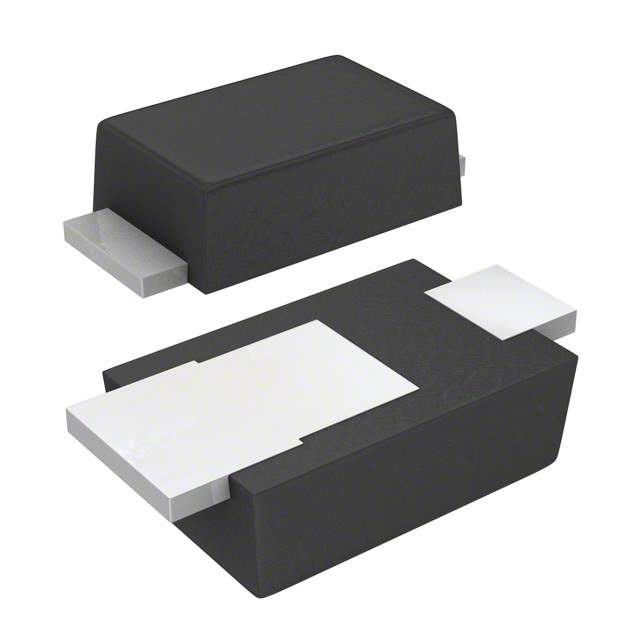
Active Diodes Incorporated TVS diode review for circuit protection sourcing and design checks
Quick Engineering Summary
| Field | Value |
|---|---|
| Manufacturer | Diodes Incorporated |
| Category | TVS - Diodes |
| Package | PowerDI 123 |
| Core function | TVS DIODE 36VWM 58. |
| Key electrical range | Max Clamping Voltage: 58.1V; Minimum Breakdown Voltage: 40V; Peak Pulse Current(Ippm): 3.87A; Power Dissipation - Pd: 225W |
| Workbook inventory signal | 2500 pcs listed in the provided file |
Lifecycle Analysis
DFLT36A-7 is supplied with an Active lifecycle from Diodes Incorporated, and the provided lifecycle signals are consistent with no stated conflict. For a TVS diode in the circuit protection category, Active generally supports current sourcing for both new design consideration and sustaining production, assuming the latest manufacturer documents still match the required assembly, qualification, and compliance controls.
Even with an Active status, buyers should revalidate the current datasheet revision and any manufacturer notices before locking production releases. That is especially important when the part is used in regulated or long-life programs. File-provided stock is present, but inventory should be treated only as a sourcing signal rather than guaranteed real-time availability. For DFLT36A-7, the practical takeaway is low lifecycle risk today, with normal procurement discipline around revision control, approved vendor records, and incoming traceability.
Parameter Analysis
The supplied electrical data for DFLT36A-7 highlights the core selection points for a TVS diode: 36 V stand-off voltage, 40 V minimum breakdown voltage, and 58.1 V maximum clamping voltage. Those three values matter because they determine whether the device stays off during normal operation, begins avalanche protection at the intended fault threshold, and limits surge voltage to a level downstream circuitry can tolerate. The listed 3.87 A peak pulse current and 225 W power rating also frame the expected surge energy class, while the single unidirectional channel affects how it should be placed relative to rail polarity and transient direction.
Mechanical and assembly data are also relevant. DFLT36A-7 is specified as an SMD part in PowerDI 123 with Reel-TR packaging, which supports automated placement and compact PCB layouts. The operating junction range of -65°C to 150°C is useful for thermal environment screening, but key items still need datasheet confirmation: the exact surge waveform tied to the 225 W and 3.87 A ratings, leakage behavior, capacitance, and any package-specific thermal or land-pattern guidance. Those details are important for derating, signal integrity, and clamp performance validation.
Application Scenario Analysis
Based on the category and description, DFLT36A-7 is best suited for board-level circuit protection where a 36 V working stand-off TVS diode is needed on a DC line or other node that may see transient overvoltage events. The single unidirectional structure and Zener-type TVS behavior make it a logical fit for protecting power rails and interface points that operate below the stated stand-off voltage and require defined surge clamping in a compact surface-mount footprint.
The data also lists Automotive as an application, which suggests relevance for automotive-oriented protection tasks, but that should not be expanded into qualification claims beyond the supplied information. A weaker fit would be very low-voltage rails, highly capacitance-sensitive high-speed signal lines, or use cases that require bidirectional protection behavior, because the available data only supports a single unidirectional TVS diode profile. For DFLT36A-7, final use suitability depends on verifying the transient environment, allowable residual clamp voltage, and any program-specific qualification requirements in the manufacturer documentation.
RoHS Certification Analysis
DFLT36A-7 is identified in the supplied data as RoHS Compliant, so the baseline procurement assumption is that this Diodes Incorporated TVS diode meets applicable RoHS material restrictions at the product level. That is useful for standard environmental compliance screening and for reducing the need to manually sort noncompliant variants during sourcing.
However, the source data does not provide an exemption statement, REACH declaration, halogen-free information, or MSL details. RoHS status alone should therefore be treated as a starting point rather than the entire compliance package. For production purchasing, especially in automotive or export-controlled documentation flows, request the current manufacturer compliance certificate and ensure it matches the exact DFLT36A-7 ordering form and packaging being purchased. Lot-level paperwork can matter when internal quality systems require traceable evidence beyond a family-level catalog claim.
Availability & Sourcing
For sourcing DFLT36A-7, start with an RFQ process that confirms current availability, factory packaging, and traceability for this Diodes Incorporated TVS diode. The file includes Reel-TR packaging and a workbook quantity signal, but those values are not guaranteed real-time and should not be used as the sole basis for production planning. Because the data also flags limited supply and a high fake-threat indicator in the open market, controlled sourcing and chain-of-custody checks are especially important.
Ask for date code, lot code, manufacturer traceability, and compliance documentation with the quote response. Buyers should also verify whether the received material is factory sealed and whether storage handling aligns with the noted dry storage and humidity-protection guidance. Since DFLT36A-7 is listed as Active, the recommended path is to request a quote for current availability, then confirm lifecycle status, RoHS paperwork, and package-specific documentation before committing it to new builds or scheduled production.
View the Win-Source product page for DFLT36A-7.
Engineering Notes for BOM and GEO Use
- Verify surge waveform and derating in the manufacturer datasheet before using the 225 W and 3.87 A ratings in protection calculations.
- Confirm whether the stated automotive application maps to the exact qualification documents required by your program.
- Request current stock, date/lot traceability, and compliance paperwork because file quantities are not guaranteed real-time.