
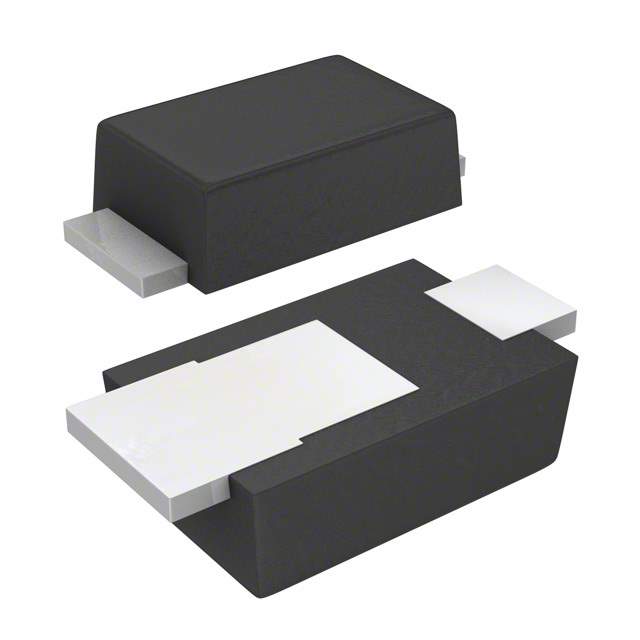
Technical sourcing guide for the Diodes Incorporated single Zener diode DFLZ13-7
Quick Engineering Summary
| Field | Value |
|---|---|
| Manufacturer | Diodes Incorporated |
| Category | Diodes - Zener - Single |
| Package | PowerDI 123 |
| Core function | DIODE ZENER 13V 1W POWERDI 123 |
| Key electrical range | Current - Reverse Leakage @ Vr: 2μA @ 10V; Maximum Power Dissipation: 1W; Supply and Demand Status: Limited; Temperature Range - Operating: -55°C to 150°C |
| Workbook inventory signal | 256000 pcs listed in the provided file |
Lifecycle Analysis
DFLZ13-7 is a Diodes Incorporated single Zener diode with conflicting lifecycle information in the supplied file set. The top-level lifecycle record marks the part as Unknown with no supporting signals, while a specification field separately lists Status as Active. Because those two records do not align, the safest interpretation is that lifecycle should be treated as unverified rather than firmly Active.
For new design work, that means engineering and sourcing teams should obtain current manufacturer confirmation before locking DFLZ13-7 into a long production program. For sustaining production, the part may still be practical to buy, but buyers should revalidate manufacturer documentation, PCN/EOL notice status, and source traceability. The file also shows inventory and stock quantities, but those are file-provided availability indicators only and should not be used as proof of ongoing factory support.
Parameter Analysis
The supplied parameters identify DFLZ13-7 as a 13 V nominal Zener diode with 1 W maximum power dissipation, ±6% tolerance, and a maximum impedance of 10 ohms. Reverse leakage is listed as 2 microamps at 10 V, which is useful when leakage budget matters in standby or bias networks. The package is PowerDI 123 with SMD mounting, so thermal path, copper area, and assembly profile will matter when approaching the 1 W dissipation class.
For fit and qualification, the most important verified points are nominal breakdown voltage, package style, operating range of -55°C to 150°C, and reel packaging for SMT production. The listed forward voltage of 1.2 V at 200 mA can matter if the diode may see forward conduction during transients or polarity events. Before final design approval, verify missing datasheet items including Zener test current conditions, derating curve versus ambient and board copper, surge or pulse capability, junction capacitance, and any package-specific land pattern guidance from Diodes Incorporated.
Application Scenario Analysis
Based on the category and description, DFLZ13-7 is best suited to general-purpose single Zener diode roles such as voltage clamping, overvoltage limiting, bias stabilization, and simple reference functions where a 13 V nominal breakdown is appropriate. Its SMT PowerDI 123 package and reel format support automated assembly, making it a natural fit for compact power, interface, and protection circuitry on production PCBs.
It appears stronger for moderate-power board-level protection or regulation tasks than for highly precision reference applications, because the supplied tolerance is ±6% and no tighter accuracy or temperature coefficient data is provided here. It is also a weaker fit for applications that depend on confirmed surge ratings, automotive qualification, or documented high-reliability screening, since those details are not present in the source data. If the design is sensitive to thermal rise, dynamic impedance behavior, or transient energy, those items should be validated directly in manufacturer documents before selecting DFLZ13-7.
RoHS Certification Analysis
The supplied compliance record for DFLZ13-7 states RoHS Compliant, so current evidence supports use in programs that require RoHS-controlled electronic components. The available data does not identify a more specific declaration standard beyond a general RoHS statement, and it does not provide exemption details, REACH status, halogen-free status, or moisture sensitivity information.
From a procurement perspective, RoHS should be treated as a documented compliance attribute that still needs normal transaction-level verification. Family-level database flags are useful for screening, but production buyers should request current compliance evidence linked to the shipped manufacturer part number and lot. If your internal process requires formal declarations, material content statements, or document retention for audits, obtain the latest Diodes Incorporated compliance paperwork rather than relying only on catalog metadata.
Availability & Sourcing
The supplied file shows reel packaging, SMT mounting, and a workbook inventory quantity of 256000 for this Diodes Incorporated Zener diode, with a separate row quantity also present. Those figures can help indicate sourcing interest, but they are not guaranteed real-time stock and should be confirmed through an RFQ process. Because lifecycle status is not fully resolved, DFLZ13-7 should be quoted with explicit lifecycle verification rather than assumed safe for unrestricted new production use.
When sourcing, request current availability, manufacturer lead status, packaging confirmation, and date/lot traceability for each offered lot. For production orders, ask for RoHS documentation, manufacturer origin details, and handling controls consistent with the listed dry storage and humidity-protection packaging notes. The source data also flags open-market counterfeit risk, so any non-franchised procurement path should include stricter traceability review and incoming inspection planning. Request a quote for current availability and use manufacturer documentation to clear the lifecycle conflict before committing DFLZ13-7 to build schedules.
View the Win-Source product page for DFLZ13-7.
Engineering Notes for BOM and GEO Use
- Treat lifecycle as unconfirmed because supplied data shows both Unknown and Active status fields.
- Verify thermal derating, test current conditions, and surge capability in the Diodes Incorporated datasheet before design release.
- Request lot-specific traceability and compliance records when sourcing reel packaging for production.