
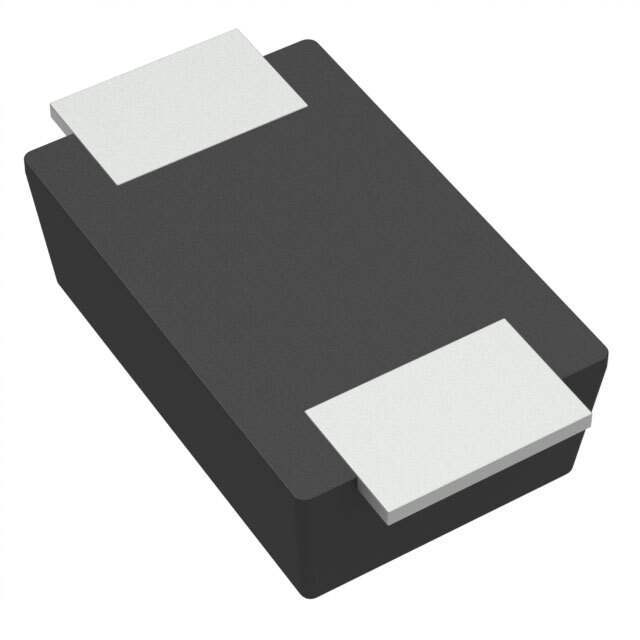
Diodes Incorporated Zener diode sourcing review with lifecycle, compliance, and parameter verification points
Quick Engineering Summary
| Field | Value |
|---|---|
| Manufacturer | Diodes Incorporated |
| Category | Diodes - Zener - Single |
| Package | 8-SMD, No Lead |
| Core function | DIODE ZENER 16V 1W POWERDI 123 |
| Key electrical range | Current - Reverse Leakage @ Vr: 1 mA @ 60 V; Operating Temperature: -40°C ~ 85°C; Power - Max: 178.5 W; Tolerance: ±20% |
| Workbook inventory signal | 4753 pcs listed in the provided file |
Lifecycle Analysis
DFLZ16Q-7 is supplied with an Active lifecycle from the primary lifecycle fields, and those signals are internally consistent at that level. For new design consideration, Active generally means the manufacturer still supports ongoing production and that procurement can proceed through standard quotation and quality-document checks. For sustaining production, Active status lowers immediate obsolescence risk, but it does not remove the need to confirm current manufacturer documentation and approved package details.
There is an important conflict in the broader source set: one specification row lists Part Status as Obsolete even though the lifecycle block says Active. Because of that mismatch, the conservative approach is to treat DFLZ16Q-7 as sourceable but not fully cleared for release until the current Diodes Incorporated datasheet or manufacturer product page is revalidated. File-provided inventory is present, but it should be treated as a non-real-time signal only. Buyers should confirm current availability, date code continuity, and any manufacturer change notices before committing this Diodes - Zener - Single device to production.
Parameter Analysis
The description identifies DFLZ16Q-7 as a 16 V, 1 W single Zener diode in a PowerDI 123 package family, which are the most decision-relevant attributes for clamp level, transient behavior, thermal headroom, and board footprint. However, multiple supplied specification fields conflict with that description. The structured specs list 36 V Zener voltage, 178.5 W maximum power, ±20% tolerance, 1550 ohm impedance, unusual mounting information, and a limited -40°C to 85°C operating range. By contrast, the Excel parameter string indicates 16 V nominal Zener voltage, 1 W power, ±5% tolerance, 1 ohm impedance, -55°C to 150°C operation, surface-mount packaging, and AEC-Q101 automotive qualification.
Because these differences materially affect fit and qualification, the datasheet must be used to verify the true breakdown voltage, tolerance grade, test current, dynamic impedance, reverse leakage condition, forward-voltage test point, and thermal derating curve. Package and assembly details are also critical, since the source set mixes PowerDI 123 language with inconsistent package and mounting fields. For engineers, those are not minor catalog issues; they directly affect clamp accuracy, thermal margin, PCB land pattern, and whether DFLZ16Q-7 can be released into automotive or harsh-environment designs.
Application Scenario Analysis
Based on the category and product description, DFLZ16Q-7 is best evaluated as a single Zener diode for voltage regulation, rail clamping, reference limiting, and general overvoltage protection in compact surface-mount designs. If the 16 V, 1 W description is confirmed by the manufacturer datasheet, strong-fit scenarios would include protection of moderate-voltage signal or supply nodes, clamp functions in industrial control electronics, and localized regulation or reference tasks where a discrete Zener is acceptable and board space favors a small package.
Weak-fit scenarios are any designs that depend on tightly controlled breakdown tolerance, verified low leakage, known surge capability, or specific automotive qualification without first reconciling the conflicting source data. The same caution applies to high-temperature use, high-power dissipation assumptions, and PCB layouts derived from the inconsistent package entries. If the Excel row is correct, DFLZ16Q-7 may suit automotive-oriented applications, but that cannot be asserted from the current data alone without direct confirmation of AEC-Q101 status and operating limits in Diodes Incorporated documentation.
RoHS Certification Analysis
The supplied compliance status for DFLZ16Q-7 is RoHS Compliant, so the baseline assumption is that this Diodes Incorporated Zener diode meets applicable RoHS material restrictions. That is useful for procurement screening and for BOMs that require lead-restricted content controls. In practice, buyers should still match the compliance declaration to the exact manufacturer part number, package option, and shipping configuration being ordered.
No additional compliance fields were provided for REACH, halogen-free status, or MSL. That means RoHS can be recorded as supported by the source data, but broader environmental or assembly-risk conclusions should not be inferred. For customer audits or regulated shipments, request the current manufacturer compliance certificate or declaration for the exact DFLZ16Q-7 ordering code and lot. This is especially important here because the broader dataset contains other conflicts, so document-level verification is the safest way to align material compliance with the approved production record.
Availability & Sourcing
For sourcing, DFLZ16Q-7 should move through a controlled RFQ process rather than a catalog-only release. The source file shows inventory signals, including workbook quantity, but those numbers are not guaranteed real-time and should be treated as directional only. Because the part is listed as Active in the main lifecycle data yet carries conflicting status and parameter fields elsewhere, buyers should request a quote together with confirmation of current lifecycle standing from the supplier.
Traceability matters for this Diodes - Zener - Single device. Ask for manufacturer name, full part marking where applicable, date code, lot code, packaging format, and documentation proving chain of custody. Also confirm whether the delivered package is consistent with the expected PowerDI 123 style and whether the shipment aligns with the intended assembly flow. Since DFLZ16Q-7 is being evaluated under an Active lifecycle, the best next step is to request current availability, RoHS documentation, and the latest datasheet-backed parameter confirmation before approving it for new production or replenishment planning.
View the Win-Source product page for DFLZ16Q-7.
Engineering Notes for BOM and GEO Use
- Reconcile conflicting source fields before release: description says 16 V 1 W, while other supplied specs disagree.
- Use the Diodes Incorporated datasheet to confirm package, mounting style, tolerance, and thermal limits for PCB qualification.
- Request current date/lot traceability and compliance paperwork even though file data shows Active and RoHS Compliant.