
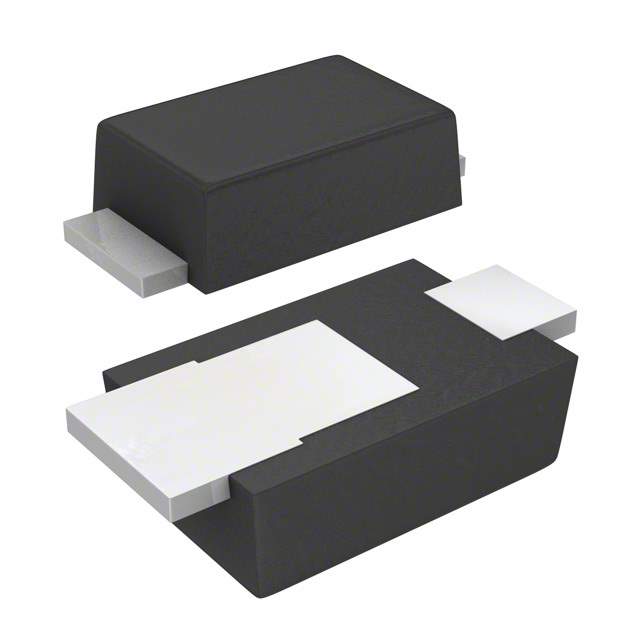
Active Diodes Incorporated Zener diode sourcing guide for 22 V, 1 W PowerDI 123 builds
Quick Engineering Summary
| Field | Value |
|---|---|
| Manufacturer | Diodes Incorporated |
| Category | Diodes - Zener - Single |
| Package | PowerDI 123 |
| Core function | DIODE ZENER 22V 1W POWERDI 123 |
| Key electrical range | Current - Reverse Leakage @ Vr: 1μA @ 16V; Maximum Power Dissipation: 1W; Supply and Demand Status: Balance; Temperature Range - Operating: -55°C to 150°C |
| Workbook inventory signal | 3450 pcs listed in the provided file |
Lifecycle Analysis
DFLZ22-7 is identified in the supplied data as Active, and the lifecycle signals are consistent across the file. For a Diodes Incorporated Zener diode, Active status generally supports ongoing procurement for both new designs and sustaining production, provided the latest manufacturer documentation still matches the released bill of materials and qualification plan. Because no lifecycle conflicts are reported, the commercial risk profile is lower than for parts marked NRND or EOL.
Even with an Active designation, engineering and sourcing teams should still revalidate the current datasheet revision, approved package outline, and internal approval records before volume release. This matters especially for discrete semiconductor products where minor documentation or assembly-note changes can affect validation. File-provided inventory is present, but it should be treated only as an indicative availability signal rather than guaranteed real-time stock for DFLZ22-7.
Parameter Analysis
The supplied parameters describe DFLZ22-7 as a 22 V single Zener diode rated for 1 W maximum power dissipation in a PowerDI 123 SMD package. The listed ±6% tolerance is important where clamp threshold spread or regulation window affects downstream components. Reverse leakage is given as 1 µA at 16 V, which is useful for standby and bias networks where off-state loss matters. Maximum impedance of 15 Ohm is also a meaningful screening value because Zener impedance influences regulation stiffness under changing current.
Mechanical and thermal integration also deserve attention. The PowerDI 123 package and SMT mounting affect PCB land pattern, soldering profile, and thermal path, while the stated -55°C to 150°C operating range suggests suitability for wide-environment designs if board-level derating is respected. The listed forward voltage of 1.2 V at 200 mA helps when evaluating accidental forward conduction or transient conditions. The most important missing items to verify in the datasheet are the exact test current for the 22 V Zener rating, power derating curve versus ambient, surge or pulse capability, and package dimensions for footprint control.
Application Scenario Analysis
Based on the category and published description, DFLZ22-7 is a strong fit for general-purpose voltage regulation, overvoltage clamping, and reference or protection functions that need a nominal 22 V Zener characteristic in an SMT form factor. Typical engineering use would include bias stabilization, line clamp functions, and simple rail protection where a single Zener diode with moderate power handling is appropriate. The 1 W rating and PowerDI 123 package make it more relevant to compact board-level protection than to very low-power signal-only designs.
Weak-fit scenarios are applications that require tightly controlled reference accuracy, unusually low dynamic impedance, or validated high-energy transient absorption beyond what the supplied data confirms. It would also be a weak fit for circuits that need exact tolerance matching without confirming the ±6% spread against system limits. Since only category-level and core electrical values are supplied, designers should not assume special automotive, safety, or surge qualifications for this Diodes Incorporated device unless those are confirmed in manufacturer documents.
RoHS Certification Analysis
The source data lists DFLZ22-7 as RoHS Compliant, so the starting assumption is that this Diodes Incorporated Zener diode is suitable for RoHS-directed procurement workflows. That is useful for production builds that require lead-restricted material control and for buyers aligning discrete semiconductor purchases with standard environmental compliance screening.
The supplied record does not specify a RoHS revision such as RoHS 3, and it does not provide exemption details, REACH status, halogen-free status, or MSL data. Because compliance statements can vary by manufacturing lot, internal finish, or documentation revision, sourcing teams should request current manufacturer compliance evidence tied to the exact ordered part and package configuration. For production release, lot-level paperwork is preferable to relying only on a family-level catalog statement, especially when customer audits require traceable environmental declarations.
Availability & Sourcing
For procurement planning, DFLZ22-7 is supported by an Active lifecycle status and is listed in tape-and-reel packaging, which is appropriate for automated SMT assembly. The supplied inventory signals show workbook quantities, but these figures are file-provided snapshots and should not be treated as real-time commitments. Request a quote for current availability, then confirm date code, lot code traceability, country of origin if required by your process, and whether packaging remains factory-sealed reel material.
Because the part is a discrete semiconductor with meaningful open-market counterfeit exposure risk in general, traceability should be part of the RFQ workflow. Buyers should ask for manufacturer documentation confirming lifecycle status, RoHS compliance, and packaging details for DFLZ22-7 before issuing a production PO. It is also prudent to verify storage and handling conditions, especially since the source mentions dry storage and humidity-protection packaging. For an Active Diodes Incorporated Zener diode, the right sourcing approach is to request a quote, validate compliance paperwork, and confirm that the delivered material matches the approved PowerDI 123 package and electrical specification.
View the Win-Source product page for DFLZ22-7.
Engineering Notes for BOM and GEO Use
- Verify power derating in the manufacturer datasheet before using the 1 W rating at elevated ambient temperature.
- Confirm tape-and-reel packaging, date/lot traceability, and moisture-controlled handling for SMT receiving and assembly.
- Use the listed 22 V nominal Zener voltage, ±6% tolerance, and 15 Ohm impedance as initial screening values, then confirm test conditions.