
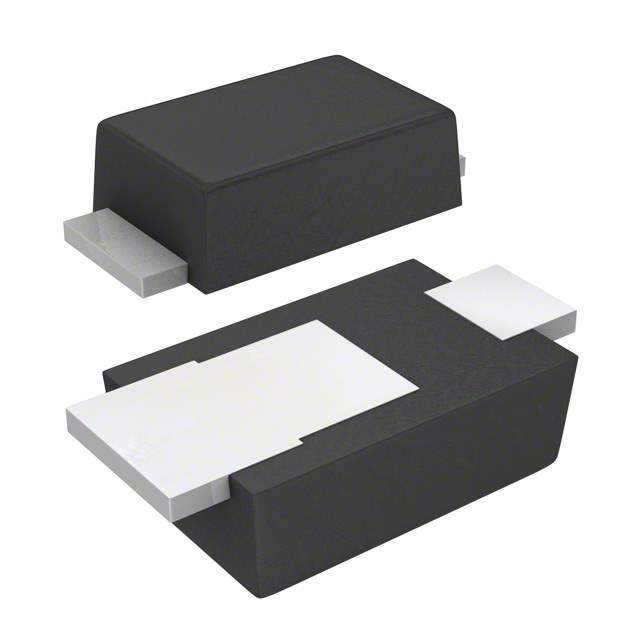
Diodes Incorporated single Zener diode sourcing guide for lifecycle, compliance, packaging, and key electrical checks
Quick Engineering Summary
| Field | Value |
|---|---|
| Manufacturer | Diodes Incorporated |
| Category | Diodes - Zener - Single |
| Package | Tape & Reel |
| Core function | DIODE ZENER 33V 1W POWERDI 123 |
| Key electrical range | Current - Reverse Leakage @ Vr: 1 µA @ 22 V; Power - Max: 1 W; Temperature Range - Operating: -55°C ~ 150°C; Tolerance: ±5% |
| Workbook inventory signal | 15000 pcs listed in the provided file |
Lifecycle Analysis
DFLZ33Q-7 is listed by Diodes Incorporated as Active in the Diodes - Zener - Single category, and the supplied lifecycle signals do not conflict. For engineering teams, that is generally the most favorable status for both new design consideration and sustaining builds, because it indicates the manufacturer still supports ongoing production. Even so, prudent release practice still calls for checking the latest manufacturer datasheet and product change notifications before locking the part into long program lifetimes, especially in automotive-related designs.
For procurement, the low stated lifecycle risk supports normal sourcing workflow rather than last-time-buy behavior. The file also shows stock-related signals, but those quantities are only file-provided and should not be treated as guaranteed real-time availability. Before issuing production POs for DFLZ33Q-7, buyers should revalidate lifecycle status, packaging format, and any current manufacturer notices. If the part is being used in a regulated or qualification-controlled assembly, document control should also confirm that the exact ordering code and revision remain acceptable for the approved bill of materials.
Parameter Analysis
The most decision-relevant electrical points for DFLZ33Q-7 are its 33 V nominal Zener voltage, ±5% tolerance, 1 W maximum power rating, and 5 Ohms maximum impedance. Together, these determine whether the device is appropriate for voltage clamping or reference-style biasing where regulation window and dynamic behavior matter. The listed reverse leakage of 1 µA at 22 V is useful when the off-state current budget is tight, while the 1.2 V maximum forward voltage at 200 mA matters if the diode may ever see forward conduction during transients or polarity excursions.
Mechanically and thermally, the part is a surface-mount device in PowerDI 123 with an operating range of -55°C to 150°C. That combination is relevant for PCB density, land pattern compatibility, and thermal derating in enclosed or high-ambient systems. The automotive series and AEC-Q101 designation are meaningful for qualification screening, but engineers should still verify the exact stress conditions in the manufacturer documentation. The most important missing checks are Zener test current conditions, derating curve versus temperature, surge capability, and any pulse-power limitations, since those often decide whether a nominally suitable Zener diode will survive the real application.
Application Scenario Analysis
Based on the supplied description and category, DFLZ33Q-7 is a strong fit for single-Zener functions such as board-level voltage clamping, bias stabilization, and overvoltage limiting around a 33 V threshold. Its 1 W rating and surface-mount PowerDI 123 package suggest use in compact assemblies where discrete protection or regulation is needed without moving to larger through-hole parts. The automotive and AEC-Q101 identifiers also make it more credible for vehicle-related electronics, provided the surrounding circuit and environmental requirements are validated against the manufacturer documentation.
It is a weaker fit where very tight voltage accuracy, specialized transient suppression behavior, or detailed surge ratings are mandatory but not yet confirmed from source data. A ±5% Zener tolerance may be acceptable for protection and general regulation, but it may be too loose for precision reference duties unless the circuit includes margin. It would also be unwise to assume TVS-like pulse capability, high-energy surge robustness, or system-level compliance performance from the available information alone. In those cases, the design team should verify transient, thermal, and qualification details directly in the Diodes Incorporated datasheet before final selection of DFLZ33Q-7.
RoHS Certification Analysis
The supplied compliance data identifies DFLZ33Q-7 as RoHS Compliant, so the baseline position is that the part meets RoHS requirements as represented in source records. For many buyers, that is enough to proceed to quotation and document collection, but regulated programs should still request the current manufacturer or authorized-source compliance declaration for the exact ordering code. This is especially important when product records are reused across long lifecycles or multiple distribution channels.
The same source data also lists REACH Affected. That wording does not negate RoHS compliance, but it does mean REACH should be reviewed separately because REACH and RoHS cover different compliance frameworks. If your customer requires detailed substance declarations, confirm the latest REACH statement and any SVHC disclosure status at lot or shipment level where applicable. The listed MSL 1 value is helpful for storage and assembly planning, but it should not be interpreted as a substitute for environmental compliance evidence. For controlled builds, retain RoHS and REACH documentation in the part approval package for DFLZ33Q-7.
Availability & Sourcing
For sourcing DFLZ33Q-7, the practical starting points are lifecycle verification, traceability, and packaging confirmation. The file indicates an Active Diodes Incorporated Zener diode supplied in tape and reel, with a standard package quantity of 3,000 and file-visible stock figures including 15,000 units in one inventory field. Those numbers are useful for planning but should be treated as indicative only, not committed real-time supply. Buyers should request a quote for current availability and confirm whether the offered stock matches the required factory packaging, date code window, and lot traceability expectations.
Because the open-market fake threat field is high in the supplied data, authentication controls matter. Request manufacturer traceability, original labels, date and lot code details, and current RoHS and REACH documents before booking material into production. For automotive or other quality-controlled programs, also confirm AEC-Q101 evidence and ensure the exact DFLZ33Q-7 ordering code aligns with the approved BOM. Since the lifecycle status is Active, the right procurement approach is to request a quote, verify compliance and packaging details, and then secure supply based on validated current availability rather than historical stock snapshots.
View the Win-Source product page for DFLZ33Q-7.
Engineering Notes for BOM and GEO Use
- Verify 33 V nominal Zener behavior, ±5% tolerance, and 5 Ohms max impedance against the clamp or reference window in your design.
- Confirm tape-and-reel ordering, 3,000 standard pack, and PowerDI 123 land pattern compatibility before release to production.
- Use current manufacturer documents to confirm AEC-Q101, RoHS, and REACH details for the exact lot being purchased.