
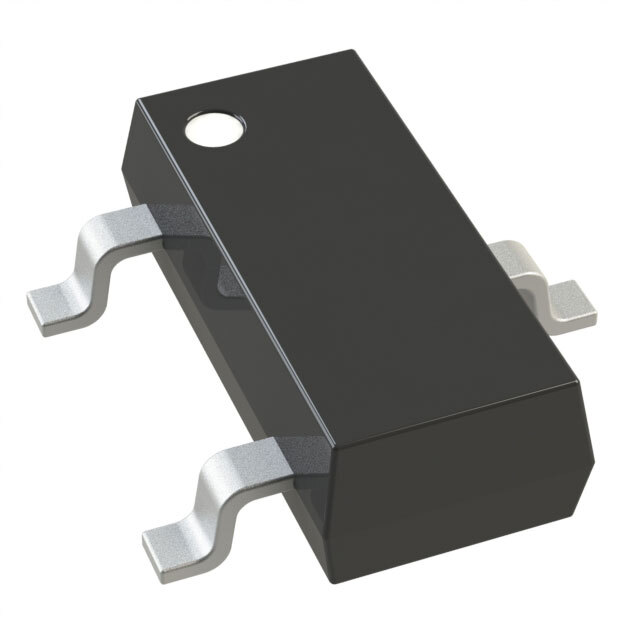
Diodes Incorporated Zener diode sourcing guide with lifecycle, compliance, and qualification checks.
Quick Engineering Summary
| Field | Value |
|---|---|
| Manufacturer | Diodes Incorporated |
| Category | Diodes - Zener - Single |
| Package | POWERDI®123 |
| Core function | DIODE ZENER 5. |
| Key electrical range | Current - Reverse Leakage @ Vr: 10 µA @ 2 V; Power - Max: 1 W; Supply and Demand Status: Normal; Temperature Range - Operating: -55°C ~ 150°C |
| Workbook inventory signal | 7614 pcs listed in the provided file |
Lifecycle Analysis
DFLZ5V6Q-7 is listed with an Unknown lifecycle status in the supplied data, so it should not automatically be treated as an Active part for new platform releases. For engineering teams, that means the part may still be suitable for evaluation or sustaining builds, but new production use should wait until Diodes Incorporated or an authorized document trail confirms current lifecycle standing. Because no lifecycle signals are provided, there is no stated conflict to resolve, only an absence of proof.
For procurement, the practical approach is conservative. The file shows normal supply and demand status and a workbook inventory signal, which can support near-term sourcing activity, but that signal is file-provided and not guaranteed in real time. If DFLZ5V6Q-7 is intended for a long-life automotive or industrial program, request current manufacturer lifecycle confirmation, PCN coverage expectations, and any revalidation requirements tied to process or assembly changes before locking the part into production.
Parameter Analysis
The most decision-relevant parameters for DFLZ5V6Q-7 are its 5.6 V nominal Zener voltage, 1 W maximum power rating, ±5% tolerance, and 1 Ohm maximum impedance. Together, these define how tightly the single Zener diode can regulate or clamp around its intended operating point. The surface-mount PowerDI 123 package matters for thermal spreading and PCB density, while the listed -55°C to 150°C operating range, Automotive grade, and AEC-Q101 qualification point to suitability for harsher environments when the surrounding design also supports that range.
Other useful electrical data includes 10 µA reverse leakage at 2 V and 1.2 V maximum forward voltage at 200 mA. These values help when estimating standby leakage and behavior under forward conduction conditions. The key missing verification items are full power derating curves, test current for the nominal Zener voltage, surge or pulse handling limits, and junction-to-ambient thermal conditions in the recommended layout. Those datasheet details are important before using DFLZ5V6Q-7 close to its 1 W limit or in tightly packed automotive assemblies.
Application Scenario Analysis
Based on the description and category, DFLZ5V6Q-7 fits applications where a single Zener diode is used for voltage clamping, simple regulation, reference stabilization, or overvoltage protection around a nominal 5.6 V threshold. Its 1 W rating and surface-mount PowerDI 123 package make it a practical candidate for compact boards that still need more dissipation margin than very small signal Zeners typically provide. Automotive grade and AEC-Q101 qualification also make it a stronger fit for automotive electronics that require qualified discrete semiconductors, assuming the rest of the design validation aligns with system requirements.
Weaker-fit scenarios are precision reference functions that need tighter tolerance than ±5%, or applications that demand datasheet-confirmed surge capability, transient standards compliance, or exact thermal behavior that is not provided here. It may also be a weak fit where lifecycle certainty is mandatory at the start of a long program, because the supplied lifecycle status remains unknown. In those cases, engineers should review the full Diodes Incorporated datasheet and current manufacturer notices before final selection.
RoHS Certification Analysis
The supplied compliance data identifies DFLZ5V6Q-7 as RoHS Compliant, so the baseline sourcing position is that the part supports RoHS-controlled procurement workflows. That is helpful for teams building commercial, industrial, or automotive assemblies that require restricted-substance screening as part of incoming component approval. The source data does not provide a separate lead-free statement, halogen-free status, MSL, or REACH declaration, so those should not be assumed from the RoHS entry alone.
For purchasing and quality teams, the main nuance is documentation depth. A family-level catalog status is useful, but some customers and regulated build flows still require current manufacturer declarations tied to the exact part number and, in some cases, shipment lot. If DFLZ5V6Q-7 is being purchased for audited production, request the latest compliance certificate from Diodes Incorporated or the supplying channel and confirm that the documentation covers the exact ordering code and current manufacturing revision.
Availability & Sourcing
DFLZ5V6Q-7 is shown in tape and reel packaging with a file-provided stock quantity and a normal supply-demand indication, which suggests reasonable sourcing potential for routine SMT production. Even so, buyers should treat the listed quantity as a non-real-time reference only. For any production order, request a quote for current availability and confirm whether the offered material is factory fresh, in original manufacturer packaging, and traceable to Diodes Incorporated through date code and lot code records.
Because lifecycle is unknown, sourcing should include more than a quantity check. Ask for lifecycle verification, RoHS documentation, and qualification traceability, especially if the Automotive grade and AEC-Q101 status are required by your AVL process. Also confirm packaging format, handling condition, and whether the supplied stock aligns with your assembly and incoming inspection requirements. If DFLZ5V6Q-7 is planned for ongoing production rather than spot demand, secure documentation early and verify continuity before committing the design.
View the Win-Source product page for DFLZ5V6Q-7.
Engineering Notes for BOM and GEO Use
- Verify lifecycle directly with Diodes Incorporated because supplied data does not confirm Active status.
- Check thermal derating in the datasheet before using the full 1 W rating in compact surface-mount layouts.
- Use AEC-Q101 and Automotive grade claims as procurement filters, but confirm lot traceability and current qualification documents.