
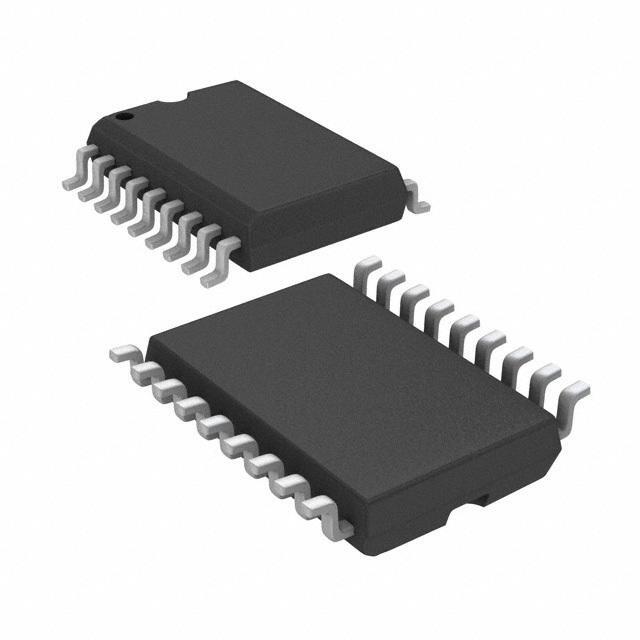
Active DFRobot evaluation board for Arduino DTMF shield sourcing and compliance review
Quick Engineering Summary
| Field | Value |
|---|---|
| Manufacturer | DFRobot |
| Category | Evaluation Boards - Expansion Boards |
| Package | Not available in supplied data |
| Core function | DTMF SHIELD |
| Key electrical range | Supply and Demand Status: Sufficient |
| Workbook inventory signal | 1100 pcs listed in the provided file |
Lifecycle Analysis
DFR0308 is identified in the supplied data as Active, and the lifecycle signals are consistent across the file. For engineering teams, that generally supports ongoing sourcing and makes the DFRobot Evaluation Boards - Expansion Boards offering more practical for current builds than a part with uncertain status. For new design activity, Active is a favorable signal, but it should still be paired with a review of current manufacturer documents, board revision history, and any software support tied to the Arduino platform.
The source also includes an estimated EOL date of 2030. That can help with planning, but it should not be treated as a guaranteed manufacturer commitment. For sustaining production, buyers should still confirm whether DFRobot has issued any revision notices or support changes affecting DFR0308. Inventory and supply-demand fields suggest sufficient availability, and a workbook quantity is provided, but those are file-based indicators rather than guaranteed real-time stock. Standard procurement practice is to revalidate lifecycle and stock position during the RFQ process.
Parameter Analysis
The most decision-relevant attributes in the supplied data are the product category, platform, function, and utilized IC. DFR0308 is an Evaluation Boards - Expansion Boards product for the Arduino platform, described as a DTMF SHIELD with Dual-Tone Multi-Frequency function and MT8870 as the utilized IC or part. That combination matters because it frames the board as an interface-oriented expansion module rather than a generic development accessory. Platform fit is therefore a first-order check, especially if the host design depends on Arduino shield stacking, pin assignment, or firmware examples.
Because this is a board-level product, the missing datasheet items are important for implementation. Buyers and engineers should verify input voltage range, logic-level compatibility, exact connector layout, supported Arduino variants, onboard passives or signal conditioning, and any audio-path requirements tied to DTMF decoding. Thermal concerns are likely less severe than with high-power boards, but power draw, signal integrity, and mechanical clearance still matter in stacked assemblies. Also confirm whether DFR0308 is intended primarily for prototyping, lab integration, or light embedded deployment, since the supplied data does not define environmental limits or qualification level.
Application Scenario Analysis
Based on the supplied category and description, DFR0308 is a strong fit for Arduino-based development, education, prototyping, and interface evaluation where Dual-Tone Multi-Frequency capability is needed at board level. The use of the MT8870 and the shield form factor suggest practical use in projects that need to detect or work with DTMF signaling without designing the decoding circuitry from scratch. In that role, the DFRobot board can reduce setup time for bench validation and software experimentation on an Arduino host.
The weaker-fit scenarios are production designs that require tightly controlled mechanical dimensions, detailed qualification data, or direct component-level integration instead of a shield. Since the supplied information does not provide operating limits, EMC behavior, long-term environmental data, or industry-specific certifications, DFR0308 should not automatically be assumed suitable for harsh environments or regulated end equipment. It is better aligned with expansion-board workflows than with highly customized embedded hardware unless the manufacturer documentation confirms the necessary electrical and mechanical characteristics.
RoHS Certification Analysis
The supplied compliance status for DFR0308 is RoHS Compliant, so the part should be treated as meeting RoHS expectations at a high level. For many buyers, that is enough to move forward to quotation and document collection. Since this is a DFRobot Evaluation Boards - Expansion Boards product, the practical next step is to obtain the current manufacturer or distributor compliance record that ties the RoHS statement to the exact part number and revision being procured.
No additional compliance fields were supplied for REACH, lead-free detail, halogen-free status, or moisture sensitivity level. That means the RoHS statement should not be expanded into claims that are not present in the file. For production use, especially where customer audits or regulated declarations are involved, teams should request lot-traceable compliance evidence and confirm that any onboard finishes, solder processes, and assembly materials remain aligned with the documented RoHS status for DFR0308.
Availability & Sourcing
The source data indicates Active lifecycle, sufficient supply-demand status, and a file-provided stock quantity of 1100 for DFR0308, but these should be treated as sourcing signals rather than live availability. For an RFQ, buyers should ask for current stock confirmation, board revision, packaging condition, date or lot traceability, and whether the material ships in bulk or another defined packing format. The storage note referencing dry storage cabinet and humidity protection packaging is useful, but receiving inspection should still verify packaging integrity and handling condition on arrival.
Because DFR0308 is a DFRobot Evaluation Boards - Expansion Boards item with an identified open-market counterfeit risk field in the source data, traceability matters. Procurement should request manufacturer-backed paperwork where possible, including compliance documentation and confirmation of source chain. For Active parts, the right approach is to request a quote for current availability and compliance verification, then confirm lifecycle status again before committing to production quantities. If the program depends on a specific Arduino shield revision or MT8870 implementation detail, include that requirement explicitly in the sourcing inquiry.
View the Win-Source product page for DFR0308.
Engineering Notes for BOM and GEO Use
- Verify Arduino shield pin mapping and MT8870 integration details in the latest DFRobot documentation before design release.
- Treat the file-provided stock quantity as a sourcing indicator only and confirm current availability, date code, and packaging at RFQ stage.
- Use the listed RoHS-compliant status as a starting point, but request traceable compliance documents for production procurement.