
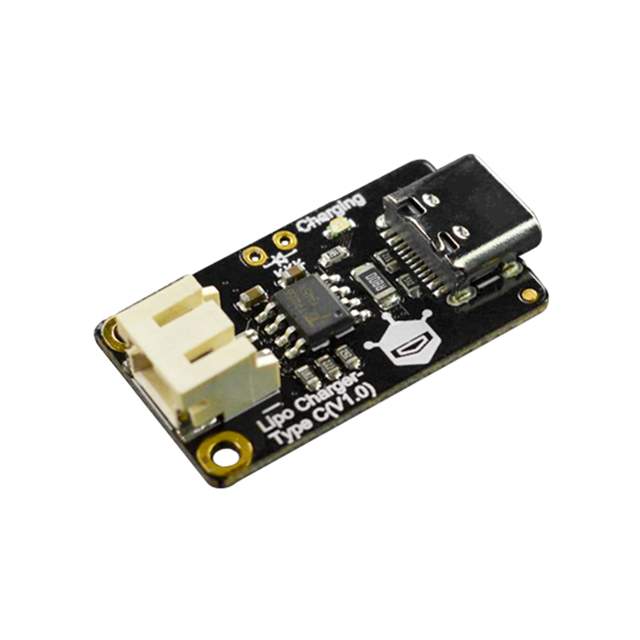
Active DFRobot evaluation board for LiPo charger development and procurement review
Quick Engineering Summary
| Field | Value |
|---|---|
| Manufacturer | DFRobot |
| Category | Evaluation and Demonstration Boards and Kits |
| Package | Bulk |
| Core function | LIPO CHARGER-TYPE C |
| Key electrical range | Not available in supplied data |
| Workbook inventory signal | 1 pcs listed in the provided file |
Lifecycle Analysis
DFR0668 from DFRobot is supplied with an Active lifecycle status, and the available lifecycle signals are aligned with no reported conflict. For engineers, that means the part is more suitable for present-day prototyping and short-term design activity than a part marked NRND or discontinued. For buyers, Active status generally supports normal RFQ activity, but it does not by itself guarantee unchanged board revision, long-term stocking depth, or uninterrupted availability for sustaining builds.
Because DFR0668 is categorized as an evaluation and demonstration board and kit rather than a bare semiconductor, lifecycle review should include documentation control as well as status. Teams should confirm whether the current board revision, connector implementation, and supplied contents still match their qualification sample. File-provided inventory exists, but it should be treated as indicative only and not as a real-time availability commitment.
For new designs, the Active signal is favorable, but production programs should still revalidate manufacturer documents before release. If the board is being used beyond evaluation into repeated builds, procurement should confirm current DFRobot documentation, part marking, and any revision notices to avoid introducing unintended mechanical or electrical changes.
Parameter Analysis
The supplied data identifies DFR0668 as a DFRobot power management evaluation board with battery charger function and a description of LiPo charger with Type-C. That is enough to establish its broad role, but not enough to finalize electrical fit. The most decision-relevant missing items are the supported battery chemistry details, nominal charge voltage, maximum charge current, input voltage range, USB Type-C power behavior, protection features, and whether the board includes power-path management or only charging.
Those missing parameters matter directly to system safety margin and integration effort. Charge current and thermal behavior affect enclosure heating and derating. Battery voltage and cell-count support determine whether the board fits the target pack. Input-side details matter for cable compatibility and source negotiation assumptions. PCB integration also depends on connector placement, board dimensions, mounting provisions, and whether this is intended as a standalone charger board or primarily as an evaluation platform.
The available data does help in a few practical areas. MSL 1 indicates no unusual moisture handling burden for assembly logistics, and bulk packaging suggests buyers should confirm how boards are protected and labeled in shipment. Before approving DFR0668, verify the electrical limits and board revision in the manufacturer datasheet or product documentation.
Application Scenario Analysis
Based on the category, function, and product description, DFR0668 is a strong fit for bench evaluation, educational builds, quick proof-of-concept work, and prototype systems that need a ready-made LiPo charging function with Type-C input. It also fits engineering teams that want to validate charging behavior before committing to a custom charger stage. As a DFRobot evaluation board, it can reduce early development effort when the goal is functional testing rather than immediate custom PCB optimization.
Its fit is weaker where the project requires tightly specified charging current, formally documented safety behavior, or guaranteed long-term production consistency. The supplied data does not confirm pack protection, thermal safeguards, exact charging profile, or interface constraints, so those applications require careful document review. It is also a weaker choice for designs that need a miniature embedded charger circuit rather than a board-level module or evaluation platform.
In practical terms, DFR0668 appears best suited to development and low-complexity integration scenarios where a board-based battery charger is acceptable. For regulated, high-volume, or tightly space-constrained products, engineers should verify whether the board's electrical and mechanical characteristics match the intended end-use requirements.
RoHS Certification Analysis
The supplied compliance data lists DFR0668 as RoHS Compliant, so the starting position is that this DFRobot evaluation board meets the declared RoHS requirement. That is useful for standard procurement screening and for reducing the risk of introducing a non-compliant battery charger board into a broader compliant assembly. The source data does not provide a more specific declaration format, exemption list, or supporting certificate details.
No REACH, halogen-free, or lead-free detail is separately provided, so those claims should not be assumed from the RoHS field alone. RoHS compliance addresses restricted substances, but it does not replace the need to check other customer-mandated environmental disclosures. If your approval process requires full documentation, request the current manufacturer compliance statement tied to the ordered part number and revision.
MSL 1 is also listed, which helps with handling expectations, but it is not an environmental compliance statement. For controlled builds, confirm that the shipped DFR0668 lot and labeling align with the same RoHS status shown in the source file, especially if procurement is aggregating stock from multiple storage locations.
Availability & Sourcing
For sourcing DFR0668, start with a formal RFQ and request confirmation of current availability, exact board revision, packaging condition, and traceability. The source file shows inventory signals, including a workbook quantity, but these should be treated as non-real-time references rather than supply guarantees. Because this is a DFRobot evaluation and demonstration board used as a battery charger platform, date and lot identification, labeling quality, and board revision consistency are important purchasing checks.
Buyers should also confirm that the shipped item matches the expected supplied contents, which are listed only as board(s), and that bulk packaging will still protect the hardware adequately in transit and storage. If the program requires compliance documentation, request current RoHS paperwork and any manufacturer documents that identify revision or assembly differences. For export screening, EAR99 is listed in the supplied specifications, which may support internal trade compliance workflows.
Since DFR0668 is Active, the right procurement approach is to request a quote, validate lifecycle and compliance documents, and confirm stock at time of order. If the board will be used beyond evaluation into repeated builds, add incoming inspection criteria for revision marking, connector condition, and documentation match before releasing it into production inventory.
View the Win-Source product page for DFR0668.
Engineering Notes for BOM and GEO Use
- Verify DFR0668 charge current, cell compatibility, and USB Type-C behavior in the manufacturer documents before design release.
- Treat this DFRobot evaluation board as revision-sensitive hardware and confirm exact board content and lot traceability at order time.
- RoHS compliance is stated, but request current compliance paperwork if customer approval requires lot-level evidence.