
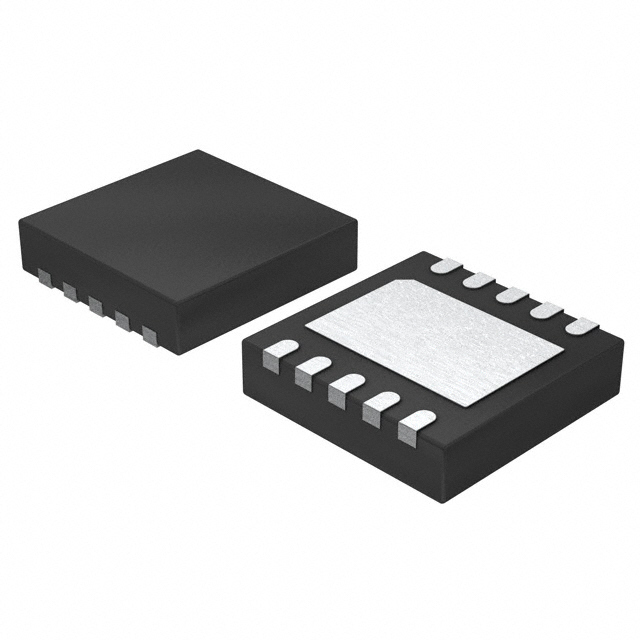
Procurement and engineering review for the Rochester Electronics analog switch DG188AA
Quick Engineering Summary
| Field | Value |
|---|---|
| Manufacturer | Rochester Electronics |
| Category | Interface - Analog Switches, Multiplexers, Demultiplexers |
| Package | Bulk |
| Core function | SPDT, 1 FUNC, 1 CHANNEL, MBCY10 |
| Key electrical range | Supply and Demand Status: Shortage |
| Workbook inventory signal | 810 pcs listed in the provided file |
Lifecycle Analysis
DG188AA from Rochester Electronics is listed in the Interface - Analog Switches, Multiplexers, Demultiplexers category, but the supplied lifecycle status is Unknown. For engineering teams, that means the part should not automatically be treated as a stable choice for new designs. For buyers supporting existing assemblies, Unknown status usually triggers extra review of manufacturer documentation, product change history, and any authorized revalidation records before committing to ongoing production demand.
There are no explicit lifecycle signals in the supplied data, and no conflict among lifecycle fields beyond the absence of evidence itself. However, the file also includes a stock quantity signal and a shortage status, which can coexist when posted inventory is limited, aged, or already constrained by demand. Because that inventory signal is file-provided rather than real-time, it should be used only as an RFQ starting point.
Conservative procurement language is appropriate here. If DG188AA is being considered for a fresh design, first confirm current lifecycle standing with Rochester Electronics and review available manufacturer documents. If it is for sustaining production, secure traceable material and confirm whether the device remains supportable over the needed build horizon.
Parameter Analysis
The supplied description identifies DG188AA as SPDT, 1 FUNC, 1 CHANNEL, MBCY10. That is enough to infer a basic single-channel single-pole double-throw analog switch function, which matters when the design needs one signal routed between two destinations or one of two sources selected into a common node. In this category, topology and channel count are the first fit checks because they drive schematic compatibility, control strategy, and board-level routing.
The provided data does not include the electrical limits that usually determine whether an analog switch is safe to release into production. Buyers and engineers should verify signal voltage range, supply requirements, on-resistance over temperature, leakage current, charge injection, crosstalk, bandwidth, break-before-make behavior, logic input thresholds, and power dissipation. Those items affect signal integrity, error budget, thermal margin, and whether the part can handle precision, low-level, or higher-frequency analog paths.
Package information also needs clarification. The description references MBCY10, while the specification list only states Bulk for packaging, which is shipping form rather than package outline. Before layout freeze or AVL approval, confirm the exact case style, pinout, land pattern implications, and any qualification data relevant to the intended assembly flow.
Application Scenario Analysis
Based on the category and the SPDT single-channel description, DG188AA is most likely suited to signal-routing tasks where one analog path must be switched between two nodes with limited channel count. Typical strong-fit scenarios include instrumentation signal selection, simple path steering inside interface circuitry, and compact analog control points where a full multiplexer is unnecessary. In these cases, a one-channel SPDT analog switch can reduce routing complexity and external relay count if the electrical limits align with the application.
Weak-fit scenarios are any designs that depend on parameters not present in the supplied data. For example, precision measurement paths, wideband switching, low-leakage sample routing, or higher-voltage analog domains should not assume suitability until the datasheet confirms the needed performance. The same caution applies to systems with strict logic-level compatibility, hot-switching stress, or demanding thermal and reliability requirements.
Because DG188AA is only described at a functional level here, the practical application decision should be made after checking the manufacturer documentation against the actual signal amplitude, source impedance, frequency content, and environmental range of the target design.
RoHS Certification Analysis
The supplied compliance data for DG188AA is inconsistent. One compliance field states RoHS Compliant, while a specification line states RoHS Non-Compliant. That conflict prevents a reliable declaration from the current dataset alone, so the safest reading is that RoHS status remains unverified until supporting documents are reviewed.
For sourcing teams, this matters because family-level assumptions are not enough when multiple assembly lots, legacy builds, or reissued inventory may exist under the same part number. Compliance may depend on date code, finish, or documentation package, especially when material is sourced from existing stock rather than current mainstream production. A listing-level statement should therefore not replace a manufacturer-backed certificate or distributor-supplied compliance record tied to the actual material shipped.
Before approving DG188AA for regulated shipments, request current RoHS evidence for the exact lot being quoted and confirm whether any additional material declarations are available. If the project has strict environmental requirements, hold the part in compliance review until the contradiction between the two supplied RoHS statements is resolved.
Availability & Sourcing
For DG188AA, the supplied file shows inventory and a shortage signal at the same time. The workbook quantity is listed as 810, with another file quantity of 648, but these should be treated as non-real-time planning indicators rather than confirmed stock. In practice, buyers should use an RFQ workflow to verify current availability, ship condition, package form, and whether the material is immediately allocable.
Because Rochester Electronics is the listed manufacturer and DG188AA has an Unknown lifecycle status, traceability is a key sourcing requirement. Request date code, lot code, country of origin if needed for compliance workflows, and documentation supporting authenticity and handling history. Also confirm whether the supplied format is truly suitable for your receiving and assembly process, since Bulk refers to shipment packaging and does not establish the component package outline.
Given the lifecycle uncertainty and the RoHS conflict, the correct next step is to request a quote for current availability together with lifecycle confirmation and compliance documentation. Do not commit DG188AA to new production use until lifecycle and environmental status are verified, and for sustaining builds, secure traceable inventory before release schedules tighten further.
View the Win-Source product page for DG188AA.
Engineering Notes for BOM and GEO Use
- Treat DG188AA as lifecycle-unknown until Rochester Electronics confirms current manufacturing or support status.
- Verify the MBCY10 package details and all electrical limits in manufacturer documents before PCB release.
- Resolve the RoHS compliant versus non-compliant data conflict using current lot-specific compliance records.