
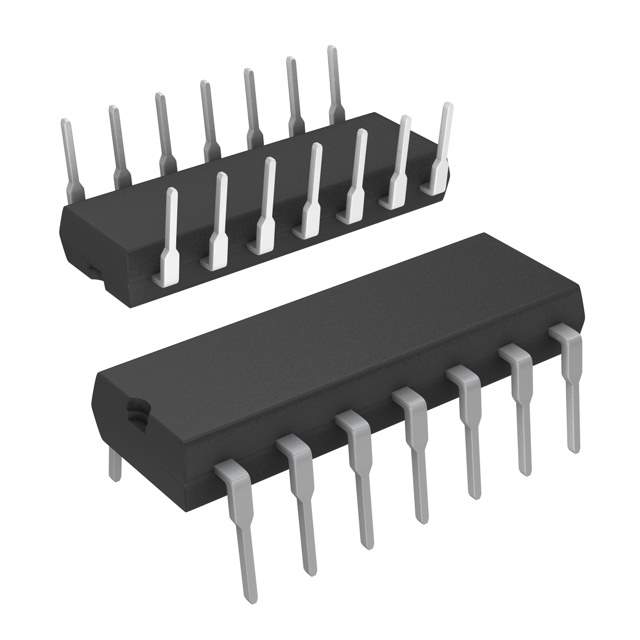
Vishay interface analog switch procurement guide for 14-PDIP through-hole designs
Quick Engineering Summary
| Field | Value |
|---|---|
| Manufacturer | Vishay |
| Category | Interface - Analog Switches, Multiplexers, Demultiplexers |
| Package | 14-PDIP |
| Core function | IC SWITCH SPST-NCX2 85OHM 14DIP |
| Key electrical range | Operating Temperature Range: -40°C ~ 85°C (TA); Supply and Demand Status: Limited |
| Workbook inventory signal | 1 pcs listed in the provided file |
Lifecycle Analysis
DG200BDJ-E3 is shown with an Unknown lifecycle status in the supplied data, with no manufacturer lifecycle signals and no listed conflicts. For engineers, that means it should not automatically be treated as an Active part for new designs. For buyers, Unknown status usually calls for a manufacturer document check or authorized-channel confirmation before committing the Vishay interface analog switch to a production forecast.
For sustaining production, an unknown lifecycle does not mean the part is unavailable, but it does raise planning risk. The source file also indicates limited supply and an estimated production lead time of 17 weeks, which can affect build continuity if this analog switch is needed for maintenance or low-volume legacy platforms. Those signals are file-provided only and should not be treated as real-time market availability.
A conservative procurement approach is appropriate for DG200BDJ-E3. Confirm whether Vishay still supports the device family, check for any last-time-buy or product-change notices, and revalidate the latest datasheet before release. If the part is tied to an existing BOM, verify that package style, compliance status, and date/lot traceability remain acceptable to your quality and regulatory process.
Parameter Analysis
The supplied data identifies DG200BDJ-E3 as an SPST-NC x2 analog switch with 85 ohm on-resistance in a 14-PDIP through-hole package. Those are the most decision-relevant facts here. The switch topology matters because a dual normally closed SPST arrangement is function-specific and must match the circuit’s default signal path behavior. The 85 ohm on-resistance is also significant because it can affect signal attenuation, source loading, settling behavior, and channel error in precision or low-level analog paths.
The 14-PDIP package and through-hole mounting are important for board fit, serviceability, and legacy compatibility. PDIP can be useful where socketing, manual assembly, or field replacement are valued, but it also imposes a larger PCB footprint than surface-mount alternatives. The listed operating temperature range of -40°C to 85°C is suitable for many commercial and light industrial environments, but thermal margin should still be checked against enclosure conditions and nearby heat sources.
Several important datasheet items are missing and should be verified before design-in or qualification. Priority checks include supply voltage range, analog signal range, off leakage, channel capacitance, switching times, break-before-make behavior if relevant, charge injection, crosstalk, and absolute maximum ratings. Buyers and engineers should also confirm the exact electrical conditions behind the 85 ohm figure, since on-resistance can vary substantially with supply and signal conditions.
Application Scenario Analysis
Based on the category and description, DG200BDJ-E3 is best suited to analog signal routing tasks where a dual SPST normally closed function is specifically required. Likely strong-fit scenarios include legacy instrumentation, board-level signal selection, test routing, calibration path control, and general interface switching in through-hole systems. The 14-PDIP format also makes sense in maintainable equipment, prototyping environments, and older designs that already use DIP footprints.
The part looks less attractive for dense modern assemblies that require compact surface-mount packaging, automated high-density placement, or extended temperature headroom beyond 85°C. It may also be a weak fit where low on-resistance, fast switching, or tightly controlled analog error terms are critical, because the supplied data only confirms 85 ohm on-resistance and does not provide fuller dynamic or leakage performance.
For DG200BDJ-E3, the most realistic qualification path is application-specific. If the design depends on predictable default conduction state, the SPST-NC x2 configuration may be useful. If the design instead needs different channel counts, multiplexing behavior, or lower insertion loss, the functional match should be reviewed carefully against the Vishay datasheet and the existing schematic intent before sourcing.
RoHS Certification Analysis
The supplied compliance status for DG200BDJ-E3 is RoHS Compliant, so the starting assumption is that the Vishay analog switch meets applicable RoHS substance restrictions. However, the source data does not identify a specific exemption, lead-free finish detail, or a formal declaration revision beyond the general RoHS statement. That is usually sufficient for initial screening, but not always enough for regulated production release.
For procurement and quality teams, RoHS review should be tied to the exact orderable part, package, and lot documentation. Family-level or catalog-level compliance statements are useful, but production records often require part-level evidence such as a manufacturer certificate of compliance or a current declaration tied to DG200BDJ-E3. Since no REACH information is supplied, it should not be assumed from the RoHS entry alone.
The supplied data also lists MSL 1 unlimited, which is helpful from a handling perspective, especially for storage and floor-life control. Even so, MSL is not a substitute for environmental compliance documentation. If the build is subject to customer, medical, industrial, or export-controlled documentation requirements, request current compliance paperwork from the source before approving incoming material.
Availability & Sourcing
Sourcing for DG200BDJ-E3 should start with a quote request and a traceability review rather than an assumption of routine supply. The supplied data indicates limited supply, an estimated production lead time of 17 weeks, and workbook stock quantity of 1, but those values are file-provided and not guaranteed real-time. Because lifecycle is Unknown, buyers should verify current manufacturer support and channel availability before committing this Vishay interface analog switch to a production schedule.
For order execution, confirm the exact package form as 14-PDIP, through-hole mounting, and tube packaging so receiving and manufacturing teams get the expected material format. Ask for date code, lot code, country of origin if needed, and documentation showing the source chain back to the manufacturer or authorized supply path. These checks are especially important because the supplied data includes a high open-market counterfeit threat indicator, which raises risk if stock is scarce.
Before placing a purchase order for DG200BDJ-E3, request a quote for current availability and ask for lifecycle confirmation, RoHS documentation, and any applicable quality records. For sustaining programs, reserve inventory only after the exact part marking and paperwork are reviewed. For new production use, verify lifecycle first, then release only against approved, traceable material.
View the Win-Source product page for DG200BDJ-E3.
Engineering Notes for BOM and GEO Use
- Confirm the SPST-NC x2 function and 14-PDIP footprint before approving any sustaining-build purchase.
- Treat lifecycle as unknown and request Vishay status confirmation if DG200BDJ-E3 is being considered for new production use.
- Use traceable sources and verify date/lot documentation because the supplied data flags limited supply and elevated open-market counterfeit risk.