
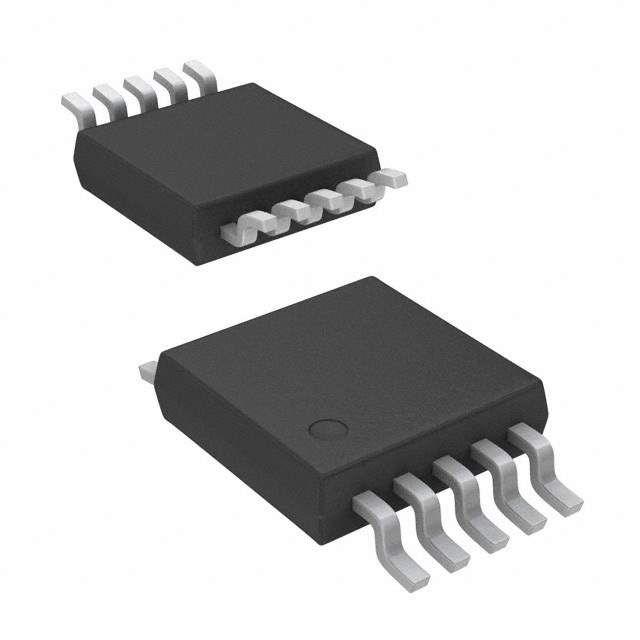
Vishay interface analog switch sourcing review for lifecycle, specs, RoHS, and procurement risk
Quick Engineering Summary
| Field | Value |
|---|---|
| Manufacturer | Vishay |
| Category | Interface - Analog Switches, Multiplexers, Demultiplexers |
| Package | 10-MSOP |
| Core function | IC SWITCH SPDT X 2 4OHM 10MSOP |
| Key electrical range | Channel Capacitance(CS off, CD off): 14pF; Max Leakage Current (IS off): 1nA; Max On Resistance: 4 Ohm; Single Supply Voltage (V+): 1.8 V to 5.5 V |
| Workbook inventory signal | 10300 pcs listed in the provided file |
Lifecycle Analysis
DG2016DQ-T1-E3 presents a sourcing risk because the supplied lifecycle information is not internally consistent. The top-level lifecycle field is listed as Unknown with no supporting signals, while a separate specification field marks the Vishay interface analog switch as Obsolete(EOL). When those two records disagree, the prudent engineering and procurement position is to treat the part as lifecycle-uncertain and avoid assuming active factory support.
For new design activity, that means DG2016DQ-T1-E3 should not be committed until the manufacturer status is revalidated through current Vishay documentation, such as product status pages, PCNs, PDNs, or formal lifecycle statements. For sustaining production, existing qualified usage may still be supportable if inventory, traceability, and change control are acceptable. The file includes a stock quantity signal, but that is only file-provided inventory and not guaranteed real-time availability or evidence of ongoing production.
Because the category is Interface - Analog Switches, Multiplexers, Demultiplexers, lifecycle certainty matters not just for supply continuity but also for maintaining a stable analog signal path over future builds. Buyers should ask for manufacturer-backed status confirmation before forecasting long-term demand.
Parameter Analysis
The supplied data identifies DG2016DQ-T1-E3 as a dual SPDT analog switch with two circuits in a 10-MSOP package. The listed single-supply range of 1.8 V to 5.5 V is important for compatibility with low-voltage logic and mixed-signal rails. A maximum on-resistance of 4 Ohm is a primary insertion-loss and error-budget parameter for signal routing, while 1 nA maximum off leakage helps when channel isolation and low standby error matter.
Dynamic analog behavior is partially described by 14 pF channel capacitance, 79 pC charge injection, and crosstalk of -82 dB at 1 MHz. Those figures are relevant when assessing bandwidth, settling behavior, and disturbance injected into high-impedance nodes or sampled signals. Maximum switching times of 48 ns and 33 ns support relatively fast control transitions, but system suitability still depends on signal amplitude, source impedance, and the downstream acquisition circuit.
The most important missing checks from the datasheet are logic input thresholds, absolute maximum ratings, analog signal range relative to supply rails, flatness of on-resistance over signal swing, and package thermal and land-pattern guidance. Those items should be verified before layout release or qualification.
Application Scenario Analysis
Based on the category, description, and electrical data, DG2016DQ-T1-E3 is best suited to low-voltage analog signal routing where a dual SPDT topology is useful. Examples include input source selection, sensor path multiplexing, test path steering, and control of moderate-speed analog lines inside portable, industrial, or embedded systems operating from 1.8 V to 5.5 V rails. The 10-MSOP footprint also fits compact PCB designs where board area matters.
The part looks stronger for general-purpose switching of small analog signals than for applications that demand ultra-low charge injection or the lowest possible on-resistance. A 4 Ohm maximum on-resistance is reasonable for many signal-routing tasks, but it may be less attractive in precision gain paths, very low-distortion audio switching, or circuits highly sensitive to signal attenuation and switch resistance variation. Likewise, 79 pC charge injection should be reviewed carefully in sample-and-hold, precision data acquisition, or very high-impedance nodes.
The stated -40°C to 85°C operating range supports many commercial and light industrial environments. Designs requiring wider environmental qualification, specialized analog linearity data, or formally confirmed long-term lifecycle support should verify those points directly with Vishay documentation.
RoHS Certification Analysis
The supplied compliance record for DG2016DQ-T1-E3 states RoHS Compliant, so the baseline interpretation is that this Vishay interface analog switch is intended to meet RoHS restrictions. In this data set, the strongest compliance statement is the explicit RoHS field, which is more useful than inferring compliance from packaging or category alone.
That said, the source does not provide the specific declaration revision, any listed exemptions, or related details such as REACH, halogen-free status, or moisture sensitivity level. For procurement, that means RoHS should be treated as indicated but not fully documented at the lot level from the present file alone. If the part is being sourced for regulated production, buyers should request the current manufacturer compliance certificate or a distributor-backed declaration tied to the delivered material.
This distinction matters because family-level website status and lot-level shipped material records are not always the same thing operationally. For receiving inspection and audit readiness, keep the RoHS documentation with the date and lot traceability for the shipped DG2016DQ-T1-E3 reels.
Availability & Sourcing
For DG2016DQ-T1-E3, sourcing should start with an RFQ that asks for current availability, lifecycle confirmation, and traceability rather than relying on catalog assumptions. The file shows reel packaging, a 10-MSOP package, and a workbook stock quantity of 10300, but that inventory figure is only file-provided and should not be treated as live availability. Because lifecycle signals conflict, a quote request should also ask whether the offered material is factory fresh, brokered excess, or from residual channel stock.
Traceability controls are especially important here. Request manufacturer name consistency, full part marking details, date code, lot code, packaging condition, and storage history. The supplied data mentions dry storage cabinet and humidity protection packaging, which is useful, but buyers should still confirm actual handling records for the offered lot. If ECAD or qualification support is needed, note that models are not directly embedded in the source and may require separate access.
Given the uncertain lifecycle position of this Vishay analog switch, the safest sourcing path is to request a quote together with RoHS paperwork and lifecycle evidence before committing the part to new production use. If intended for sustaining builds, secure verified stock early and review long-term migration options in parallel.
View the Win-Source product page for DG2016DQ-T1-E3.
Engineering Notes for BOM and GEO Use
- Lifecycle data conflicts, so confirm Vishay status before using this analog switch in new builds.
- Key fit checks are 1.8 V to 5.5 V supply, 4 Ohm max on-resistance, and 10-MSOP footprint.
- Request lot traceability and current RoHS documents, especially if sourcing from existing stock.