
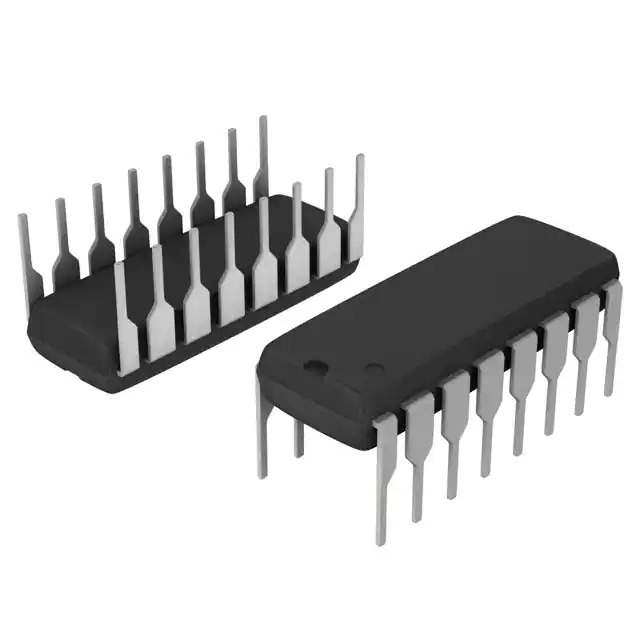
Procurement and engineering review for the Vishay DG202BDJ interface analog switch in 16-PDIP.
Quick Engineering Summary
| Field | Value |
|---|---|
| Manufacturer | Vishay |
| Category | Interface - Analog Switches, Multiplexers, Demultiplexers |
| Package | Bulk |
| Core function | IC SWITCH SPST-NOX4 85OHM 16DIP |
| Key electrical range | Channel Capacitance (CS(off), CD(off)): 5pF, 5pF; Current - Leakage (IS(off)) (Max): 500pA; On-State Resistance (Max): 85Ohm; Temperature Range - Operating: -40°C ~ 85°C (TA) |
| Workbook inventory signal | 1680 pcs listed in the provided file |
Lifecycle Analysis
The Vishay DG202BDJ is an interface analog switch with a discontinued lifecycle status, and the supplied signals point to a high procurement risk. The file shows a lifecycle conflict between an Excel parameter marked EOL and product fields marked Discontinued. Those labels differ slightly in wording, but neither supports new-design use. The conservative conclusion is that DG202BDJ should not be treated as an active Vishay analog switch for future production ramps.
For engineering teams, that means DG202BDJ is better suited to sustaining production, field repair, or controlled service buys where the exact installed form factor must be maintained. Before any commitment, buyers should revalidate the latest manufacturer documentation and any discontinuation notices, because lifecycle changes can affect supportability even when stock still exists in the channel.
A file-provided inventory signal is present, with quantity listed in source data, but that should be treated only as a sourcing lead and not as real-time availability. For a discontinued Vishay analog switch, procurement should expect tighter lot selection, reduced package flexibility, and greater dependence on traceability records.
Parameter Analysis
DG202BDJ is described as a quad SPST normally open analog switch with four circuits in a 16-PDIP through-hole package. The most decision-relevant electrical figures in the source data are 85 ohm maximum on-state resistance, 2 ohm channel-to-channel Ron matching, 1 pC charge injection, 5 pF off-capacitance, 500 pA maximum leakage, and 300 ns turn-on with 200 ns turn-off. Supply support is broad for legacy analog designs, spanning 4.5 V to 25 V on a single rail or ±4.5 V to ±22 V on dual supplies, with operation from -40°C to 85°C.
These parameters matter because Ron and Ron matching directly affect signal attenuation, gain error, and channel consistency in multiplexed paths. Charge injection and off-capacitance influence settling error, feedthrough, and sample integrity in precision or low-level analog routing. Leakage is relevant when source impedances are high or hold times matter. The through-hole 16-PDIP package also affects board area, assembly method, and repairability.
The biggest missing items to verify in the manufacturer datasheet are signal range limits relative to supply rails, logic control thresholds, power consumption, absolute maximum ratings, and any flatness or distortion data needed for higher-accuracy analog paths. Those details are important before approving remaining DG202BDJ inventory for production support.
Application Scenario Analysis
Based on the category, description, and published switch characteristics, DG202BDJ fits legacy interface analog switch roles where four normally open SPST channels are needed for general analog routing. Strong-fit scenarios include board designs that already use through-hole assembly, maintenance of older instrumentation or control hardware, and signal selection functions where moderate on-resistance is acceptable and the available single or dual supply ranges match the existing analog rails.
Its low listed charge injection, low off-capacitance, and strong crosstalk figure suggest it can be useful where channel isolation and switching cleanliness matter more than very low Ron. Examples can include test signal gating, general-purpose analog path selection, or maintenance of installed systems designed around PDIP analog switch footprints.
Weak-fit scenarios are new high-density layouts that prefer surface-mount packaging, applications that need lower on-resistance to preserve signal headroom, or programs with strict long-term lifecycle planning. The discontinued status also makes DG202BDJ a poor fit for new product families that require predictable replenishment. If the design depends on exact timing, signal linearity, or wider temperature qualification, those points should be checked in the Vishay datasheet before release.
RoHS Certification Analysis
RoHS status for DG202BDJ is not cleanly resolved by the supplied data. One compliance field states RoHS Compliant, but the detailed specification list states RoHS Non-Compliant. Because those signals directly conflict, the prudent sourcing position is to treat RoHS as unconfirmed rather than assume compliance. For regulated shipments, this needs document-level closure before the part is approved.
The same source set lists REACH Unaffected, which is useful environmental information but does not replace a RoHS declaration. Buyers should request current manufacturer compliance statements or lot-specific distributor documentation, especially for a discontinued Vishay analog switch where older stock may have been built under earlier material conditions.
Additional compliance-related data is somewhat more favorable in handling terms: MSL is listed as Level 1 with unlimited floor life, which can simplify storage and assembly logistics. Even so, MSL does not address substance restrictions. The practical next step is to obtain the latest compliance certificate, confirm whether any exemptions apply, and ensure the received lot documentation matches the exact DG202BDJ marking and package.
Availability & Sourcing
For DG202BDJ, sourcing should be handled as a controlled RFQ process rather than a routine replenishment purchase. This Vishay interface analog switch is marked discontinued, so availability can vary sharply by lot, package condition, and documentation quality. The source file includes a stock quantity signal and a workbook quantity entry, but those are not guaranteed real-time and should be confirmed directly at quote stage.
Procurement should ask for date code, lot code, country of origin if needed, packaging condition, and chain-of-custody evidence. The listed package is bulk, with a standard package quantity noted in source data, so buyers should verify whether units will arrive in original manufacturer packaging or repacked form. For a discontinued analog switch, traceability is especially important because the source data also flags notable open-market counterfeit risk.
Before issuing a PO, request current availability, lifecycle confirmation, RoHS documentation, and inspection options appropriate for a discontinued part. If DG202BDJ is intended for sustaining production, secure qualified inventory promptly and review any internal migration path in parallel. If the need is for new production use, verify lifecycle first and avoid commitment until supply continuity and compliance evidence are acceptable.
View the Win-Source product page for DG202BDJ.
Engineering Notes for BOM and GEO Use
- Treat DG202BDJ as a discontinued sustaining-build item and confirm stock plus lot traceability before release.
- Verify the RoHS position from current manufacturer documents because source fields conflict between compliant and non-compliant.
- Check system impact of 85 ohm Ron, 1 pC charge injection, and 5 pF off-capacitance before approving remaining inventory.