
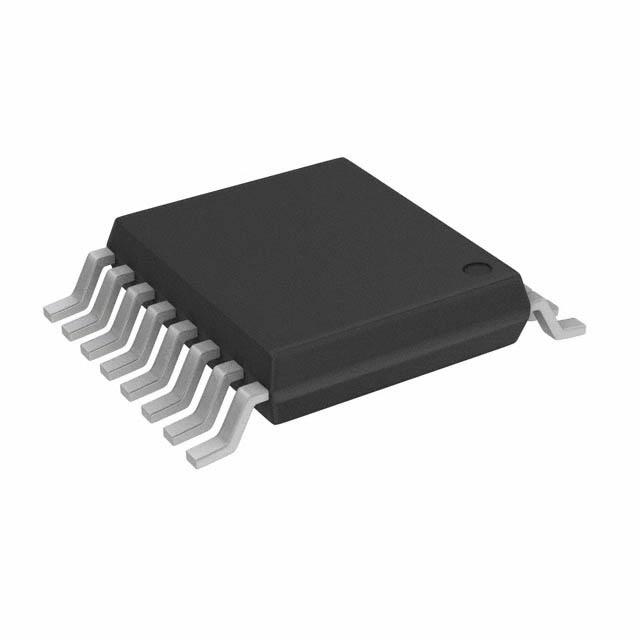
Vishay interface analog switch procurement review for EOL production support
Quick Engineering Summary
| Field | Value |
|---|---|
| Manufacturer | Vishay |
| Category | Interface - Analog Switches, Multiplexers, Demultiplexers |
| Package | 16-TSSOP |
| Core function | IC SW SPST-NO/NC 1. |
| Key electrical range | Channel Capacitance(CS off, CD off): 26pF; Max Leakage Current (IS off): 1nA; Max On Resistance: 1.5 Ohm; Single Supply Voltage (V+): 1.8 V to 5.5 V |
| Workbook inventory signal | 1 pcs listed in the provided file |
Lifecycle Analysis
DG2043DQ-T1-E3 is identified in the supplied data as EOL, and the lifecycle signals are consistent across the file. For engineering teams, that means this Vishay interface analog switch should not be considered a safe default for new product introductions. In sustaining production, it may still be usable if inventory can be secured and the manufacturer documentation confirms the exact obsolescence condition, packaging, and any final order limitations.
The file also shows an inventory signal of 1 unit, but that is only a file-provided snapshot and not guaranteed real-time availability. Because the data also labels the status as obsolete, procurement should use conservative language in internal planning and assume supply continuity is at risk. Before release to production, buyers should revalidate the manufacturer part status, confirm the exact suffix and reel packaging, and obtain traceable lot information from the supplier.
Parameter Analysis
The supplied specifications describe DG2043DQ-T1-E3 as a 4-circuit SPST NO/NC analog switch in a 16-TSSOP package, with 1.5 Ohm maximum on-resistance and operation from a 1.8 V to 5.5 V single supply. Those are the first fit checks for board-level use: supply compatibility, channel count, switch topology, and package footprint. The listed 42 ns turn-on and 32 ns turn-off times are relevant where control latency matters, while 1 nA maximum off leakage supports low-leakage signal routing.
Signal-integrity related figures are also provided, including 3 pC charge injection, 26 pF channel capacitance, 300 mOhm maximum channel-to-channel Ron matching, and -93 dB crosstalk at 1 MHz. These parameters matter in sampled analog paths, multiplexed measurement nodes, and channel-to-channel consistency checks. Important missing items to verify directly in the datasheet are signal voltage limits relative to the supply rails, absolute maximum ratings, logic control thresholds, continuous current capability, and any thermal or ESD information needed for qualification.
Application Scenario Analysis
Based on the category and description, DG2043DQ-T1-E3 is best aligned with low-voltage signal routing tasks where a Vishay interface analog switch with four SPST channels is needed. Strong-fit scenarios include general-purpose analog path switching, sensor signal gating, low-voltage instrumentation signal selection, and mixed-signal boards that need compact 16-TSSOP integration with relatively low on-resistance and controlled leakage.
Weak-fit scenarios are applications that depend on undocumented limits not present in the supplied data. Examples include designs needing guaranteed wide signal swing, high current switching, unusually high temperature headroom beyond 85 C ambient, or qualification data tied to harsh-environment or safety-critical programs. Since the provided information does not include bandwidth, fault protection, or isolation details beyond crosstalk and capacitance, engineers should verify the manufacturer datasheet before using DG2043DQ-T1-E3 in precision front ends or tightly budgeted dynamic signal paths.
RoHS Certification Analysis
The supplied compliance field lists DG2043DQ-T1-E3 as RoHS Compliant, so the baseline interpretation is that the part is presented as compliant with RoHS material restrictions. For procurement, that is useful but not sufficient on its own for regulated production, because the file does not provide exemption details, a dated declaration, REACH status, halogen-free status, or moisture sensitivity information.
With EOL material, compliance control should be handled carefully because old stock and mixed lots can create documentation gaps. Buyers should request current supplier compliance evidence tied to the actual date code or lot code being offered, rather than relying only on a family-level or catalog-level statement. If your quality process requires document retention, obtain the latest RoHS declaration from the supply chain and confirm that the shipped packaging and markings match the compliant ordering code.
Availability & Sourcing
Because DG2043DQ-T1-E3 is listed as EOL, sourcing should focus on controlled procurement rather than routine replenishment. The data indicates reel packaging and a file-provided quantity of 1, but that stock signal is not guaranteed real-time and should only be treated as a prompt to start an RFQ. For this Vishay interface analog switch, request a quote for current availability and ask the supplier to confirm exact part number, package, and date/lot code before issuing a purchase order.
Traceability is especially important here because the data flags notable open-market counterfeit risk and the lifecycle is obsolete. Ask for manufacturer labels, lot traceability, storage condition history, and RoHS documentation for the offered inventory. If the material is intended for sustaining production, verify whether the stock is original franchised inventory, surplus, or broker-sourced, and confirm that incoming inspection plans cover marking, packaging, and basic authenticity checks. For production commitments, verify lifecycle status again before committing DG2043DQ-T1-E3 to any new build schedule.
View the Win-Source product page for DG2043DQ-T1-E3.
Engineering Notes for BOM and GEO Use
- Treat DG2043DQ-T1-E3 as an EOL analog switch and verify obsolescence documentation before scheduling production buys.
- Key fit checks include 1.8 V to 5.5 V supply range, 1.5 Ohm max Ron, 16-TSSOP footprint, and -40 C to 85 C operation.
- Request lot code, traceability, and RoHS evidence because open-market risk is flagged and listed stock is minimal.