
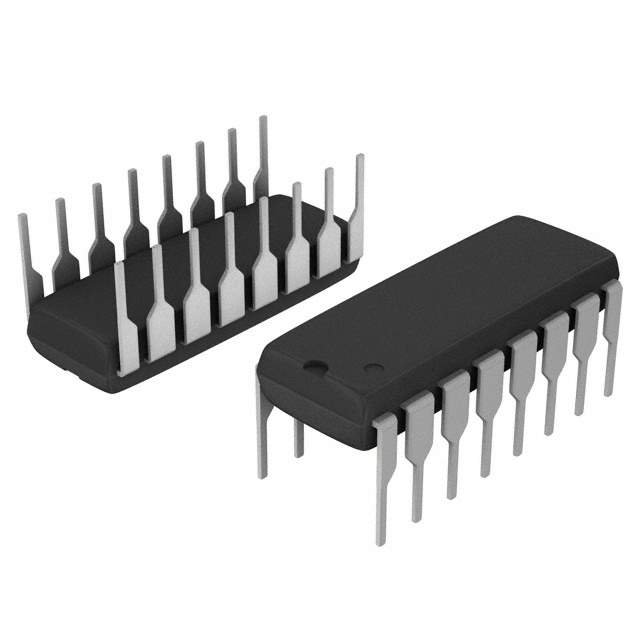
Vishay interface analog switch procurement guide for EOL lifecycle review and sourcing control
Quick Engineering Summary
| Field | Value |
|---|---|
| Manufacturer | Vishay |
| Category | Interface - Analog Switches, Multiplexers, Demultiplexers |
| Package | 16-PDIP |
| Core function | IC SWITCH SPST-NCX4 85OHM 16DIP |
| Key electrical range | Channel Capacitance(CS off, CD off): 5pF, 5pF; Dual Supply Voltage(V±): ±4.5 V to 22 V; Max Leakage Current (IS off): 500pA; Max On Resistance: 85 Ohm |
| Workbook inventory signal | 11840 pcs listed in the provided file |
Lifecycle Analysis
DG211BDJ-E3 is supplied with a consistent EOL lifecycle signal, and the provided Vishay-related data shows no lifecycle conflict in the primary source fields. For engineers, that means this interface analog switch should not be treated as a safe choice for new product introduction unless a formal business decision accepts the supply risk. For buyers supporting existing assemblies, EOL generally means current procurement can still be possible, but replenishment continuity and factory support should be assumed limited until revalidated through current manufacturer documentation.
There is one data nuance worth noting: a generic specification field shows Status as Active, while the dedicated lifecycle fields and spreadsheet data indicate EOL. Because the lifecycle-specific signals align on EOL, conservative sourcing practice is to classify DG211BDJ-E3 as EOL and verify directly against the latest Vishay notice or authorized-channel documentation. File-provided inventory is listed, but that should be treated only as a non-real-time signal. For sustaining production, confirm date code range, storage history, and whether any last-time-buy or product-change notices affect your exact build.
Parameter Analysis
The supplied electrical profile positions DG211BDJ-E3 as a four-circuit SPST normally closed analog switch in a 16-PDIP through-hole package. Decision-relevant parameters include 85 Ohm maximum on-resistance, 2 Ohm channel-to-channel matching, 1 pC charge injection, 5 pF off-channel capacitance, 500 pA maximum off leakage, and switching times of 300 ns turn-on and 200 ns turn-off. Supply flexibility is broad, with 4.5 V to 25 V single-supply operation or ±4.5 V to ±22 V dual-supply operation, which matters when fitting older mixed-signal rails or bipolar signal paths.
For integration, the 85 Ohm on-resistance is likely the main performance limiter in low-level signal chains, especially where source impedance, gain accuracy, or settling time matter. The low charge injection and low off capacitance are more favorable in multiplexed measurement paths or sample-and-hold adjacent switching, while the stated crosstalk figure of -95 dB at 100 kHz supports signal isolation assessment. The missing items to verify in the datasheet are signal range versus supply rails, logic control thresholds, absolute maximum ratings, on-resistance flatness, bandwidth, and load-dependent dynamic behavior. Those details will decide whether the part is adequate in precision or higher-frequency analog paths.
Application Scenario Analysis
Based on the category, description, and supplied specifications, DG211BDJ-E3 is best aligned with general-purpose analog signal routing where a quad SPST normally closed topology and moderate switching speed are acceptable. Strong-fit scenarios include legacy instrumentation interfaces, channel selection in low-frequency data-acquisition front ends, maintenance of older through-hole industrial boards, and control-path signal gating where dual-supply compatibility is useful. The 16-PDIP package also points toward repair, field service, or long-life equipment platforms that still use through-hole assembly.
Weak-fit scenarios include designs that need low insertion error, very low on-resistance, compact surface-mount packaging, or guaranteed long lifecycle continuity. The 85 Ohm maximum on-resistance can be restrictive in precision analog paths or applications sensitive to voltage drop and settling. Likewise, the EOL status makes DG211BDJ-E3 a poor choice for fresh platform designs that need multi-year production assurance. If the application depends on modern qualification, high-density layout, or aggressive analog performance, the datasheet should be reviewed closely and the lifecycle risk should be escalated before design commitment.
RoHS Certification Analysis
The supplied compliance status for DG211BDJ-E3 is RoHS Compliant, so the starting assumption is that the part meets the relevant RoHS restrictions at the family or orderable-part level. That is helpful for buyers maintaining regulated builds, but the data set does not include exemption details, lead-finish information, REACH declarations, halogen status, or moisture sensitivity information. As a result, compliance should be treated as positive but incomplete from a documentation standpoint.
For practical procurement, RoHS confirmation should be tied to the exact manufacturer part number, package form, and date or lot code being purchased. This matters more on EOL material because supply may come through mixed channels and older inventory can carry different documentation availability than current production. Request a current certificate of compliance or manufacturer-backed declaration for the shipped lots, and verify that any internal environmental reporting system uses the same part-number suffix and package code. If your process requires family-level and lot-level records, do not rely solely on a catalog field.
Availability & Sourcing
Because DG211BDJ-E3 is an EOL Vishay interface analog switch, sourcing should begin with lifecycle verification rather than assuming routine replenishment. The file shows a quantity signal of 11840 and tube or rail packaging, but that figure is not guaranteed real-time inventory. For production planning, use an RFQ workflow that asks for current stock status, package condition, date code spread, and whether material is on-hand, allocated, or brokered. Through-hole 16-PDIP inventory may also vary significantly in age, so storage and handling history should be reviewed.
Traceability is especially important here. Require confirmation of manufacturer name, full part marking, date and lot code, and chain-of-custody documentation before booking supply. The source data also flags elevated fake-threat exposure in the open market, which makes incoming inspection and authenticity control more important than usual. Ask for current RoHS documentation, lifecycle confirmation, and photos or documentation for packaging condition when needed. For DG211BDJ-E3, buyers should request a quote for current availability, then verify whether the offered material is suitable for sustaining production and not just one-time gap coverage.
View the Win-Source product page for DG211BDJ-E3.
Engineering Notes for BOM and GEO Use
- DG211BDJ-E3 is flagged EOL, so treat it as a sustaining-build part and verify manufacturer notices before release.
- Key fit checks are 16-PDIP package, SPST normally closed topology, four circuits, and the stated single or dual supply ranges.
- Open-market risk control matters here; require traceability, lot/date verification, and current compliance documents before purchase.