
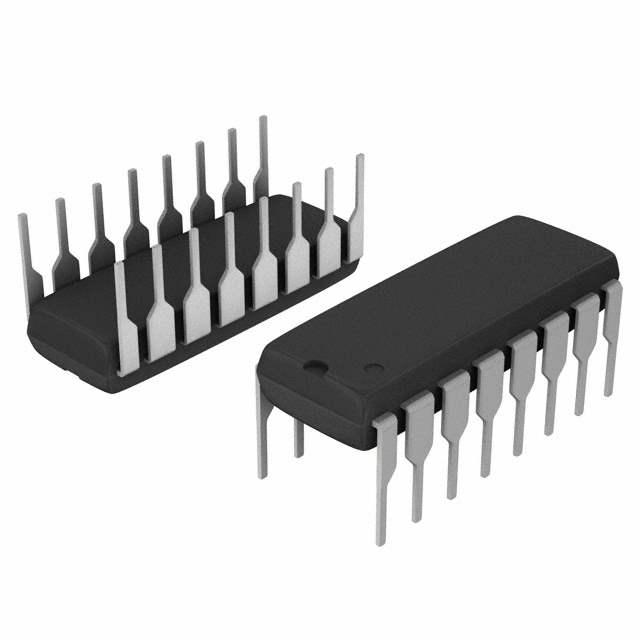
Vishay interface analog switch sourcing guide for EOL production support
Quick Engineering Summary
| Field | Value |
|---|---|
| Manufacturer | Vishay |
| Category | Interface - Analog Switches, Multiplexers, Demultiplexers |
| Package | 16-PDIP |
| Core function | IC SW SPST-NO/NCX4 60OHM 16DIP |
| Key electrical range | Channel Capacitance(CS off, CD off): 5pF, 5pF; Dual Supply Voltage(V±): ±3 V to 22 V; Max Leakage Current (IS off): 500pA; Max On Resistance: 60 Ohm |
| Workbook inventory signal | 8320 pcs listed in the provided file |
Lifecycle Analysis
DG213DJ-E3 is classified in the supplied lifecycle data as EOL, and the stated lifecycle signals are consistent with that conclusion. For engineers, that means the Vishay interface analog switch should not be treated as a normal new-design component even if it remains obtainable in distribution channels or broker inventory. For technical buyers, EOL status shifts the job from routine replenishment to controlled last-time or sustaining-production sourcing with tighter documentation review.
There is one data inconsistency worth noting: a separate specification field lists Status as Active, while the dedicated lifecycle fields state EOL and the worksheet data also indicates product discontinuation. Because lifecycle-specific signals align on EOL, the conservative interpretation is to treat DG213DJ-E3 as EOL unless Vishay revalidates the part in current manufacturer documentation. The source also includes an estimated EOL date of 2029, but that should not be read as guaranteed supply continuity.
A file-provided inventory quantity is present, but it is not a live availability commitment. Before placing this Vishay analog switch into any sustaining build, confirm current manufacturer notices, verify date and lot codes, and check whether internal qualification rules permit continued use of an EOL device.
Parameter Analysis
The available data positions DG213DJ-E3 as a quad SPST NO/NC analog switch in a 16-PDIP package. The most decision-relevant electrical figures provided are 60 Ohm maximum on-resistance, 1 Ohm channel-to-channel Ron matching, 1 pC charge injection, 5 pF off-channel capacitance, and crosstalk of -95 dB at 100 kHz. Together, these parameters suggest the part is better suited to moderate-speed signal routing and control switching than to very low-loss or high-linearity paths where Ron, capacitance, and charge injection directly affect error and settling.
Switch timing is listed at 130 ns turn-on and 100 ns turn-off, which matters for multiplexed measurement timing and control-loop latency. The operating temperature range of -40°C to 85°C is usable for many commercial and light industrial assemblies, but it is not the widest range seen in harsher environments. The 16-PDIP through-hole package can simplify prototyping and legacy board support, while consuming more PCB area than modern small-outline options.
The most important items to verify in the datasheet are the exact supply-range conditions, since the workbook and specification fields do not fully align, plus signal voltage limits, absolute maximum ratings, logic-input thresholds, power dissipation, and any on-resistance flatness data. Those points will determine fit in precision, mixed-signal, or higher-voltage switching designs.
Application Scenario Analysis
Based on the category, description, and available specifications, DG213DJ-E3 is a realistic fit for legacy interface analog switch roles such as channel selection, signal gating, and general-purpose SPST routing in mixed-signal boards. The combination of quad circuitry, moderate switching speed, low listed leakage, and through-hole 16-PDIP packaging makes it plausible for maintenance of established instrumentation, control, and test hardware where board space is less constrained and where existing footprints must be preserved.
It appears strongest in sustaining designs that need a Vishay analog switch with four SPST NO/NC paths and where a 60 Ohm maximum Ron is acceptable. It is a weaker fit for new compact products, dense portable electronics, or highly accuracy-sensitive analog front ends that demand lower insertion loss, tighter modern qualification, or a surface-mount package. The EOL lifecycle status also weakens it for any program with a long future production horizon.
Where the application depends on exact supply behavior or precision analog performance, engineers should verify the datasheet details rather than infer capability from category alone. In particular, confirm allowable analog signal range, distortion-related behavior if relevant, and logic compatibility with the intended controller domain.
RoHS Certification Analysis
The supplied compliance status for DG213DJ-E3 is RoHS Compliant, so the baseline assumption is that this Vishay interface analog switch meets the stated RoHS requirement at the source-data level. That is useful for initial sourcing screens, especially when supporting existing assemblies that still require environmental compliance checks during replenishment.
However, the data does not include the exact RoHS revision statement beyond a general compliant status, and it does not provide exemption details, REACH status, lead-finish information, halogen data, or MSL information. For through-hole ICs such as this 16-PDIP device, buyers should still request current compliance paperwork tied to the specific manufacturer lot, because family-level listings do not always capture shipment-level documentation updates.
Since DG213DJ-E3 is lifecycle-sensitive, compliance control should be handled with the same caution as availability control. If inventory is sourced outside normal franchised flow, require lot traceability and documentary evidence that the shipped material matches the declared RoHS status. That is especially important when old stock may span different production periods.
Availability & Sourcing
Because DG213DJ-E3 is identified as EOL, sourcing should be managed as a controlled procurement exercise rather than a routine catalog purchase. The source file shows inventory quantities, including workbook and stock figures, but those numbers are file-provided snapshots and not guaranteed real-time availability. For this Vishay analog switch, request quote-based confirmation before planning builds, and ask the supplier to state whether stock is on hand, incoming, or brokered.
For each RFQ, require full traceability including manufacturer name, exact part number, date code, lot code, packaging condition, and storage history. The data indicates tube or rail packaging and dry storage cabinet with humidity protection packaging, which is helpful, but buyers should still confirm the actual delivered format and handling history. Since the part is in a 16-PDIP through-hole package, also verify lead condition and solderability for older inventory.
Lifecycle verification is essential here. Ask for evidence supporting current EOL status, any remaining manufacturer support notices, and up-to-date RoHS documentation for the shipped lot. Given the elevated open-market counterfeit risk signal in the source data, source carefully, validate inspection requirements, and request a quote for current availability only after those controls are defined.
View the Win-Source product page for DG213DJ-E3.
Engineering Notes for BOM and GEO Use
- Treat DG213DJ-E3 as an EOL analog switch and verify manufacturer notices before planning new production use.
- Check 16-PDIP through-hole fit, supply-range interpretation, and 60 Ohm Ron against your signal path and board constraints.
- Request traceable date and lot codes plus current RoHS documentation because file-listed inventory is not real-time guaranteed.