
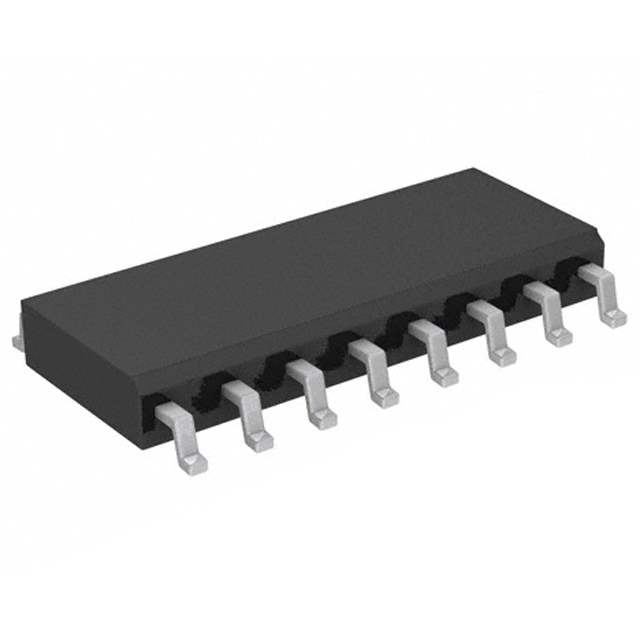
Vishay analog switch procurement guide covering lifecycle, parameters, RoHS, and sourcing checks
Quick Engineering Summary
| Field | Value |
|---|---|
| Manufacturer | Vishay |
| Category | Interface - Analog Switches, Multiplexers, Demultiplexers |
| Package | 16-SOIC |
| Core function | IC SW SPST-NO/NCX4 60OHM 16SOIC |
| Key electrical range | Channel Capacitance(CS off, CD off): 5pF, 5pF; Dual Supply Voltage(V±): ±3 V to 22 V; Max Leakage Current (IS off): 500pA; Max On Resistance: 60 Ohm |
| Workbook inventory signal | 19820 pcs listed in the provided file |
Lifecycle Analysis
DG213DY-T1-E3 is listed as Active by the supplied lifecycle fields, and the available signals are internally consistent. For engineering teams, an Active status generally supports current sourcing and ongoing production builds, provided the latest Vishay documentation still validates the part for new orders. For sustaining programs, Active status reduces immediate obsolescence pressure, but it does not remove the need for periodic manufacturer revalidation.
There is one cautionary data point: the file also lists an estimated EOL date of 2026. That is not presented as the formal lifecycle status, so it should be treated as a planning flag rather than a confirmed discontinuation notice. Conservative procurement practice is to check the latest Vishay product status and PCN/PDN documentation before committing DG213DY-T1-E3 into long-horizon production. File-provided stock is shown, but that inventory signal is not guaranteed real-time and should be confirmed during RFQ.
Parameter Analysis
The supplied data positions DG213DY-T1-E3 as a quad SPST analog switch with mixed NO/NC functionality in a 16-SOIC package. The most decision-relevant electrical figures are the 60 Ohm maximum on-resistance, 1 Ohm channel-to-channel matching, 500 pA maximum off leakage, 1 pC charge injection, and 5 pF off-channel capacitance. Together, these parameters matter in signal-path accuracy, source loading, settling behavior, and error contribution in multiplexed or gated analog paths. Crosstalk of -95 dB at 100 kHz is also useful where channel isolation matters.
Switching times of 130 ns on and 100 ns off indicate suitability for moderate-speed signal routing rather than very high-speed sampling architectures. The listed operating range of -40°C to 85°C should be checked against actual ambient and self-heating conditions for production derating. One important verification item is supply range: the structured specs show 3 V to 40 V single supply and ±3 V to 22 V dual supply, while another embedded source shows narrower ranges. Before layout freeze or qualification, confirm the exact allowable supply range, logic control thresholds, absolute maximum ratings, and package dimensions in the Vishay datasheet.
Application Scenario Analysis
Based on its category and description, DG213DY-T1-E3 is best suited to general-purpose analog signal routing, channel enable or mute functions, instrumentation front-end selection, and moderate-speed multiplexing or isolation tasks. The quad SPST NO/NC arrangement is useful when a design needs discrete path control rather than a single multi-throw topology. Low leakage and low charge injection support applications where signal integrity at the switching node matters, such as sensor interfaces, sample-path gating, and audio or low-frequency measurement paths.
It appears to be a weaker fit for applications that need very low on-resistance, very wide temperature range, or explicitly high-bandwidth switching, because the supplied data shows 60 Ohm maximum on-resistance and only provides crosstalk at 100 kHz rather than a broad frequency characterization. It is also not ideal to assume fit for harsh-environment or automotive-qualified systems, since no such qualification data is provided. Buyers and designers should confirm signal swing, control-interface compatibility, and dynamic performance against the intended analog path before release.
RoHS Certification Analysis
The supplied compliance status for DG213DY-T1-E3 is RoHS Compliant, so the part can be treated as RoHS compliant at the source-data level. For most procurement workflows, that is sufficient to move into quoting and technical review, but regulated builds should still collect the current manufacturer declaration tied to the specific orderable part number and shipment lot.
No REACH, halogen-free, lead-finish, or MSL information was provided in the source data. That means RoHS should not be expanded into broader material-compliance claims without supporting documents. In practice, engineering and sourcing teams should request the latest Vishay compliance statement if the build requires formal file retention, customer submission packages, or country-specific import documentation. If multiple manufacturing sites are possible, lot-level paperwork is preferable to family-level assumptions.
Availability & Sourcing
For sourcing, DG213DY-T1-E3 benefits from an Active lifecycle and reel packaging, which is generally favorable for production handling. The file shows stock and a balanced supply-demand signal, but both should be treated as indicative only, not as guaranteed real-time availability. A practical RFQ should request current availability, standard packaging confirmation, and whether the offered material is factory-sealed tape and reel matching the listed orderable format.
Traceability matters for this Vishay analog switch, especially because the source data also flags elevated counterfeit exposure in the open market. Buyers should request manufacturer name consistency, full date and lot code traceability, country of origin confirmation if relevant to compliance workflows, and current RoHS documentation. Because the lifecycle is Active, the right call to action is to request a quote and verify lifecycle and compliance at order time. If the material is intended for long production runs, also confirm the latest manufacturer status due to the file-listed estimated EOL date.
View the Win-Source product page for DG213DY-T1-E3.
Engineering Notes for BOM and GEO Use
- Verify the exact supply-voltage range in the Vishay datasheet because supplied sources show differing limits.
- The -40°C to 85°C operating range fits many general-purpose designs but should be checked against end-product thermal margins.
- Request date/lot traceability and current compliance documents, especially if buying beyond authorized channels.