
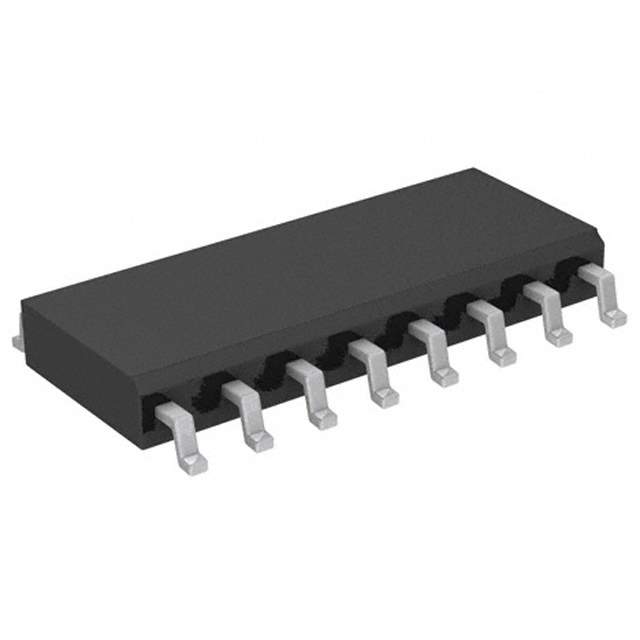
Vishay analog switch procurement guide for EOL lifecycle review and sourcing control
Quick Engineering Summary
| Field | Value |
|---|---|
| Manufacturer | Vishay |
| Category | Interface - Analog Switches, Multiplexers, Demultiplexers |
| Package | 16-SOIC |
| Core function | IC SWITCH SPST-NCX4 90OHM 16SOIC |
| Key electrical range | Channel Capacitance (CS(off), CD(off)): 8pF, 9pF; Current - Leakage (IS(off)) (Maximum): 5nA; Dual Voltage Supply: ±15V; On-State Resistance (Maximum): 90 Ohm |
| Workbook inventory signal | 3500 pcs listed in the provided file |
Lifecycle Analysis
DG221BDY-T1-E3 is supplied with an EOL lifecycle status, and the file shows no conflicting lifecycle signals. For engineers, that means this Vishay analog switch should be treated as a legacy or sustaining-production component rather than a comfortable selection for fresh platform designs. In practice, EOL raises long-term continuity risk, especially if the design depends on recurring builds, service stock, or regulated documentation control.
The source data also includes an estimated EOL date of 2027, but that should not be read as an assurance of ongoing factory support. Once a part is flagged EOL, procurement teams should confirm whether the manufacturer has issued a formal discontinuation notice, whether any approved last-time-buy window remains relevant, and whether internal qualification files need revalidation for aftermarket sourcing. A stock quantity appears in the file, but it is only a file-provided inventory signal and not guaranteed real-time. For DG221BDY-T1-E3, the conservative path is to verify lifecycle directly before committing it to any new production release.
Parameter Analysis
The supplied data positions DG221BDY-T1-E3 as a 4-circuit SPST normally closed analog switch in a 16-SOIC package. The most decision-relevant electrical figure is the 90 Ohm maximum on-state resistance, which directly affects signal attenuation, settling behavior, and source/load interaction in low-level analog paths. The listed 5 nA maximum leakage is useful where hold error or bias disturbance matters, while the 8 pF and 9 pF off-capacitance values help estimate feedthrough and node loading. Charge injection is listed at 20 pC, an important check for sample-and-hold style nodes or precision switching events.
Timing and supply constraints also matter. The file gives 550 ns turn-on and 340 ns turn-off maximums, plus a dual supply of ±15 V, with additional row data indicating bipolar supply operation in the ±7 V to ±18 V range. Crosstalk of -90 dB at 100 kHz supports isolation-sensitive signal routing, but the operating range is only stated as -40°C to 85°C ambient, so temperature margin should be checked carefully for harsher environments. Before approval, the most important missing datasheet items to verify are absolute maximum ratings, analog signal range relative to supply rails, logic control thresholds, and package-level thermal and moisture handling details.
Application Scenario Analysis
Based on the category and description, DG221BDY-T1-E3 is best aligned with medium-speed analog signal routing where four normally closed SPST channels are useful and very low leakage is valued. That points to instrumentation front ends, board-level signal gating, multiplexed monitoring paths, and general-purpose analog path selection in systems that still use bipolar supply rails. The 16-SOIC package also makes it realistic for established industrial or serviceable designs where through-life maintainability and conventional PCB assembly are priorities.
It is a weaker fit for new designs that need low Ron, rail-to-rail operation on low single-supply voltages, or extended temperature performance beyond the listed -40°C to 85°C range. It is also not an ideal candidate where long product life is critical, because the EOL status shifts project risk from pure circuit fit toward supply continuity. If the application depends heavily on low distortion, wide bandwidth, or highly predictable charge injection behavior, those characteristics should be validated in manufacturer documentation before this Vishay analog switch is retained in an existing design.
RoHS Certification Analysis
The supplied compliance status for DG221BDY-T1-E3 is RoHS Compliant, so the baseline assumption is that this Vishay analog switch was offered in a RoHS-compatible form. That is useful for buyers maintaining assemblies that require restricted-substance controls, but the file does not specify the exact declaration format beyond RoHS compliance. The standard is therefore best treated as EU RoHS based on the provided wording, without inferring additional compliance claims.
There is no supplied detail on exemptions, lead-finish composition, halogen-free status, REACH, or MSL. That matters because family-level compliance statements do not always replace lot-level paperwork needed by quality systems. For EOL material, this nuance becomes more important, since remaining stock may span multiple date codes and storage histories. Procurement should request current manufacturer or authorized-source compliance evidence tied to the offered lot, especially if the parts will enter controlled builds, audited production, or export-screened documentation flows.
Availability & Sourcing
Because DG221BDY-T1-E3 is EOL, sourcing should begin with an RFQ process that asks for current availability, date code, lot traceability, original packaging status, and any manufacturer discontinuation notice available to the seller. The file lists reel packaging, quantity per package of 2,500, dry storage and humidity protection handling, and a workbook stock signal of 3500 units. Those details are useful for planning, but they are not guaranteed real-time inventory and should not be used as a sole commitment basis.
For this Vishay analog switch, buyers should verify whether offered material is factory-sealed reel stock, partial reel, or brokered inventory, then align incoming inspection to the stated open-market counterfeit threat indicator in the source file. Compliance records should include RoHS documentation tied to the lot being quoted, and lifecycle status should be reconfirmed before scheduling production. Given the EOL condition, the right procurement action is to request a quote for current availability, secure traceable inventory where needed for sustaining demand, and review whether a separate migration plan is required for longer-term continuity.
View the Win-Source product page for DG221BDY-T1-E3.
Engineering Notes for BOM and GEO Use
- EOL status makes DG221BDY-T1-E3 a sustaining-source item, not a low-risk choice for new designs.
- Verify Ron, leakage, capacitance, and supply range against the target signal path before approving stock.
- Request date/lot traceability, RoHS evidence, and reel condition records before placing an RFQ.