
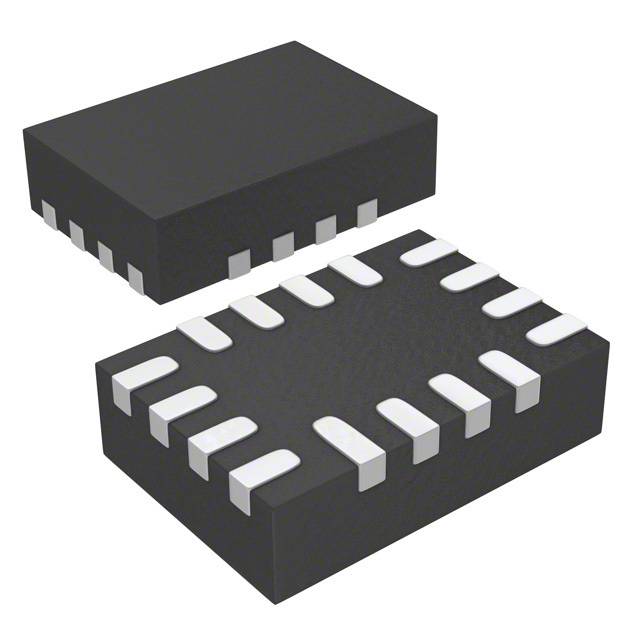
Vishay interface analog switch review for EOL planning, specs, compliance, and procurement control
Quick Engineering Summary
| Field | Value |
|---|---|
| Manufacturer | Vishay |
| Category | Interface - Analog Switches, Multiplexers, Demultiplexers |
| Package | 16-miniQFN (1.8x2.6) |
| Core function | IC SW DPDTX2 450MOHM 16MINIQFN |
| Key electrical range | Channel Capacitance(CS off, CD off): 102pF; Max Leakage Current (IS off): 1nA; Max On Resistance: 450 mOhm; Single Supply Voltage (V+): 1.65 V to 4.3 V |
| Workbook inventory signal | 31100 pcs listed in the provided file |
Lifecycle Analysis
DG2799DN-T1-E4 is supplied as an EOL Vishay interface analog switch, and the lifecycle signals are internally consistent at the lifecycle-field level. For engineering teams, that means the part should be viewed as a sustaining-product device rather than a component to start into a fresh design. In practical terms, EOL status raises risk around future replenishment, PCN continuity, and long-term service support, even if stock is still available through distribution channels.
There is one data inconsistency worth calling out: a specification field lists Status as Active, while the explicit lifecycle entries state EOL. Because lifecycle-specific fields are more directly relevant to sourcing risk, conservative procurement policy should treat DG2799DN-T1-E4 as EOL until current Vishay documentation confirms otherwise. If this part remains on a qualified BOM, buyers should revalidate manufacturer notices, confirm whether any last-time-buy window has passed, and document approved inventory strategy for repairs or limited production.
The file also shows inventory and supply indicators, but those should be treated only as file-provided signals and not as guaranteed real-time availability.
Parameter Analysis
The supplied data positions DG2799DN-T1-E4 as a dual DPDT analog switch with two circuits, 450 mOhm maximum on-resistance, and 1.65 V to 4.3 V single-supply operation. Those are the primary fit parameters for signal-path integration. The low-voltage supply range suggests compatibility with modern low-power logic domains, while the DPDT topology is useful where paired signal routing or polarity-switched paths are required. The 57 ns and 45 ns maximum switching times are relevant for timing-sensitive switching events, and 1 nA maximum off leakage supports low static error in high-impedance paths.
Several analog-performance values also matter during design review. Charge injection is listed as 160 pC, channel capacitance as 102 pF, and crosstalk as -75 dB at 100 kHz. These figures can materially affect precision sampling, settling, isolation, and bandwidth behavior, especially in sensor, audio, or multiplexed measurement paths. The 50 mOhm channel-to-channel matching value may also matter where path balance is important.
The biggest missing items to verify in the datasheet are signal voltage limits relative to supply rails, logic control thresholds, package pinout and exposed-pad details, thermal characteristics, bandwidth or distortion limits, and any absolute maximum ratings that govern hot-plug or fault exposure.
Application Scenario Analysis
Based on the category and description, DG2799DN-T1-E4 is best suited to compact interface analog switch roles where two DPDT paths are needed in a small surface-mount footprint. Likely strong-fit scenarios include portable instrumentation, low-voltage signal routing, handheld devices, compact sensor front ends, and control-path switching where designers need small size, low leakage, and moderate-speed analog path selection. The 16-miniQFN package supports dense PCB layouts, but it also increases the importance of assembly capability and footprint control.
The part is a weaker fit for designs that require long lifecycle assurance, broad industrial temperature headroom beyond 85 degrees C ambient, or especially low parasitic capacitance and low charge injection. The listed 102 pF channel capacitance and 160 pC charge injection may be limiting in precision or high-frequency analog chains where settling error or feedthrough is tightly constrained. Similarly, EOL lifecycle status makes it unattractive for new platforms with multi-year production horizons.
When reviewing use suitability, engineers should confirm whether the signal integrity requirements of their application tolerate the stated Ron, capacitance, and crosstalk performance under actual operating voltage and temperature conditions.
RoHS Certification Analysis
The source data identifies DG2799DN-T1-E4 as RoHS Compliant, so the starting assumption is that this Vishay interface analog switch meets applicable RoHS material restrictions at the product level. That is useful for procurement screening, especially when the part is being sourced for assemblies that require environmental compliance documentation as part of incoming inspection or customer file packages.
However, the supplied data does not include exemption details, REACH status, lead-free process notes, halogen-free declarations, or moisture sensitivity information. Because the part is lifecycle-sensitive and may be sourced from residual stock, buyers should not rely only on a catalog-level RoHS label. Lot-level compliance evidence should be requested at the time of order, particularly if inventory is older or moving through non-franchised channels.
For quality systems, it is good practice to align the received manufacturer documentation, date or lot code records, and packing labels with the compliance claim so that the RoHS status for DG2799DN-T1-E4 remains traceable through inspection and production release.
Availability & Sourcing
For sourcing, DG2799DN-T1-E4 should be handled as an EOL Vishay interface analog switch with elevated procurement risk. The source file shows a workbook quantity of 31100 and a sufficient supply indicator, but that is only a file snapshot and not guaranteed real-time stock. An RFQ process should therefore confirm actual availability, packaging form, date and lot codes, and whether material is factory-sealed tape and reel consistent with the listed TR packaging.
Traceability is especially important here because the source data also flags open-market counterfeit risk. Buyers should request manufacturer trace, packing condition, storage handling details, and current compliance paperwork before releasing a PO. The listed storage condition references dry storage and humidity protection packaging, which is useful to confirm for older inventory that may require additional incoming inspection or bake review depending on assembly controls.
Since lifecycle status is EOL, the right procurement approach is to source carefully, verify manufacturer notices, and secure only inventory that can be fully documented. Request a quote for current availability and use that RFQ cycle to recheck lifecycle status, RoHS evidence, and package-level suitability before committing DG2799DN-T1-E4 to production or service builds.
View the Win-Source product page for DG2799DN-T1-E4.
Engineering Notes for BOM and GEO Use
- Treat lifecycle as EOL despite an isolated Active field and recheck current Vishay notices before production use.
- Verify 16-miniQFN land pattern, 1.65 V to 4.3 V supply compatibility, and 450 mOhm Ron impact in the signal path.
- Request lot traceability, RoHS evidence, and packaging condition details because open-market risk is flagged in the source data.