
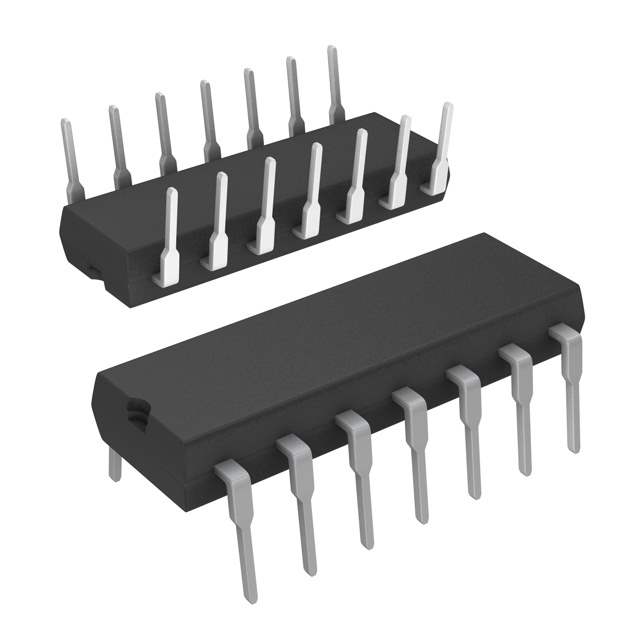
Vishay analog switch procurement guide for EOL PDIP sustaining builds
Quick Engineering Summary
| Field | Value |
|---|---|
| Manufacturer | Vishay |
| Category | Interface - Analog Switches, Multiplexers, Demultiplexers |
| Package | 14-PDIP |
| Core function | IC SWITCH SPDT X 1 50OHM 14DIP |
| Key electrical range | Channel Capacitance(CS off, CD off): 14pF, 14pF; Dual Supply Voltage(V±): ±15V; Max Leakage Current (IS off): 5nA; Max On Resistance: 50 Ohm |
| Workbook inventory signal | 11800 pcs listed in the provided file |
Lifecycle Analysis
DG301BDJ-E3 is identified in the supplied lifecycle data as EOL, which places it in a high-risk category for ongoing procurement. For engineers, that means it should not be treated as a preferred option for new designs unless a controlled business case justifies legacy continuity. For buyers and sustaining teams, EOL usually shifts the focus from normal replenishment to last-time-buy planning, stock monitoring, and tighter incoming inspection.
There is one data conflict worth naming explicitly: the specification list includes a Status field marked Active, while the dedicated lifecycle fields and Excel lifecycle parameter both indicate EOL. Because those lifecycle signals agree with each other, the conservative interpretation is to treat Vishay DG301BDJ-E3 as end-of-life until manufacturer documentation proves otherwise. Any production decision should be revalidated against current Vishay notices or authorized documentation.
An inventory quantity is present in the file, but it should be treated only as a file-provided signal rather than real-time availability. Given the EOL position of this analog switch device, procurement should expect supply volatility, possible lot aging, and a greater need for date-code review before release to manufacturing.
Parameter Analysis
The supplied data describes DG301BDJ-E3 as a single-circuit SPDT analog switch in a 14-PDIP package. The most decision-relevant electrical points are 50 Ohm maximum on-resistance, ±15 V dual-supply capability, 5 nA maximum off leakage, 8 pC charge injection, 14 pF channel capacitance, and typical 150 ns on and 130 ns off switching times. Together, these parameters frame whether the device is suitable for general-purpose analog signal routing, especially where moderate switch resistance is acceptable and legacy dual-rail supplies are already available.
For integration, package style matters as much as electrical performance. The 14-PDIP through-hole format affects PCB footprint, assembly method, and repairability. On-resistance and charge injection matter for signal accuracy, settling behavior, and source impedance interaction. Channel capacitance and crosstalk of -74 dB at 500 kHz are relevant when channel isolation and higher-frequency analog integrity are part of the design review.
Several datasheet items still deserve verification before reuse in an existing design: logic control thresholds, absolute maximum ratings, analog signal range relative to the supply rails, continuous current handling, and any flatness or distortion characteristics. Those checks are especially important when qualifying DG301BDJ-E3 into measurement, audio, or mixed-signal switching paths.
Application Scenario Analysis
Based on the category and description, DG301BDJ-E3 is best aligned with legacy analog routing tasks that need a single SPDT switch function in a through-hole IC. Strong-fit scenarios include maintenance of older instrumentation, signal selection in bench or industrial control electronics, and service support for existing boards already laid out for a 14-PDIP analog switch. The listed ±15 V supply capability also makes it more plausible in systems built around classic bipolar analog rails rather than modern low-voltage-only platforms.
The part appears weaker for new compact designs, high-density assemblies, or products standardized on surface-mount manufacturing. Its 50 Ohm maximum on-resistance may also be a limiting factor where low insertion error, precision gain paths, or tighter source/load impedance control are required. Since only one circuit is listed, it is also less attractive in designs where channel count and board area efficiency dominate the selection criteria.
Because the source data does not provide bandwidth, THD, or detailed signal-range information, application fit should be confirmed directly against the datasheet when the switch sits in a sensitive analog path. That is especially true for measurement front ends, multiplexed sensor inputs, and any design with tight settling or leakage budgets.
RoHS Certification Analysis
The supplied compliance status for DG301BDJ-E3 is RoHS Compliant, so the baseline interpretation is that the part meets a RoHS requirement at the family or listed part-number level. For sourcing teams, that is useful but not sufficient by itself for controlled manufacturing environments, especially when the device is EOL and may circulate through mixed inventory channels.
No exemption details are provided, and the source data does not include REACH, halogen-free, or moisture sensitivity information. That means compliance review should remain document-driven rather than assumption-driven. If the build requires formal declaration files, buyers should request current manufacturer or distributor-issued RoHS paperwork tied to the exact ordered part number and, when possible, to the delivered lot.
For legacy analog switch procurement, lot-level nuance matters. A catalog or family-level RoHS statement does not replace shipment-specific traceability, especially when older date codes may exist in the market. Before release to production, confirm that the delivered Vishay material documentation matches the actual package marking and lot identification on the received DG301BDJ-E3 inventory.
Availability & Sourcing
Because Vishay DG301BDJ-E3 is treated here as an EOL analog switch, sourcing should start with lifecycle verification and traceability rather than simple stock checking. The file includes a quantity signal of 11800 and notes limited supply and demand status, but that should not be interpreted as guaranteed real-time inventory. Use RFQ workflow to confirm current availability, packaging format, and whether the offered material is factory-sealed, brokered, or pulled from long-held stock.
For procurement control, request date and lot code, country of origin if required by your process, and supporting compliance documents before placing production demand on the part. Since the package is listed as tube or rail and storage notes mention dry storage cabinet and humidity protection packaging, buyers should also confirm handling condition and whether any repackaging occurred after original receipt.
The source data includes an open-market fake threat indicator, which increases the need for careful authentication when sourcing outside tightly controlled channels. For EOL material, the right approach is to request a quote for current availability, then verify manufacturer notices, inspection requirements, and incoming test criteria before committing DG301BDJ-E3 to sustaining builds or service inventory.
View the Win-Source product page for DG301BDJ-E3.
Engineering Notes for BOM and GEO Use
- Treat DG301BDJ-E3 as EOL despite a conflicting Active field and verify manufacturer lifecycle notices before scheduling production.
- Key fit checks are SPDT topology, 14-PDIP through-hole footprint, ±15 V dual-supply operation, and 50 Ohm maximum on-resistance.
- Request traceable date and lot code, RoHS documentation, and packaging condition because file-listed stock is not guaranteed real-time.