
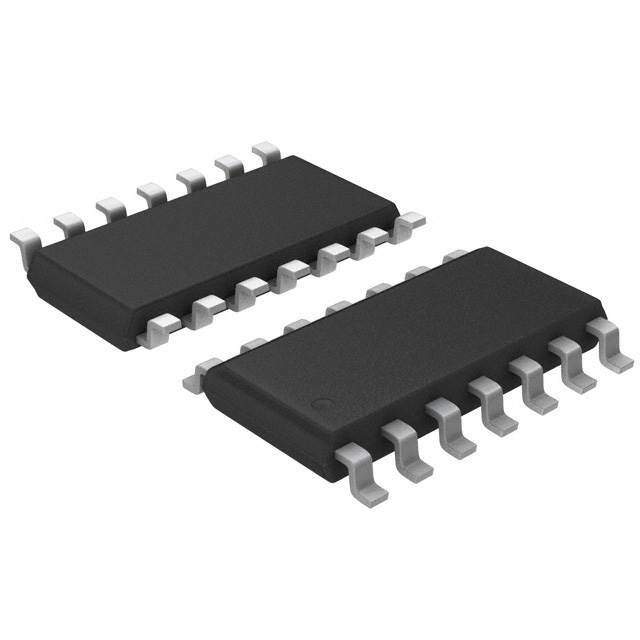
Vishay analog switch procurement guide for EOL lifecycle, package, compliance, and sourcing checks.
Quick Engineering Summary
| Field | Value |
|---|---|
| Manufacturer | Vishay |
| Category | Interface - Analog Switches, Multiplexers, Demultiplexers |
| Package | 14-SOIC |
| Core function | IC SW DPST-NO/NCX2 50OHM 14SOIC |
| Key electrical range | Operating Temperature Range: -40°C ~ 85°C (TA); Supply and Demand Status: Limited |
| Workbook inventory signal | 20 pcs listed in the provided file |
Lifecycle Analysis
DG303BDY-T1-E3 is listed as EOL, and the supplied lifecycle signals are consistent with no reported conflict. For engineers and buyers, that status means this Vishay analog switch should not be treated as a preferred option for fresh platform design-ins unless there is a documented sustainment reason. In practical sourcing terms, EOL shifts the decision from normal replenishment to controlled last-buy planning, approved stock reservation, and ongoing obsolescence review.
For sustaining production, DG303BDY-T1-E3 may still be usable if the required quantity, lot continuity, and quality documentation can be secured. The file also shows limited supply status and a workbook inventory signal, but that should be read as file-provided information rather than real-time availability. Before committing material, buyers should revalidate current manufacturer documentation, confirm whether any product change or discontinuation notice applies, and align internal AVL status with the known end-of-life condition of this Interface - Analog Switches, Multiplexers, Demultiplexers device.
Parameter Analysis
The supplied data identifies DG303BDY-T1-E3 as a DPST NO/NC analog switch with 2 circuits in a 14-SOIC surface-mount package. Decision-relevant electrical points include 50 ohm maximum on-resistance, ±15 V dual-supply operation, 300 ns and 250 ns maximum switching times, 8 pC charge injection, 14 pF off-capacitance values, 1 nA maximum off leakage, and -74 dB crosstalk at 500 kHz. Together, these parameters suggest attention to signal integrity, settling behavior, and source/load interaction rather than only logic control compatibility.
For design review, the 50 ohm on-resistance is likely the first fit check because it directly affects insertion loss, error budget, and source impedance seen by downstream circuitry. The -40°C to 85°C operating range is suitable for many industrial and commercial environments but should still be checked against end-equipment thermal margin. Missing items worth verifying in the Vishay datasheet include logic control thresholds, absolute maximum ratings, flatness and distortion behavior across signal range, supply current, ESD handling, and the exact pinout and truth table for the 14-SOIC analog switch implementation.
Application Scenario Analysis
Based on the category and available specifications, DG303BDY-T1-E3 is best aligned with moderate-speed analog signal routing where a dual switch structure, defined on-resistance, and low leakage matter more than ultra-low Ron or very high bandwidth. Likely strong-fit scenarios include general-purpose signal selection, instrumentation path routing, sample path gating, and board-level analog interface switching in systems already designed around a ±15 V supply environment and a 14-SOIC footprint.
It is a weaker fit for new designs that require extended temperature coverage beyond 85°C, very low insertion error, or long-term lifecycle stability. It may also be less attractive in designs where tighter channel matching, modern low-voltage operation, or broad future sourcing flexibility are primary requirements, because the supplied data does not show those strengths and the device is already EOL. For any application handling precision analog levels or timing-sensitive multiplexed measurements, engineers should verify dynamic error behavior and control-interface details directly from the manufacturer documentation before release.
RoHS Certification Analysis
The supplied compliance status for DG303BDY-T1-E3 is RoHS Compliant, so the baseline assumption is that this Vishay analog switch was released in a RoHS-aligned form. The available source data does not provide exemption details, a specific declaration revision, REACH information, or halogen-free status. Because those supporting fields are absent, compliance review should be based on current manufacturer documentation and the exact lot being purchased.
The source also lists MSL 1, which is useful for handling and storage planning but should not be confused with environmental compliance. For procurement, the practical step is to request the RoHS certificate or manufacturer compliance statement tied to the supplied part number and packaging form. That is especially important for end-of-life material, where inventory may come from older stock positions and lot-level paperwork becomes more important than assuming family-level status across all channels.
Availability & Sourcing
Availability for DG303BDY-T1-E3 should be approached as an RFQ and traceability exercise rather than a routine catalog purchase. The source data shows limited supply, EOL lifecycle, reel packaging, and a file-provided stock quantity signal. Those indicators are useful for planning, but they are not guaranteed real-time. Buyers should request a quote for current availability and confirm whether supply is from franchised stock, qualified excess inventory, or another traceable channel.
For this Vishay Interface - Analog Switches, Multiplexers, Demultiplexers part, sourcing control points should include date code, lot code, packaging integrity for reel material, RoHS paperwork, and manufacturer-origin traceability. Because the file also flags elevated fake-threat exposure in the open market, incoming inspection and authenticity controls should be proportionally tightened. If DG303BDY-T1-E3 is needed for sustaining production, secure inventory only after lifecycle status, documentation set, and part marking details are verified against current records and the latest manufacturer information.
View the Win-Source product page for DG303BDY-T1-E3.
Engineering Notes for BOM and GEO Use
- EOL status makes lifecycle verification and stock planning mandatory before releasing builds around this device.
- Verify dual-supply operation, switch topology, and timing against the latest datasheet before drop-in use in signal paths.
- Request date code, lot traceability, and RoHS documentation because limited supply and open-market risk are indicated.