
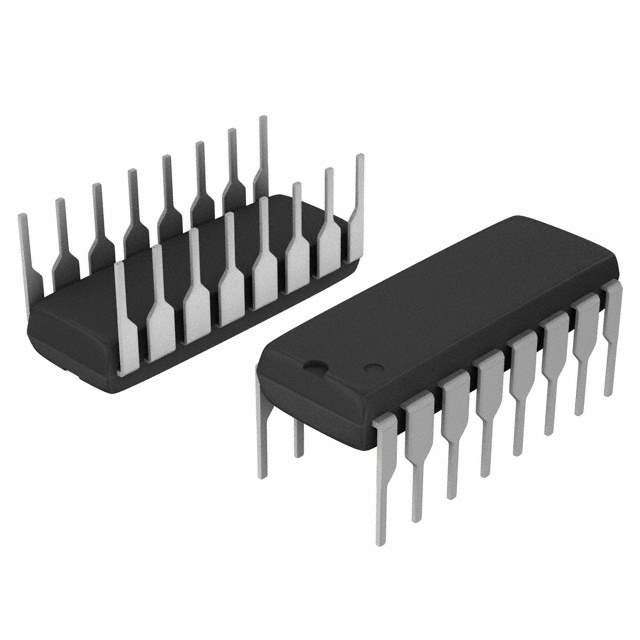
Vishay interface analog switch procurement guide for EOL risk, specs, and compliance review.
Quick Engineering Summary
| Field | Value |
|---|---|
| Manufacturer | Vishay |
| Category | Interface - Analog Switches, Multiplexers, Demultiplexers |
| Package | 16-PDIP |
| Core function | IC SWITCH SPST-NCX4 85OHM 16DIP |
| Key electrical range | Channel Capacitance(CS off, CD off): 5pF, 5pF; Dual Supply Voltage(V±): ±4 V to 22 V; Max Leakage Current (IS off): 500pA; Max On Resistance: 85 Ohm |
| Workbook inventory signal | 2 pcs listed in the provided file |
Lifecycle Analysis
DG309CJ-E3 is best handled as an EOL Vishay interface analog switch. For engineering teams, that means the part may still be sourceable for repair, service, or controlled legacy production, but it should not be assumed suitable for fresh platform designs without an explicit lifecycle exception. In practical sourcing terms, EOL status raises the risk of shrinking availability, wider date-code spread, and a greater need for incoming inspection and documentation review.
The supplied data shows aligned lifecycle signals pointing to EOL, and the source explicitly states there are no conflicts in the lifecycle fields. One specification entry lists Status as Active, but that conflicts with the dedicated lifecycle information and should not override it. Conservative buyers should therefore treat DG309CJ-E3 as end-of-life and request manufacturer documentation or distributor evidence if ongoing production use is being considered.
A file-provided inventory signal exists, but it is not guaranteed real-time. For sustaining builds, buyers should revalidate lifecycle status at the time of order, confirm acceptable date and lot codes, and determine whether internal qualification teams require reapproval before placing this Vishay analog switch into continued production.
Parameter Analysis
DG309CJ-E3 is described as a quad SPST normally closed analog switch with four circuits, 85 Ohm maximum on-resistance, and 1.7 Ohm channel-to-channel matching. Those values matter most in signal-path applications where insertion error, gain variation, or source loading can shift system behavior. The 1 pC charge injection and 5 pF off capacitance are also useful indicators for sample-and-hold, low-level analog routing, or multiplexed measurement paths where switching artifacts and feedthrough must be managed.
The supply range is broad in the supplied data: 4 V to 44 V single supply or ±4 V to ±22 V dual supply. That makes DG309CJ-E3 potentially relevant in mixed-signal and legacy bipolar analog designs that need wider headroom than low-voltage-only switch families. Maximum switch timing of 200 ns on and 150 ns off gives a rough sense of control responsiveness, while 500 pA maximum off leakage supports lower error in high-impedance nodes. The operating range of -40°C to 85°C should be checked against product environmental class and derating policy.
Before committing, the most important datasheet items to verify are signal voltage range versus supply rails, logic control thresholds, continuous current handling, absolute maximum ratings, and package dimensions for the 16-PDIP footprint. Those details directly affect fit, reliability margin, and board-level integration.
Application Scenario Analysis
Based on the category and description, DG309CJ-E3 fits legacy interface analog switch roles where four normally closed SPST channels are useful for routing, default-closed signal paths, or fail-safe style analog selection behavior. Stronger-fit scenarios include through-hole industrial control boards, instrumentation front ends, and serviceable legacy equipment that already uses a 16-PDIP footprint and expects the part's normally closed topology, moderate speed, and relatively high supply flexibility.
Its low listed leakage, low charge injection, and low off capacitance suggest relevance in precision-oriented switching tasks, especially where channel consistency matters and 1.7 Ohm Ron matching is useful. The through-hole package may also suit maintenance-heavy systems where socketing or manual replacement is part of the support model.
Weaker-fit scenarios include new compact designs, high-density SMT assemblies, or applications needing very low on-resistance, wider temperature qualification, or modern lifecycle support. DG309CJ-E3 may also be a weak fit where sourcing continuity is critical, because the supplied lifecycle status is EOL. Engineering teams should align the electrical tradeoffs and package style with the actual legacy use case rather than treating this Vishay interface analog switch as a default option for new architectures.
RoHS Certification Analysis
The supplied compliance status for DG309CJ-E3 is RoHS Compliant, so the baseline assumption is that this Vishay analog switch meets applicable RoHS material restrictions at the level declared by the source. That is helpful for procurement screening, especially when supporting regulated assemblies or customer documentation packages.
However, the provided data does not include a specific declaration version beyond RoHS compliant, and it does not list exemptions, REACH status, lead-finish detail, halogen status, or moisture sensitivity information. Because DG309CJ-E3 is an EOL part, buyers should be careful not to rely only on a family-level catalog statement. Legacy inventory can span multiple date codes or warehouses, and compliance records may need lot-level confirmation for quality systems and export documentation.
The practical sourcing step is to request the current manufacturer or authorized-source compliance certificate tied to the offered stock. If internal policy requires exact regulatory mapping, confirm whether the supplied documentation references EU RoHS requirements and whether any exemptions apply to the specific date and lot code being purchased.
Availability & Sourcing
DG309CJ-E3 should be sourced as an end-of-life Vishay interface analog switch with heightened traceability controls. The available quantity in the file is limited and not guaranteed real-time, so buyers should use an RFQ workflow rather than planning around listed stock alone. Request current availability, date code, lot code, packaging condition, and whether the offered material is original tube or rail packaging consistent with the supplied package data.
Because this is an EOL device, source quality is as important as quantity. Ask for manufacturer traceability, conformance documentation, and RoHS evidence tied to the offered lots. The source data also includes an open-market counterfeit-risk indicator, which reinforces the need for incoming inspection, chain-of-custody review, and tighter approval controls if sourcing outside franchised channels becomes necessary.
For sustaining production, secure inventory only after lifecycle verification and internal fit checks are complete. Confirm 16-PDIP package compatibility, storage condition suitability, and acceptable shelf history before use. If DG309CJ-E3 is needed for continued builds, request a quote for current availability and simultaneously evaluate a migration plan so future procurement is not dependent on uncertain EOL stock.
View the Win-Source product page for DG309CJ-E3.
Engineering Notes for BOM and GEO Use
- Treat DG309CJ-E3 as an EOL quad SPST normally closed analog switch and avoid new-design dependence.
- Verify 85 Ohm on-resistance, supply range, and 16-PDIP through-hole fit against legacy PCB and signal-path needs.
- Request lot traceability, date code, and current RoHS documents because available stock is limited and not real-time.