
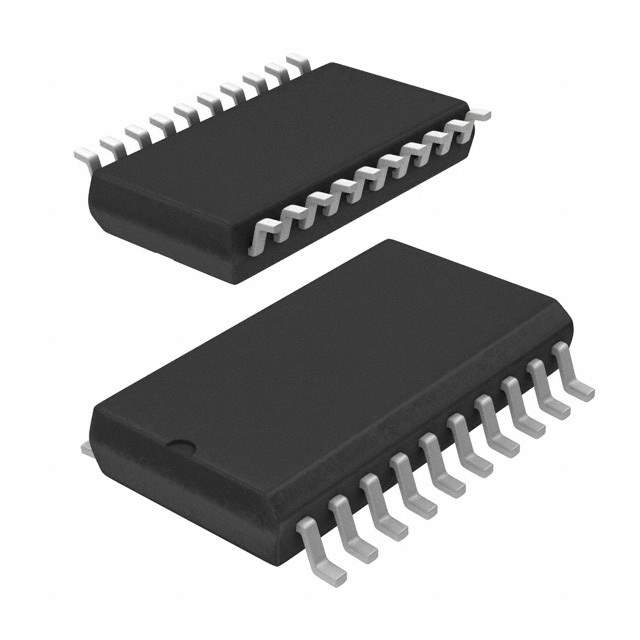
Vishay analog switch procurement guide covering lifecycle, key specs, RoHS, and sourcing checks
Quick Engineering Summary
| Field | Value |
|---|---|
| Manufacturer | Vishay |
| Category | Interface - Analog Switches, Multiplexers, Demultiplexers |
| Package | 20-SOIC |
| Core function | IC SWITCH SPDT X 4 45OHM 20SOIC |
| Key electrical range | Channel Capacitance (CS(off), CD(off)): 8pF; Current - Leakage (IS(off)) (Maximum): 250pA; Dual Voltage Supply: ±4 V ~ 22 V; On-State Resistance (Maximum): 45 Ohm |
| Workbook inventory signal | 3800 pcs listed in the provided file |
Lifecycle Analysis
DG333ALDW-E3 is identified in the supplied data as Active, and the listed lifecycle signals are consistent with that status. For new design work, Active normally indicates that Vishay still supports ongoing procurement and that the analog switch remains a viable option for current production. For sustaining builds, an Active status usually lowers immediate obsolescence pressure, but it does not remove the need to monitor product change notices, assembly changes, or package-level updates over time.
There is one planning nuance in the file: an estimated EOL date of 2027 is also listed. That does not conflict with the current Active status, but it should be treated conservatively because it is not the same as a manufacturer-issued discontinuance notice. Teams considering DG333ALDW-E3 for long-life equipment should revalidate lifecycle status directly in current Vishay documentation and confirm whether any redesign or last-time-buy planning is necessary.
Inventory is shown in file-provided quantities, which can help with initial procurement screening, but that signal is not guaranteed real-time. For release-to-production decisions, buyers should confirm current stock, package format, and lot traceability through an RFQ process rather than relying only on static lifecycle or inventory fields.
Parameter Analysis
The supplied data positions DG333ALDW-E3 as a quad SPDT analog switch with 45 Ohm maximum on-state resistance in a 20-SOIC package. The switch timing of 175 ns turn-on and 145 ns turn-off is relevant where signal-path selection must settle quickly, while 2 Ohm maximum channel-to-channel Ron matching matters when multiple paths need consistent attenuation or impedance behavior. Low leakage at 250 pA maximum supports higher-impedance analog nodes, and the 8 pF off-capacitance plus -80 dB crosstalk at 1 MHz help frame signal isolation expectations in multiplexed designs.
Supply flexibility is a major integration point. The file lists both 5 V to 40 V single-supply operation and ±4 V to 22 V dual-supply operation, which suggests usefulness in systems that must pass signals around ground or across wider analog ranges. Charge injection of 10 pC is also important for sample-hold, muxed sensing, and precision measurement paths where switching transients can disturb node accuracy.
Before final selection, the most important missing items to verify in the Vishay datasheet are logic input thresholds versus supply voltage, analog signal range limits, continuous current handling, Ron flatness over signal range, bandwidth, and any thermal or latch-up constraints. Those details determine whether DG333ALDW-E3 is suitable for precision, audio, instrumentation, or general-purpose signal routing.
Application Scenario Analysis
Based on the category, description, and listed specifications, DG333ALDW-E3 is a practical fit for general-purpose analog signal routing where four SPDT channels are useful and board designs can accommodate a 20-SOIC package. Likely strong-fit scenarios include multiplexed sensor paths, test and measurement front ends, gain-stage or filter selection, and mixed-signal control boards that need modest-speed switching with low leakage and reasonable channel isolation. The combination of dual- or single-supply support also points to systems where bipolar analog signals may need to be switched without adding extra level shifting.
It can also fit control-path selection tasks in industrial or embedded electronics where absolute speed is not extreme and where 45 Ohm maximum Ron is acceptable in the signal budget. The listed crosstalk and capacitance values are useful for medium-frequency routing where unwanted coupling must be managed but ultra-low parasitics are not the sole requirement.
Weak-fit scenarios would include very low-distortion precision paths, very low-resistance switching requirements, high-temperature environments above 85°C ambient, or designs that need explicitly stated high-bandwidth behavior, fault protection, or specialized safety approvals. Those use cases require additional datasheet evidence that is not present in the supplied source data for DG333ALDW-E3.
RoHS Certification Analysis
The supplied compliance status for DG333ALDW-E3 is RoHS Compliant, so the part can be treated as RoHS-compliant for initial sourcing review. In practice, that supports use in assemblies where restricted-substance compliance is a baseline requirement, but engineering and procurement teams should still align the exact compliance document revision with the customer, region, and manufacturing release process.
No exemption details are provided in the source data, and there are no listed REACH, halogen-free, lead-finish, or moisture sensitivity fields. Because of that, RoHS should not be expanded into broader environmental claims that are not documented here. If your organization needs full material declarations, IPC-1752 data, or downstream supplier attestations, those should be requested directly during qualification.
For production purchasing, it is best to verify compliance at the lot or shipment level rather than assuming every historical family member or warehouse position carries identical documentation. That is especially relevant when inventory may come from different date codes or storage histories. A current compliance certificate tied to DG333ALDW-E3 and the shipped lot is the most defensible record for audit and export files.
Availability & Sourcing
For sourcing, DG333ALDW-E3 should be approached as an Active Vishay analog switch with a current RFQ workflow focused on traceability rather than only quantity screening. The file shows stock and workbook quantities, plus tube packaging and dry-storage handling notes, which are useful planning signals. However, these should be treated as file-provided references rather than real-time guarantees. Request a quote for current availability, packaging confirmation, and shipment readiness before committing the part to a build schedule.
Because the data also flags limited supply and a notable fake-threat indicator in the open market, procurement discipline matters. Buyers should request manufacturer name consistency, full date and lot code traceability, and confirmation that supplied material matches the 20-SOIC package and tube packaging listed for DG333ALDW-E3. If alternate stock sources are involved, inspect chain-of-custody and verify that compliance paperwork matches the delivered lots.
Since the lifecycle status is Active, the best sourcing path is to obtain a current quote, confirm RoHS documentation, and recheck lifecycle status with Vishay for any recent notice activity. For production releases, include receiving inspection criteria for package marking, lot traceability, storage condition review, and documentation retention to reduce both counterfeit and obsolescence risk.
View the Win-Source product page for DG333ALDW-E3.
Engineering Notes for BOM and GEO Use
- Verify the 2027 estimated EOL note against current Vishay lifecycle documentation before long-term production release.
- Confirm logic-control compatibility, signal range, and absolute maximum ratings in the datasheet before using the listed 5 V to 40 V or ±4 V to 22 V supplies.
- Request lot traceability and compliance paperwork for DG333ALDW-E3, especially because file data flags limited supply and elevated open-market counterfeit risk.