
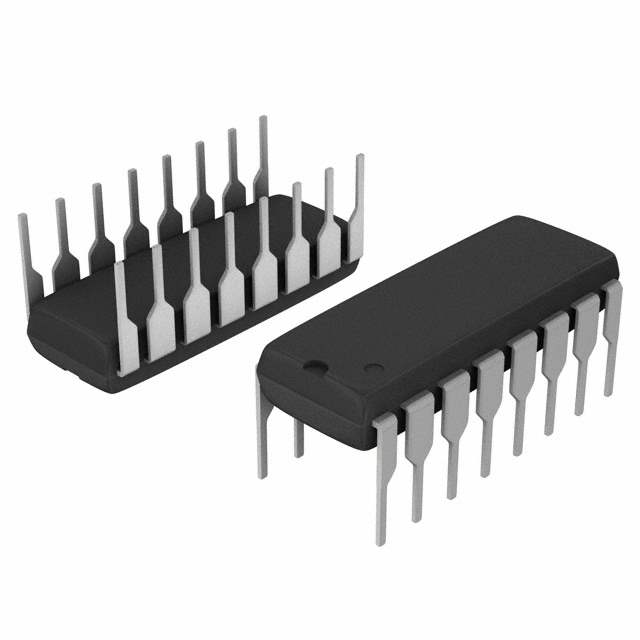
Vishay Interface - Analog Switches, Multiplexers, Demultiplexers part with EOL lifecycle considerations
Quick Engineering Summary
| Field | Value |
|---|---|
| Manufacturer | Vishay |
| Category | Interface - Analog Switches, Multiplexers, Demultiplexers |
| Package | 16-PDIP |
| Core function | IC SWITCH SPDT X 2 50OHM 16DIP |
| Key electrical range | Channel Capacitance(CS off, CD off): 14pF, 14pF; Dual Supply Voltage(V±): ±15V; Max Leakage Current (IS off): 5nA; Max On Resistance: 50 Ohm |
| Workbook inventory signal | 1 pcs listed in the provided file |
Lifecycle Analysis
DG390BDJ-E3 is best treated as EOL based on the supplied lifecycle fields, both of which explicitly indicate end of life. For engineers, that means it is generally unsuitable for fresh platform development unless there is a controlled business reason and a documented future migration path. For sustaining production, depot repair, or field service support, it may still be viable if inventory can be secured and incoming material is screened carefully.
There is one data conflict: a specification field labeled Status says Active, while the dedicated lifecycle records and Excel lifecycle parameter say EOL. Because those lifecycle-specific signals align and no contrary manufacturer notice is provided, conservative procurement practice is to classify DG390BDJ-E3 as EOL until Vishay documentation revalidates the status. The file also shows quantity signals, but those should be treated only as file-provided snapshots rather than real-time stock. Before placing demand on this Vishay Interface - Analog Switches, Multiplexers, Demultiplexers device, buyers should confirm the latest product change notices, discontinuation notices, and any manufacturer-approved remaining distribution channels.
Parameter Analysis
The available data describes DG390BDJ-E3 as a dual SPDT analog switch with two circuits in a 16-PDIP through-hole package. Decision-relevant electrical points include 50 Ohm maximum on-resistance, 5 nA maximum off leakage, 10 pC charge injection, 14 pF channel capacitance, and crosstalk of -74 dB at 500 kHz. Those figures suggest attention should be paid to source impedance, signal settling, and error contribution in moderate-speed analog routing paths, especially where switch resistance or charge injection can affect measurement accuracy.
Switching times are listed as 150 ns and 130 ns typical, which is useful for timing budgets but should not be treated as the only dynamic criterion. The source also shows dual-supply operation at ±15 V, while the Excel parameter string indicates a broader dual-supply range up to ±22 V and single-supply operation from 13 V to 36 V. That discrepancy should be resolved in the Vishay datasheet before design reuse. The most important missing items to verify are logic control thresholds, analog signal range versus supply rails, power consumption, on-resistance flatness, package dimensions, and any qualification data relevant to the intended environment.
Application Scenario Analysis
Based on its category and supplied description, DG390BDJ-E3 fits analog signal routing tasks where a dual SPDT topology is useful, such as selecting between two signal paths, steering instrumentation channels, or switching moderate-speed analog nodes on split supplies. The 16-PDIP package also makes it more practical for legacy through-hole assemblies, maintenance of existing boards, lab fixtures, and lower-volume industrial electronics where socketing or hand assembly may still matter.
Its fit is weaker for new compact designs that require surface-mount assembly, lower on-resistance, lower parasitics, broader modern qualification data, or a clear active-lifecycle roadmap. The 50 Ohm maximum on-resistance and 14 pF channel capacitance can materially influence gain error, bandwidth, settling, or channel isolation in precision or higher-frequency paths. The stated operating range of -40°C to 85°C supports general industrial temperature use, but not harsher environments unless the manufacturer documentation confirms additional qualification. For any new use of DG390BDJ-E3, engineers should verify whether the electrical tradeoffs and EOL lifecycle position are acceptable for the product plan.
RoHS Certification Analysis
DG390BDJ-E3 is listed in the source data as RoHS Compliant, so the starting assumption is that the Vishay analog switch was offered in a RoHS-aligned form. That is helpful for maintenance purchasing where environmental compliance must be preserved, but the listing does not include a full declaration standard, exemption detail, lead-finish statement, halogen information, REACH data, or moisture sensitivity information.
For practical compliance control, buyers should request a current manufacturer or authorized-source certificate tied to the exact orderable lot, especially because lifecycle risk is already high. Family-level or catalog-level RoHS statements do not always guarantee that every warehouse lot has the same documentation package. If internal compliance systems require formal evidence, confirm the precise RoHS declaration revision, manufacturer name formatting, and part-number suffix mapping for DG390BDJ-E3 before receiving stock into production. Where mixed legacy inventory is possible, lot-level verification is more reliable than relying only on broad catalog text.
Availability & Sourcing
Availability for DG390BDJ-E3 should be approached as a controlled RFQ process rather than a simple catalog purchase. The source indicates limited supply and provides small visible stock signals, including workbook quantity and stock quantity values, but these are not guaranteed real-time. Because DG390BDJ-E3 is an EOL Vishay Interface - Analog Switches, Multiplexers, Demultiplexers part, sourcing teams should request a quote for current availability and simultaneously ask for date code, lot code, country of origin if needed, packaging condition, and full traceability back to the original supply chain.
Packaging is listed as Tube or Rail, with dry storage cabinet and humidity protection notes in the file. Even so, incoming inspection should verify package integrity, lead condition, and consistency with the 16-PDIP through-hole format. The file also flags elevated fake-threat risk in the open market, so independent broker purchases deserve extra scrutiny, including visual inspection, marking verification, and where appropriate electrical authentication. Before committing DG390BDJ-E3 to production or service stock, confirm lifecycle documentation, RoHS evidence, and whether the available quantity supports your build horizon. Request a quote to validate current stock position and compliance paperwork.
View the Win-Source product page for DG390BDJ-E3.
Engineering Notes for BOM and GEO Use
- Treat DG390BDJ-E3 as EOL for planning, despite one conflicting Active field in the source listing.
- Verify supply-voltage range in the Vishay datasheet before reuse, as source data shows both ±15 V and broader supply limits.
- For open-market buys, require traceability and lot verification because the file flags limited supply and elevated counterfeit risk.