
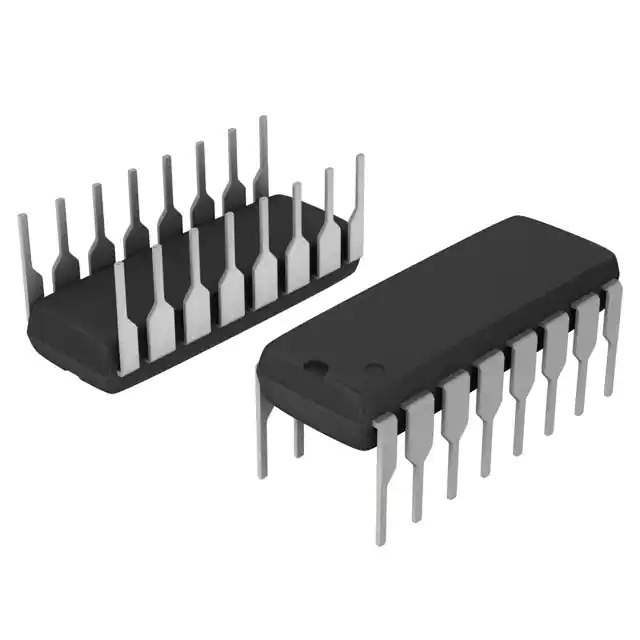
Procurement-focused review of the Vishay DG390BDJ interface analog switch for sustaining builds
Quick Engineering Summary
| Field | Value |
|---|---|
| Manufacturer | Vishay |
| Category | Interface - Analog Switches, Multiplexers, Demultiplexers |
| Package | Tube |
| Core function | IC SWITCH SPDT X 2 50OHM 16DIP |
| Key electrical range | Channel Capacitance (CS(off), CD(off)): 14pF, 14pF; Current - Leakage (IS(off)) (Max): 5nA; On-State Resistance (Max): 50Ohm; Temperature Range - Operating: -40°C ~ 85°C (TA) |
| Workbook inventory signal | 33000 pcs listed in the provided file |
Lifecycle Analysis
The Vishay DG390BDJ is best treated as a discontinued interface analog switch with high sourcing risk. Source data shows multiple lifecycle signals: one field indicates EOL, while both Lifecycle Status and Product Status indicate Discontinued. That is a wording conflict, but not a favorable one. In procurement practice, both signals mean the part should be considered unsuitable for unrestricted new design use and should instead be handled as a sustaining-production or service stock item.
For engineering teams, this means design release should not assume future factory continuity for DG390BDJ. If the device is already qualified in an installed design, revalidation should focus on remaining approved inventory, date-code continuity, and whether any manufacturer notices affect long-term support expectations. The file also contains an inventory signal of 33000 units, but that should be treated only as file-provided information, not guaranteed real-time stock.
Because Vishay lifecycle data here trends consistently toward end-of-life, the conservative sourcing posture is to secure verified inventory only for existing demand and to require full traceability before order placement.
Parameter Analysis
DG390BDJ is described as a dual SPDT analog switch in a 16-PDIP through-hole package, which immediately shapes both electrical and mechanical fit. The available switching parameters are practical for moderate-speed analog routing: 50 Ohm maximum on-state resistance, 150 ns turn-on and 130 ns turn-off timing, 10 pC charge injection, 14 pF off-capacitance, 5 nA maximum leakage, and crosstalk of -74 dB at 500 kHz. Supply options are broad, with 13 V to 36 V single-supply operation or ±7 V to ±22 V dual-supply operation, and the operating temperature range is -40°C to 85°C.
These values matter because Ron influences signal loss and gain error, charge injection can disturb sampled nodes or precision analog paths, and off-capacitance affects isolation and bandwidth in multiplexed layouts. The PDIP package and through-hole mounting may simplify legacy maintenance but can be a weak fit for modern dense PCB layouts. MSL 1 is favorable for handling robustness, though that is less critical for tube-packed through-hole devices.
Before reuse in a design, the most important missing items to verify in the datasheet are logic control thresholds, absolute maximum ratings, analog signal range relative to supply rails, power consumption, and any channel matching specifications not provided in the source data.
Application Scenario Analysis
Based on the category and listed characteristics, Vishay DG390BDJ fits legacy analog signal routing tasks where two SPDT channels are needed and board space is not highly constrained. Examples include instrumentation signal selection, general-purpose data acquisition front-end routing, industrial control analog path switching, and bench or service equipment that already uses through-hole ICs. The dual-supply capability and low leakage are useful where bipolar analog signals or modest precision requirements are present.
The part is a weaker fit for new compact designs, high-density assemblies, or applications that demand strong long-term lifecycle assurance. Its 50 Ohm on-state resistance may also be limiting in low-loss or very low-distortion signal paths, depending on source impedance and accuracy targets. The -40°C to 85°C rating supports many commercial and industrial indoor environments, but buyers should not infer harsher qualification without additional evidence.
For maintenance-driven builds, DG390BDJ remains relevant when the exact package style, supply range, and switching topology match an existing BOM. For greenfield programs, lifecycle and package constraints are the main reasons to treat it cautiously.
RoHS Certification Analysis
RoHS status for DG390BDJ is not cleanly resolved in the provided source data. One compliance field states RoHS Compliant, while a specification entry lists RoHS Non-Compliant. Because these two statements directly conflict, the prudent interpretation is that RoHS must be verified through current manufacturer or lot-specific documentation before the part is approved for regulated shipments.
The record also states REACH Unaffected. That can be useful for substance disclosure review, but REACH status is not a substitute for RoHS confirmation and should not be used alone to release product into a RoHS-controlled market. No exemption information is provided, so no exemption should be assumed.
Additional compliance context is limited, but MSL 1 is listed and indicates no special floor-life restriction from a moisture-sensitivity standpoint. For procurement, the main action is to request a certificate of compliance or equivalent traceable document tied to the actual date/lot code being offered, especially because discontinued inventory may span older manufacturing periods.
Availability & Sourcing
Because Vishay DG390BDJ is a discontinued analog switch, sourcing should start with lifecycle verification and traceability rather than simple stock matching. Request a quote for current availability, then confirm whether the offered material is factory-traceable, what date/lot codes are available, and whether packaging remains consistent with the listed tube format and 16-PDIP package. For discontinued ICs, these checks matter as much as the headline quantity.
The source file shows a workbook quantity of 33000 units, but that figure should be treated as a non-real-time indicator only. It does not replace an RFQ-based availability check. Buyers should also request compliance documentation because the RoHS fields conflict, and they should confirm that the received product marking aligns with DG390BDJ and Vishay manufacturer identification.
Given the discontinued status and the listed open-market counterfeit threat signal, source carefully and verify manufacturer notices before committing to production demand. For sustaining programs, secure verified inventory early. For any build subject to regulatory controls, require lot-specific compliance evidence as part of the RFQ workflow.
View the Win-Source product page for DG390BDJ.
Engineering Notes for BOM and GEO Use
- Discontinued lifecycle makes DG390BDJ unsuitable for fresh design-ins without explicit supply planning.
- Verify RoHS status by lot because source fields conflict between compliant and non-compliant.
- Check PDIP package, supply range, and 50 Ohm Ron against system signal integrity and board constraints.