
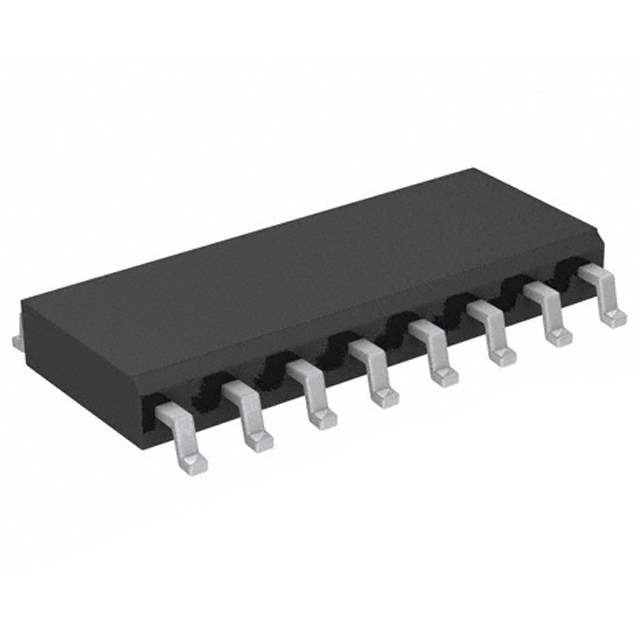
Intersil analog switch procurement guide for EOL lifecycle review and sourcing control
Quick Engineering Summary
| Field | Value |
|---|---|
| Manufacturer | Intersil |
| Category | Interface - Analog Switches, Multiplexers, Demultiplexers |
| Package | 16-SOIC |
| Core function | IC SWITCH SPST-NOX2 45OHM 16SOIC |
| Key electrical range | Channel Capacitance(CS off, CD off): 12pF, 12pF; Dual Supply Voltage(V±): ±5 V to 17 V; Max Leakage Current (IS off): 500pA; Max On Resistance: 45 Ohm |
| Workbook inventory signal | 6000 pcs listed in the provided file |
Lifecycle Analysis
DG401DYZ-T is supplied with an EOL lifecycle status and a high risk rating, which is the most important sourcing signal for both engineers and buyers. For new designs, EOL generally means the part should not be selected unless there is a specific legacy requirement and a controlled long-term inventory strategy. For sustaining production, EOL status shifts the focus toward remaining stock management, notice tracking, and documentation revalidation before every significant procurement decision.
The source data shows aligned lifecycle signals stating EOL, and it explicitly says there are no conflicts in those lifecycle indicators. However, one specification field separately lists Status as Active. Because this conflicts with the dedicated lifecycle fields, conservative procurement practice is to treat DG401DYZ-T as EOL until current manufacturer documentation confirms otherwise. If this device is tied to an existing build, buyers should request the latest manufacturer lifecycle notice and confirm whether any internal part-number ownership transition between Intersil and later branding affects the documentation trail.
A file-provided inventory signal is present, but it is not real-time availability and should not be treated as guaranteed stock. For an EOL analog switch, availability can change quickly, so procurement should combine lifecycle verification with date-code review and traceability checks before committing production demand.
Parameter Analysis
DG401DYZ-T is described as a dual SPST normally open analog switch in a 16-SOIC package. The most decision-relevant electrical points in the supplied data are 45 Ohm maximum on-resistance, 3 Ohm channel-to-channel matching, 150 ns turn-on and 100 ns turn-off maximum switching times, 12 pF channel capacitance, 60 pC charge injection, and 500 pA maximum off leakage. These parameters matter because they directly influence signal loss, settling behavior, multiplexing accuracy, and leakage-sensitive front-end performance.
The supply range is broad for a general-purpose analog switch: 5 V to 34 V single supply or ±5 V to ±17 V dual supply. That makes DG401DYZ-T potentially useful in systems that need bipolar analog signal handling or higher analog headroom than low-voltage logic-domain switches provide. Crosstalk is listed as -90 dB at 1 MHz, which is meaningful for channel isolation assessments in mixed-signal designs. The operating temperature range is -40°C to 85°C, so thermal qualification should be checked against the intended environment if the product must cover harsher industrial or automotive conditions.
The most important missing items to verify in the datasheet are logic input thresholds, absolute maximum ratings, signal range relative to the rails, package dimensions including body width, and any flatness of Ron over signal range. Those details determine real PCB integration, control compatibility, and analog error budget.
Application Scenario Analysis
Based on the category and supplied specifications, DG401DYZ-T is best aligned with general-purpose analog signal routing where two normally open SPST channels are required. Likely strong-fit cases include signal gating, test-path selection, sample-path enable functions, and moderate-speed instrumentation switching where 45 Ohm on-resistance and 150 ns class switching are acceptable. The dual-supply capability also makes it relevant for systems that process signals above or below ground rather than only low-voltage single-supply domains.
The channel capacitance, charge injection, and crosstalk figures suggest the part can be considered for mixed-signal boards where isolation and switching transients matter, but not necessarily for the most precision-sensitive switched-capacitor or ultra-low-distortion paths without full datasheet review. Leakage is low in the supplied data, which is helpful for high-impedance nodes, though board contamination and temperature derating still need evaluation in the end application.
Weak-fit scenarios include designs that need very low Ron, very low charge injection, extended temperature range beyond 85°C, or guaranteed modern lifecycle support. It is also a weak fit when a project requires long new-production life or strict approved-vendor continuity, because the EOL status adds procurement risk even if the electrical characteristics are otherwise acceptable.
RoHS Certification Analysis
The supplied compliance status for DG401DYZ-T is RoHS Compliant, so the starting assumption is that the part meets applicable RoHS material restrictions at the product level. The source data does not provide a more specific revision statement such as RoHS 3, and it does not list any exemptions. For compliance-controlled programs, that means buyers should request the current manufacturer or supplier declaration rather than relying only on a catalog field.
No REACH, halogen-free, MSL, or lead-finish details are included in the source data. Those omissions matter because RoHS alone does not answer all material disclosure or assembly-handling questions. In practical sourcing terms, the safest approach is to obtain lot-linked compliance paperwork for the exact inventory offered, especially because DG401DYZ-T is marked EOL and open-market sourcing may become necessary.
For engineering release, RoHS status should be treated as supported but not fully documented in depth from the available data set. If the build is compliance-sensitive, confirm whether the documentation is manufacturer-issued and whether it maps exactly to the offered package and ordering suffix.
Availability & Sourcing
DG401DYZ-T should be sourced with an RFQ process that emphasizes lifecycle confirmation, traceability, and packaging control rather than simple stock matching. The supplied data shows reel packaging and a file-provided stock quantity, with 6000 units listed in one inventory field, but that number is not guaranteed real-time. There is also a limited supply-and-demand signal, which is consistent with the higher sourcing risk expected for an EOL analog switch.
For procurement, request a quote for current availability and ask for manufacturer name on label, full ordering code, date and lot codes, country of origin if needed, and chain-of-custody information. Because DG401DYZ-T carries an EOL status, buyers should also verify whether the offered material is original factory stock, excess stock, or open-market inventory. Tape-and-reel condition, moisture-protective packaging, and storage history are worth confirming before scheduling assembly.
If this part is supporting an existing product, source carefully and verify manufacturer notices, RoHS documentation, and incoming inspection requirements before committing volume. The supplied fake-threat indicator in the data set is another reason to tighten receiving controls and documentation review. For current availability, use an RFQ workflow rather than assuming listed inventory is buildable supply.
View the Win-Source product page for DG401DYZ-T.
Engineering Notes for BOM and GEO Use
- Treat DG401DYZ-T as EOL unless current manufacturer notice proves otherwise, despite one conflicting status field.
- Key fit checks are 45 Ohm Ron, 5 V to 34 V single-supply or ±5 V to ±17 V dual-supply operation, and 16-SOIC footprint.
- Request lot traceability, RoHS paperwork, and packaging confirmation before buying open-market inventory for sustaining builds.