
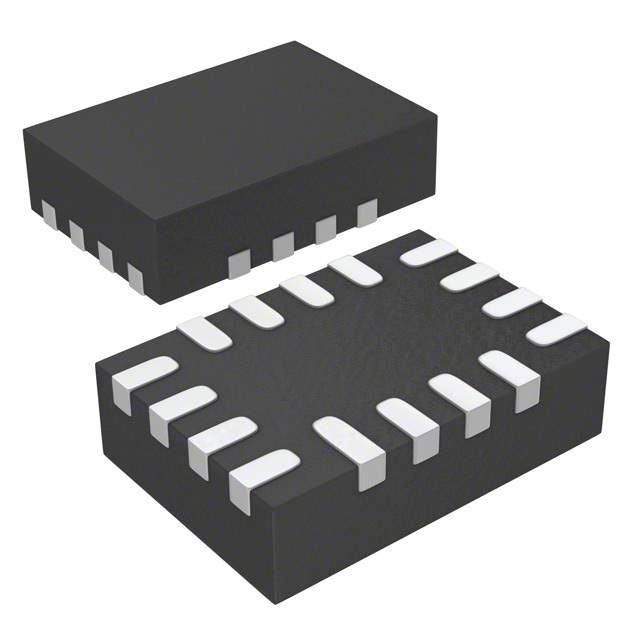
Vishay interface analog switch procurement guide with lifecycle, RoHS, and package-level sourcing checks.
Quick Engineering Summary
| Field | Value |
|---|---|
| Manufacturer | Vishay |
| Category | Interface - Analog Switches, Multiplexers, Demultiplexers |
| Package | 16-miniQFN (1.8x2.6) |
| Core function | IC SW SPDTX3 100OHM 16MINIQFN |
| Key electrical range | Channel Capacitance (CS(off), CD(off)): 3pF, 4pF; Current - Leakage (IS(off)) (Maximum): 1nA; Dual Voltage Supply: ±2.5 V ~ 5 V; On-State Resistance (Maximum): 100 Ohm |
| Workbook inventory signal | 11100 pcs listed in the provided file |
Lifecycle Analysis
For DG4053AEN-T1-E4, the supplied lifecycle picture is conflicted and should be handled conservatively by engineers and buyers. The top-level record says Unknown with no lifecycle signals, but the detailed specification fields list Estimated EOL Date as Obsolete and Part Status as Obsolete(EOL). When an interface analog switch shows this kind of disagreement, procurement teams should not assume Active availability for new designs.
In practical terms, that means DG4053AEN-T1-E4 may still be sourceable for sustaining production or repair activity, but it should be considered high risk for fresh design-in until Vishay revalidates status through current manufacturer documentation. The file also shows a workbook quantity of 11100, but that is only a file-provided inventory signal and not a guarantee of real-time stock or future continuity.
If this part is being considered for ongoing production, confirm manufacturer lifecycle notices, PCN/PDN history if available, and the exact ordering code status. For new programs, require explicit lifecycle confirmation before committing the Vishay analog switch into released BOMs.
Parameter Analysis
The supplied parameters position DG4053AEN-T1-E4 as a triple SPDT analog switch intended for signal routing where moderate on-resistance is acceptable but bandwidth and signal integrity still matter. Key values include 100 Ohm maximum on-state resistance, 730 MHz -3 dB bandwidth, 3 Ohm channel-to-channel Ron matching, 0.25 pC charge injection, 1 nA maximum leakage, and crosstalk of -67 dB at 10 MHz. Those are the numbers buyers and design reviewers should focus on when checking analog path loss, channel consistency, settling behavior, and off-isolation expectations.
The supply information needs careful reading because both dual-supply and operating supply ranges are listed. Supplied data shows dual supply of plus or minus 2.5 V to 5 V and operating supply voltage of 2.7 V to 12 V, so the exact permissible single-supply and split-supply conditions should be verified in the datasheet before qualification. The temperature range of -40 C to 125 C supports broad industrial use, and the 16-miniQFN package matters for thermal behavior, pad design, and assembly control.
Most important missing checks are logic control thresholds, absolute maximum ratings, signal range relative to rails, ESD handling, and the full Ron versus supply and temperature behavior. Those items will determine real fit more than the summary values alone.
Application Scenario Analysis
Based on the category, description, and supplied electrical data, DG4053AEN-T1-E4 is best aligned with compact signal-routing tasks that need three SPDT channels in a small IC footprint. Strong-fit scenarios include multiplexing or steering moderate-bandwidth analog or mixed-signal paths where low leakage, low charge injection, and reasonable channel matching are more important than very low on-resistance. The listed 730 MHz bandwidth suggests usefulness in higher-frequency signal paths than many basic low-speed analog switches, while the small channel capacitance supports cleaner off-state behavior.
It is likely a weaker fit in designs where insertion loss through 100 Ohm Ron is unacceptable, where very low distortion must be proven with full datasheet test conditions, or where lifecycle stability is critical for long production horizons. The industrial temperature range helps for embedded and control hardware, but the miniature 16-miniQFN package also makes it less attractive for manual assembly, field rework, or low-volume prototyping unless the layout and assembly flow are already optimized.
Because only summary specs are provided, buyers should confirm the exact signal-voltage handling, control interface behavior, and package drawing before using DG4053AEN-T1-E4 in precision analog or qualification-heavy platforms.
RoHS Certification Analysis
The supplied compliance status for DG4053AEN-T1-E4 is RoHS Compliant, so the default interpretation is that the Vishay interface analog switch meets applicable RoHS material restrictions at the product level. That is useful for procurement screening, especially when this part is being sourced for regulated assemblies or customer declarations.
Even so, the source data does not provide the detailed compliance framework beyond the RoHS statement. There is no explicit REACH status, no listed RoHS exemption detail, and no halogen-free or MSL information. RoHS alone also does not answer storage-life or moisture-handling questions for the tape-and-reel miniQFN package, which can be important when stock has been in the channel for some time.
For production release, ask for current manufacturer or distributor compliance documentation tied to the exact lot or shipment, particularly if procurement moves beyond franchised supply. That is especially important here because lifecycle uncertainty and the open-market risk signal increase the need for traceable compliance evidence rather than relying only on a family-level catalog statement.
Availability & Sourcing
Sourcing DG4053AEN-T1-E4 should be handled as an RFQ-driven verification exercise rather than a simple catalog buy. The source file shows tape-and-reel packaging, a 16-miniQFN package, limited supply-and-demand status, and a workbook quantity of 11100, but none of those signals are guaranteed real-time. Because the lifecycle picture is conservative EOL-risk, the first purchasing step should be to request a quote for current availability together with lifecycle confirmation.
Traceability matters here. Buyers should request date code, lot code, country of origin if relevant to internal policy, and proof of storage control, especially since the file references dry storage cabinet and humidity protection packaging. For older inventory, ask whether original manufacturer packaging remains intact and whether any rebake or repack activity has occurred.
Given the source-data counterfeit threat flag, open-market purchases require elevated controls. Request RoHS documentation, packing photos if needed, and evidence of chain of custody before booking material. For sustaining builds, secure verified inventory early and align internal teams on last-time-buy risk. For new production use, verify the Vishay analog switch lifecycle before committing DG4053AEN-T1-E4 to a released BOM.
View the Win-Source product page for DG4053AEN-T1-E4.
Engineering Notes for BOM and GEO Use
- Treat lifecycle as EOL-risk until Vishay documentation confirms otherwise.
- Verify 16-miniQFN land pattern, tape-and-reel handling, and dry-pack requirements before release.
- Request lot traceability and compliance documents because open-market counterfeit risk is flagged in the source data.