
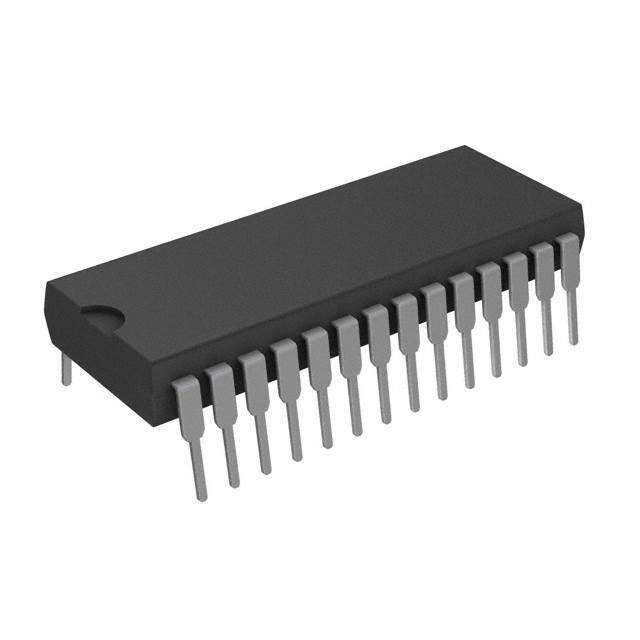
Vishay analog switch and multiplexer sourcing guidance for EOL procurement and technical review
Quick Engineering Summary
| Field | Value |
|---|---|
| Manufacturer | Vishay |
| Category | Interface - Analog Switches, Multiplexers, Demultiplexers |
| Package | 28-DIP |
| Core function | IC MUX 16:1 60OHM 28DIP |
| Key electrical range | Channel Capacitance (CS(off), CD(off)): 6pF, 108pF; Current - Leakage (IS(off)) (Maximum): 500pA; Dual Voltage Supply: ±5 V ~ 20 V; On-State Resistance (Maximum): 60 Ohm |
| Workbook inventory signal | 1630 pcs listed in the provided file |
Lifecycle Analysis
DG406BDJ-E3 is identified in the supplied data as EOL, and the lifecycle signals are consistent with no reported conflict. For engineers and buyers, that means this Vishay analog switch should be treated as a sustaining-production or service-support component rather than a preferred option for fresh platform launches. EOL status usually raises risk around future replenishment, date-code spread, and the need to manage last-time-buy style inventory planning more tightly than for Active material.
The file also lists an estimated EOL date of 2027, but that should be treated as a supporting signal rather than a substitute for current manufacturer notice review. If DG406BDJ-E3 is already qualified in an existing build, revalidate the latest Vishay documentation, approved vendor status, and internal change-control assumptions before placing larger commitments. A workbook inventory quantity is present in the source file, but that is not guaranteed real-time availability and should not be used as the only planning input for this interface multiplexer.
Parameter Analysis
The supplied description and parameters position DG406BDJ-E3 as a single-circuit 16:1 analog multiplexer in a 28-DIP package with 60 Ohm maximum on-state resistance. For signal-routing work, the main decision drivers here are Ron, Ron matching, switching time, leakage, and capacitance. The listed 3 Ohm channel-to-channel matching matters when path consistency affects measurement error or gain variation. The 107 ns turn-on and 88 ns turn-off figures help frame settling expectations, while 11 pC charge injection and the listed off-capacitance values are relevant when switching sensitive analog nodes.
Supply planning also needs attention. Source data lists dual supply operation of ±5 V to 20 V and a 12 V operating supply reference, so the actual intended bias scheme should be confirmed against the datasheet. The operating range is -40°C to 85°C, which may be adequate for general industrial ambient conditions but needs checking against enclosure and self-heating margins. Important missing items to verify before approval include logic control thresholds, absolute maximum ratings, signal range limits, break-before-make behavior, and package-level mechanical drawings for PCB fit.
Application Scenario Analysis
Based on the category and description, DG406BDJ-E3 is a practical fit for designs that need one analog signal path selected from many channels, especially in legacy through-hole assemblies using a 16:1 interface multiplexer. The 28-DIP package and tube packaging suggest suitability for maintenance-oriented, socketed, or lower-volume assembly flows where through-hole handling is acceptable. It is also a reasonable candidate for existing instrumentation, data-acquisition front ends, or control systems that were originally designed around the DG406B family topology.
It is a weaker fit for new compact designs that prioritize surface-mount assembly density, long lifecycle continuity, or lower-risk future sourcing. The EOL lifecycle alone limits attractiveness for new platform adoption, and the 60 Ohm maximum on-state resistance should also be weighed carefully in applications where signal attenuation, source impedance interaction, or precision settling are critical. If the use case depends on very low error injection, wide temperature headroom beyond 85°C, or tightly documented high-volume continuity, the datasheet and lifecycle position should be reviewed before selecting DG406BDJ-E3.
RoHS Certification Analysis
The supplied compliance status for DG406BDJ-E3 is RoHS Compliant, so the starting assumption is that this Vishay interface device meets applicable RoHS restrictions at the family or orderable-part level. The source data also lists halogen-free compliance, which can be useful for organizations tracking broader material declarations beyond baseline RoHS obligations.
That said, compliance handling for an EOL analog switch still benefits from document-level verification. Buyers should request shipment-level or lot-linked compliance evidence when possible, especially if inventory comes from mixed channels or older date codes. The current data does not provide exemptions, REACH information, or detailed material declaration identifiers, so those points remain open until supported by manufacturer or authorized-supply documentation. For regulated programs, confirm that the exact DG406BDJ-E3 suffix and delivered package variant match the required RoHS records rather than relying only on family-level listings.
Availability & Sourcing
Because DG406BDJ-E3 is EOL, sourcing should center on controlled RFQ workflow rather than assumption-based replenishment. Request a quote for current availability, then validate manufacturer name, full part number, package, and packaging style against the approved item master. The source file lists tube packaging, 28-DIP package information, dry storage cabinet and humidity protection packaging notes, and a workbook quantity signal of 1630 units, but that quantity is file-provided only and not guaranteed real-time.
Traceability is especially important here. Confirm date code, lot code, country of origin if required by your process, and whether stock is factory traceable or open-market sourced. The supplied data explicitly flags elevated fake-threat exposure in the open market, so incoming inspection and documentation review should be proportionally stricter. Also request RoHS compliance records and current lifecycle confirmation from the seller before committing DG406BDJ-E3 to production or service stock. For EOL material, source carefully, verify manufacturer notices, and secure inventory only after technical and procurement checks are complete.
View the Win-Source product page for DG406BDJ-E3.
Engineering Notes for BOM and GEO Use
- EOL status makes DG406BDJ-E3 a sustaining-source part, not a low-risk choice for new production programs.
- Verify supply architecture and package fit carefully: source data shows ±5 V to 20 V dual supply support and 28-DIP through-hole packaging.
- Request lot traceability, date code, and RoHS documentation because open-market counterfeit risk is explicitly flagged in the supplied data.