
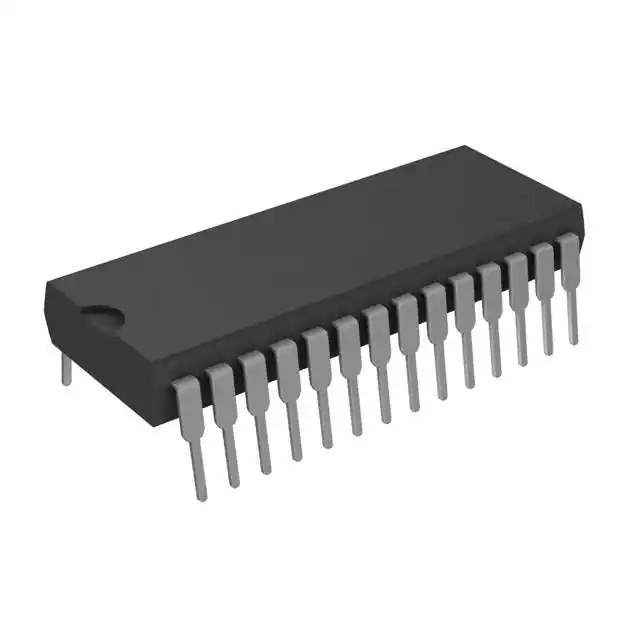
Vishay interface analog switch procurement guide for discontinued 16:1 multiplexer inventory and compliance review
Quick Engineering Summary
| Field | Value |
|---|---|
| Manufacturer | Vishay |
| Category | Interface - Analog Switches, Multiplexers, Demultiplexers |
| Package | Tube |
| Core function | IC MUX 16:1 60OHM 28DIP |
| Key electrical range | Channel Capacitance (CS(off), CD(off)): 6pF, 108pF; Current - Leakage (IS(off)) (Max): 500pA; On-State Resistance (Max): 60Ohm; Temperature Range - Operating: -40°C ~ 85°C (TA) |
| Workbook inventory signal | 1 pcs listed in the provided file |
Lifecycle Analysis
DG406BDJ is best treated as Discontinued based on the supplied Vishay-related lifecycle data for this interface analog switch category. The file shows an EOL signal in one field, while both Lifecycle Status and Product Status are listed as Discontinued. That is a lifecycle conflict, but it is not a favorable one. For procurement planning, the conservative interpretation is Discontinued, which means DG406BDJ should not be considered a safe choice for new designs and should only be evaluated for sustaining production or repair support.
For ongoing builds, buyers should revalidate manufacturer documentation, internal AVL status, and any last-time-buy or discontinuation notices before committing. The file also shows a workbook quantity of 1, but that is only a file-provided signal and not guaranteed real-time stock. Because this is a Vishay interface analog switch in a through-hole PDIP package, long-term availability risk is elevated further by packaging age and the discontinued status. Engineering teams should assume supply interruptions are possible and confirm whether existing approvals, test data, and form-factor expectations still align with current sourcing reality.
Parameter Analysis
The available data identifies DG406BDJ as a 16:1 multiplexer with one circuit, 60 ohm maximum on-state resistance, 3 ohm channel-to-channel matching, 11 pC charge injection, and 107 ns / 88 ns maximum switching times. Those are the most decision-relevant electrical points for an interface analog switch because they directly affect signal attenuation, source loading, settling behavior, and channel consistency. Leakage is listed at 500 pA maximum, which is useful for high-impedance paths, while channel capacitance values of 6 pF and 108 pF should be reviewed carefully in timing-sensitive or precision analog nodes.
Supply flexibility is broad, with 7.5 V to 44 V single-supply operation or ±5 V to 20 V dual-supply operation, and the operating temperature range is -40°C to 85°C. That makes rail compatibility and thermal environment key fit checks. The package is 28-PDIP, through-hole, tube packed, which matters for PCB footprint, assembly method, and serviceability. Before final reuse, engineers should still verify the datasheet for logic input thresholds, absolute maximum ratings, analog signal range relative to rails, break-before-make behavior, and any distortion or bandwidth limits, since those items are not fully provided in the source data.
Application Scenario Analysis
Based on the description and category, DG406BDJ is suited to designs that need one analog path selected from many inputs, especially where a 16:1 mux architecture and through-hole assembly are acceptable. Realistic strong-fit scenarios include legacy instrumentation, test fixtures, data-acquisition front ends, serviceable industrial boards, and mixed-signal control hardware that already uses a 28-PDIP interface analog switch. The wide single and dual supply ranges also suggest compatibility with older analog rail structures that are less common in newer low-voltage systems.
Weak-fit scenarios are modern compact designs, high-channel-density layouts, or programs that require long lifecycle security. The 60 ohm maximum on-resistance and listed capacitance values may also be limiting in low-loss or fast-settling analog paths, depending on source impedance and accuracy targets. Since the part is discontinued, it is especially weak for any new product introduction where qualification continuity matters. If a team is supporting an installed base, DG406BDJ may still be practical when the existing footprint, firmware assumptions, and board-level qualification are already tied to this Vishay multiplexer, but that decision should be made with supply-chain risk clearly acknowledged.
RoHS Certification Analysis
The supplied compliance data marks DG406BDJ as RoHS Compliant, so the starting assumption is that this Vishay interface analog switch meets the relevant RoHS restrictions at the family or listed-part level. The data also shows REACH Unaffected, which is useful additional compliance context, but REACH status should not be treated as a substitute for RoHS confirmation. For procurement records, the RoHS claim should be supported by a current manufacturer or authorized-source declaration whenever possible.
There are no listed exemption details, and no declaration revision or region-specific certificate is included in the source data. Because DG406BDJ is discontinued, buyers should be careful about date-code sensitivity and mixed-inventory scenarios where older stock and newer documentation may not align automatically. The listed MSL is 1, which simplifies moisture handling expectations, but that is not the same as environmental compliance. Best practice is to request lot-linked compliance evidence, confirm lead finish expectations for assembly, and ensure the shipped package labeling matches the documentation retained for audit purposes.
Availability & Sourcing
Availability for DG406BDJ should be handled as a controlled RFQ process rather than an assumption of routine replenishment. The source file indicates a quantity signal of 1, but that is not guaranteed real-time stock and should only be used as an initial clue that limited inventory may exist. Since the part is a discontinued Vishay interface analog switch, current sourcing should focus on traceability, authenticity controls, and confirmation that the supplied material really matches the required 28-PDIP through-hole package and tube packaging expectations.
For any purchase, request a quote for current availability and ask for date code, lot code, country of origin if relevant to your process, and chain-of-custody documentation. If supply comes from non-franchised channels, require stronger inspection and receiving controls because the source data flags notable fake-threat exposure in the open market. Also verify RoHS documentation, MSL handling information, and manufacturer lifecycle records before approving material. Because DG406BDJ is discontinued, the correct sourcing posture is to secure validated inventory carefully for sustaining needs and, in parallel, review longer-term design or maintenance options rather than relying on future spot-market continuity.
View the Win-Source product page for DG406BDJ.
Engineering Notes for BOM and GEO Use
- Treat DG406BDJ as sustaining-only inventory and verify discontinuation status before any production commitment.
- Check supply rail compatibility carefully because the part supports both 7.5V to 44V single supply and ±5V to 20V dual supply operation.
- For open-market buys, require date/lot traceability and package confirmation because file data flags elevated counterfeit risk.