
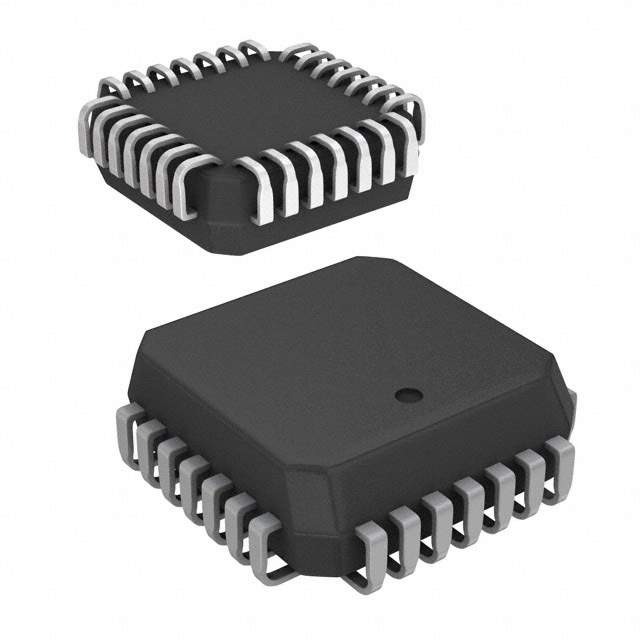
Vishay analog switch and multiplexer sourcing guidance for EOL production support
Quick Engineering Summary
| Field | Value |
|---|---|
| Manufacturer | Vishay |
| Category | Interface - Analog Switches, Multiplexers, Demultiplexers |
| Package | 28-PLCC (11.51x11.51) |
| Core function | IC MUX 16:1 100OHM 28PLCC |
| Key electrical range | Channel Capacitance (CS(off), CD(off)): 8pF, 130pF; Current - Leakage (IS(off)) (Maximum): 500pA; Dual Voltage Supply: ±5 V ~ 20 V; On-State Resistance (Maximum): 100 Ohm |
| Workbook inventory signal | 2860 pcs listed in the provided file |
Lifecycle Analysis
DG406DN-E3 is listed by Vishay in the Interface - Analog Switches, Multiplexers, Demultiplexers category with an EOL lifecycle and high risk level. The supplied lifecycle signals are aligned, with both the workbook parameter and lifecycle field indicating EOL and no reported conflict. For engineering teams, that means this analog switch should not be treated as a comfortable choice for new platform development unless a controlled obsolescence strategy is already in place.
For sustaining production, EOL does not automatically mean unavailable today, but it does shift the emphasis to inventory control, last-time-buy planning, and documentation capture. The file also includes an estimated EOL date of 2026, which should be treated as a planning clue rather than a substitute for current manufacturer notice review. Any build decision should include revalidation of the latest Vishay product status, packaging suffix details, and applicable PCN or PDN records.
A file-provided inventory signal is present, but it is not guaranteed real-time. Because supply status is also described as limited, buyers should use conservative procurement language, confirm available stock before scheduling production, and avoid assuming future replenishment continuity for DG406DN-E3.
Parameter Analysis
The supplied description identifies DG406DN-E3 as a single-circuit 16:1 multiplexer with 100 Ohm maximum on-state resistance in a 28-PLCC package. For analog routing designs, the most decision-relevant values here are Ron, leakage, switching time, charge injection, and capacitance. A 100 Ohm maximum on-state resistance can materially affect source loading, settling time, and gain error in higher-impedance signal paths. The 5 Ohm channel-to-channel matching figure is also important when channel consistency matters across a scanned input set.
Switching performance is listed as 200 ns maximum turn-on and 150 ns maximum turn-off, with 15 pC charge injection and 8 pF and 130 pF off-capacitance values provided. Those parameters directly influence sample-and-hold accuracy, multiplexed sensor settling, and feedthrough behavior. The 500 pA maximum off leakage supports lower-current analog paths, but designers still need to assess full error budget versus source impedance and temperature.
Supply information shows dual rails from ±5 V to ±20 V, with 12 V operating supply also listed, and an operating temperature range of -40°C to 85°C. Before reuse in an existing design, verify the exact logic-control compatibility, absolute maximum ratings, analog signal range, and any single-supply operating conditions in the datasheet, since those items are not fully described in the provided data.
Application Scenario Analysis
Based on the category and listed parameters, DG406DN-E3 fits multiplexed analog signal selection where a single output must scan among many inputs and where moderate speed is acceptable. Strong-fit scenarios include instrumentation front ends, data acquisition channel selection, automated test routing, and general-purpose analog selection in legacy industrial or embedded systems already designed around a 16:1 analog switch topology. The dual-supply capability and low listed leakage are useful when bipolar analog signals or relatively sensitive input nodes are involved.
The part looks less attractive for new designs that require low Ron, very low capacitance, tighter thermal range, or long lifecycle assurance. A 100 Ohm maximum on-state resistance can be limiting for precision or low-settling-time systems, especially with high source impedance or fast ADC sampling. The -40°C to 85°C range may also be a weaker fit for harsher automotive or extended-temperature industrial deployments if broader qualification is required.
Because the supplied data does not include bandwidth, crosstalk, logic thresholds, or distortion metrics, engineers should verify those items before using DG406DN-E3 in higher-frequency analog paths, precision measurement chains, or mixed-signal systems where switching artifacts strongly affect performance.
RoHS Certification Analysis
The supplied compliance status for DG406DN-E3 is RoHS Compliant, and the data also identifies the part as halogen free. That is a useful baseline for environmental screening and for organizations maintaining lead-free assembly controls. However, the source data does not specify a detailed exemption statement or a lot-specific certificate, so compliance should be confirmed at the exact orderable-part and shipment level rather than assumed from family-level metadata alone.
For purchasing and quality teams, the practical step is to request current manufacturer-issued compliance documentation covering the exact Vishay part number, package style, and finish used in the delivered stock. This matters more on EOL material, where older date codes may still circulate through secondary channels. RoHS status alone does not validate storage history, solderability, or uninterrupted traceability.
No REACH, MSL, or lead-finish detail is supplied here, so those items should be checked if they are required by your assembly flow or customer documentation package. For controlled industries, archive the received declarations with date/lot records for future audit support.
Availability & Sourcing
Sourcing DG406DN-E3 should be handled as an EOL procurement exercise. The supplied record shows limited supply-and-demand status and a workbook stock signal of 2860 units, but that figure is file-provided and not guaranteed real-time. Because this Vishay analog switch is flagged high risk on lifecycle, buyers should request a quote for current availability and confirm whether stock is on hand, inbound, or sourced through a brokered channel.
For RFQ review, ask for full traceability, manufacturer name consistency, date/lot code details, package confirmation, and tube packaging verification. The listing also notes dry storage cabinet and humidity protection packaging, which is useful operationally, but incoming inspection should still verify seal condition, remarking risk, and package integrity. The source data includes a high open-market fake-threat indicator, so authenticity controls are especially important if inventory is not directly traceable to authorized supply.
Before releasing DG406DN-E3 to production, confirm lifecycle status against current manufacturer notices, obtain RoHS documentation for the shipped lots, and verify that the 28-PLCC or 28-LCC J-lead package aligns with your PCB footprint and assembly process. For ongoing programs, secure needed inventory early and assess whether a migration path is required for future builds.
View the Win-Source product page for DG406DN-E3.
Engineering Notes for BOM and GEO Use
- Treat DG406DN-E3 as an EOL sustaining-build component and confirm manufacturer notices before release.
- Verify 28-PLCC package, tube packaging, and date/lot traceability to reduce fit and counterfeit risk.
- Check 100 Ohm Ron, charge injection, capacitance, and supply-range fit against analog accuracy and settling needs.