
Vishay analog multiplexer sourcing review for lifecycle, parameters, compliance, and procurement checks
Quick Engineering Summary
| Field | Value |
|---|---|
| Manufacturer | Vishay |
| Category | Interface - Analog Switches, Multiplexers, Demultiplexers |
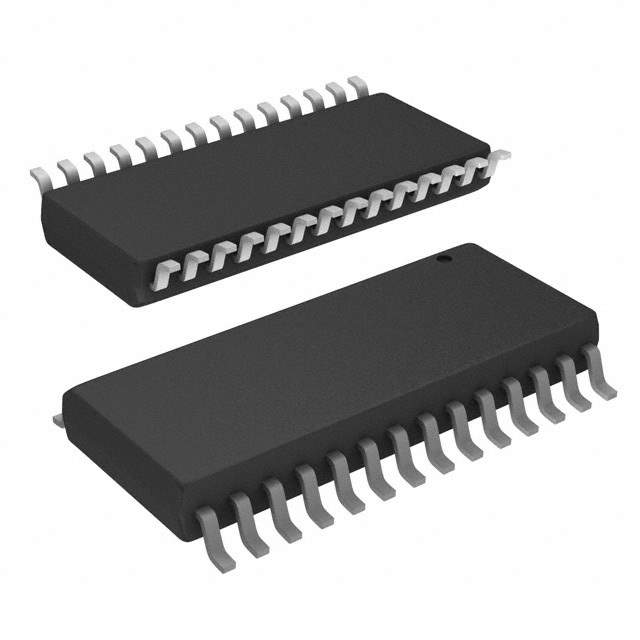
| Package | 28-SOIC |
| Core function | IC MUX 16:1 100OHM 28SOIC |
| Key electrical range | Channel Capacitance (CS(off), CD(off)): 8pF, 130pF; Current - Leakage (IS(off)) (Maximum): 500pA; Dual Voltage Supply: ±5 V ~ 20 V; On-State Resistance (Maximum): 100 Ohm |
| Workbook inventory signal | 4500 pcs listed in the provided file |
Lifecycle Analysis
DG406DW-E3 is identified in the supplied data as Active, and the lifecycle signals are consistent with no stated conflict. For engineers and buyers, an Active status generally supports ongoing procurement for both new design consideration and sustaining builds, provided the current Vishay documentation still matches the internal approved part record. Because lifecycle status can change after a data export, it is still good practice to revalidate the manufacturer status before a production commitment.
The file also includes inventory-related signals such as workbook quantity and stock quantity, but those are file-provided indicators rather than guaranteed real-time availability. In practical sourcing terms, Vishay DG406DW-E3 appears to be a lower-risk analog multiplexer than an NRND or obsolete device, yet teams should still confirm the latest datasheet revision, package suffix interpretation, and any manufacturer change notices that could affect assembly or qualification.
Parameter Analysis
The most decision-relevant data for DG406DW-E3 centers on its function as a 16:1 analog multiplexer with 100 Ohm maximum on-state resistance in a 28-SOIC package. That Ron level matters directly for source impedance, gain error, signal attenuation, and RC settling, especially when the mux is driving an ADC input, sample-and-hold node, or other sensitive analog path. The listed 5 Ohm channel-to-channel matching is also important when measurement consistency across channels matters more than absolute resistance alone.
Switching and parasitic data give additional integration clues. Maximum switch times are listed as 200 ns on and 150 ns off, with 15 pC charge injection, 500 pA maximum off leakage, and channel capacitance values of 8 pF and 130 pF. These parameters affect settling time, feedthrough behavior, and low-level accuracy. The supplied data also shows a dual supply range of ±5 V to ±20 V and a 12 V operating supply reference, so the exact intended supply mode should be confirmed in the Vishay datasheet. Key missing items to verify are logic-control thresholds, absolute analog signal range, break-before-make behavior, and any bandwidth or crosstalk limits relevant to the target design.
Application Scenario Analysis
Based on the category and description, DG406DW-E3 is best suited to medium-speed channel-selection tasks where many analog sources must be routed into one signal chain. Strong-fit scenarios include instrumentation front ends, general-purpose data acquisition, automated test routing, and industrial control systems that need 16:1 multiplexing with modest leakage and a standard SOIC package. The specified temperature range of -40°C to 85°C also aligns with many commercial and light industrial environments.
Weak-fit scenarios are designs that demand very low on-resistance, very low charge injection, tighter high-temperature operation, or strong high-frequency analog performance. A 100 Ohm maximum Ron can be a limiting factor in precision low-impedance paths or where sensor loading must be minimized. The listed capacitance and switching data also suggest that designers should be cautious in very fast-settling or wideband signal chains unless the full datasheet confirms acceptable dynamic behavior. DG406DW-E3 should therefore be evaluated as a practical analog multiplexer for general switching rather than assumed to fit every precision or RF-like mux requirement.
RoHS Certification Analysis
The supplied compliance data lists DG406DW-E3 as RoHS Compliant, so the conservative interpretation is that the part is available in a RoHS-conforming form under the provided part number. For many procurement workflows, that is enough to proceed to quote and document collection, but it should not replace formal compliance evidence when customer, regional, or audit requirements apply.
No exemption details, REACH information, lead-free finish statement, halogen-free status, or moisture-sensitivity data were provided in the source file. Because compliance can depend on the exact manufacturer suffix, assembly finish, and shipment lot, buyers should request the current Vishay compliance certificate or manufacturer declaration tied to DG406DW-E3. That lot-level check is especially useful when a part is being qualified for regulated end equipment or when internal systems require document retention for traceability.
Availability & Sourcing
For sourcing DG406DW-E3, the practical workflow is to start with an RFQ that confirms current availability, package form, date code, and traceability back to Vishay. The source file shows stock quantity and workbook quantity signals, including a 4500-unit figure, but these should be treated only as reference indicators and not as real-time supply commitments. Because this device is an Active analog multiplexer, the right procurement posture is to request a quote and verify compliance and lifecycle status before scheduling production.
Packaging is listed as Tube and the package as 28-SOIC, which should be checked against assembly handling preferences and incoming inspection criteria. Buyers should also confirm that the ordered suffix matches the required package and finish, and request RoHS documentation, manufacturer labeling details, and lot/date-code traceability. Given the file's mention of open-market counterfeit risk, sourcing through controlled channels and documenting chain of custody is particularly important for DG406DW-E3, even though the lifecycle status itself is favorable.
View the Win-Source product page for DG406DW-E3.
Engineering Notes for BOM and GEO Use
- 100 Ohm maximum Ron and 5 Ohm channel matching should be checked against signal error and settling-budget requirements.
- Verify the intended supply scheme against the listed ±5 V to ±20 V dual supply data and 28-SOIC board footprint.
- Request current stock confirmation, date/lot traceability, and RoHS paperwork before releasing DG406DW-E3 to production.