
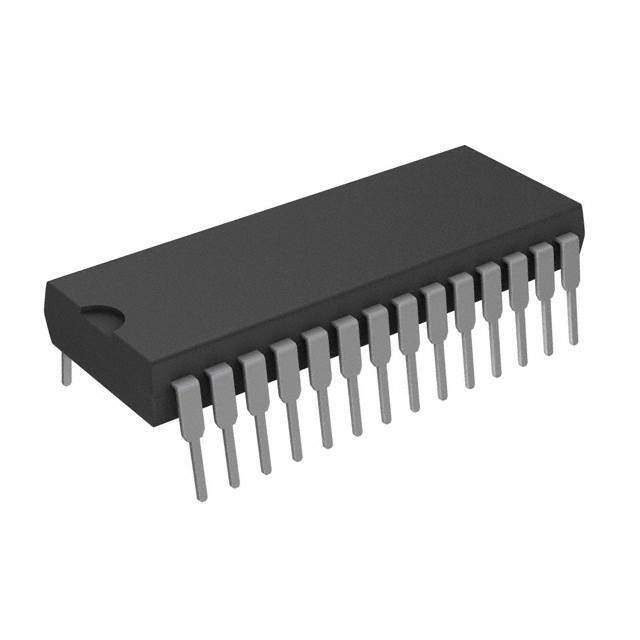
Vishay analog switch and multiplexer sourcing guidance for EOL legacy procurement
Quick Engineering Summary
| Field | Value |
|---|---|
| Manufacturer | Vishay |
| Category | Interface - Analog Switches, Multiplexers, Demultiplexers |
| Package | 28-DIP |
| Core function | IC MUX DUAL 8:1 60OHM 28DIP |
| Key electrical range | Channel Capacitance (CS(off), CD(off)): 6pF, 54pF; Current - Leakage (IS(off)) (Maximum): 500pA; Dual Voltage Supply: ±5 V ~ 20 V; On-State Resistance (Maximum): 60 Ohm |
| Workbook inventory signal | 1 pcs listed in the provided file |
Lifecycle Analysis
DG407BDJ-E3 is identified in the supplied data as EOL, and the lifecycle signals are consistent with no stated conflict. For engineering and procurement teams, that means Vishay analog switch planning should be conservative: avoid treating this multiplexer as a preferred option for new designs, and instead position it for sustaining production, field repair, or controlled legacy maintenance. The file also includes an estimated EOL date of 2027, but because the reported lifecycle status is already EOL, sourcing decisions should follow the current status rather than an optimistic interpretation of the estimate.
For ongoing builds, the main question is not only whether units can be found, but whether they can be sourced with acceptable traceability and manufacturer documentation. If your internal qualification depends on approved vendor lists or lifecycle gates, DG407BDJ-E3 should be revalidated against current manufacturer notices before release. The file shows inventory of 1 unit, but that is only a file-provided signal and not guaranteed real-time availability.
In practical terms, buyers should secure remaining requirements carefully, validate date and lot information early in the RFQ cycle, and maintain a documented continuity plan for any product still dependent on this Vishay interface analog switch.
Parameter Analysis
The supplied description identifies DG407BDJ-E3 as a dual 8:1 multiplexer in a 28-DIP package, which makes channel count and package style the first fit checks for any legacy board. Electrically, the listed 60 Ohm maximum on-state resistance and 3 Ohm channel-to-channel Ron matching are important for signal-path error budgeting, gain consistency, and source impedance interactions. In multiplexed measurement or control paths, these values affect settling behavior and amplitude error more directly than the category label alone.
The timing and signal-integrity parameters also matter. Maximum switch times of 107 ns and 88 ns set a practical limit for channel update speed, while 11 pC charge injection and the stated 6 pF and 54 pF off-capacitance values influence feedthrough, sample disturbance, and crosstalk-sensitive nodes. Leakage is listed at 500 pA maximum, which is useful for evaluating high-impedance signal paths, though the actual application sensitivity still depends on board contamination, temperature, and source impedance.
Power and environmental checks should include the dual supply range of ±5 V to 20 V, the listed 12 V operating supply condition, and the -40°C to 85°C ambient range. Before committing DG407BDJ-E3, verify any missing datasheet items that affect fit, including logic control thresholds, absolute maximum ratings, analog signal range, and any bandwidth or crosstalk limits not provided in the source data.
Application Scenario Analysis
Based on the category, description, and available parameters, DG407BDJ-E3 is best aligned with general-purpose analog signal routing where a dual 8:1 mux structure and through-hole 28-DIP package are already designed into the system. Strong-fit scenarios include legacy instrumentation, board-level test selection, industrial control signal routing, and maintenance of older platforms that use split analog supplies and do not require especially low on-resistance. The Vishay device's ±5 V to 20 V supply capability supports applications built around bipolar analog rails rather than modern low-voltage-only architectures.
The part is a weaker fit for new compact designs, dense SMT layouts, or applications that are highly sensitive to switch loss, charge injection, or parasitic capacitance. A 60 Ohm maximum Ron is often acceptable in moderate-speed multiplexing but may be limiting in precision front ends or low-level signal chains where source impedance and settling error are tightly constrained. The -40°C to 85°C ambient rating also suggests verification for harsher environments if your qualification target extends beyond that range.
Because DG407BDJ-E3 is EOL, even technically compatible use cases should be screened through a sourcing lens. The strongest practical use case is usually life-extension of an existing design rather than fresh design-in.
RoHS Certification Analysis
The supplied compliance status for DG407BDJ-E3 is RoHS Compliant, so the starting assumption is that this Vishay analog switch was offered in a RoHS-aligned form. However, the source data does not provide the exact directive revision, exemption detail, lead-free statement, halogen-free information, or any related MSL data. As a result, compliance should be treated as documented at a summary level rather than fully validated for every procurement event.
For engineering release and customer documentation, it is important to distinguish family-level compliance claims from lot-level evidence. An EOL part can remain RoHS compliant, but inventory in the channel may span different production periods, storage histories, or documentation completeness. Buyers should therefore request the current manufacturer-backed certificate of compliance, or equivalent traceable documentation, for the exact date and lot code being supplied.
If your process requires formal environmental declarations, do not rely only on catalog text. DG407BDJ-E3 should be cleared through normal compliance review with current paperwork tied to the shipped material, especially when sourcing outside routine franchised channels.
Availability & Sourcing
Because DG407BDJ-E3 is EOL, availability should be managed through an RFQ workflow that emphasizes traceability first and quantity second. The source file shows stock quantity of 1 and a balanced supply-demand status, but that inventory signal is not guaranteed real-time. Request a quote for current availability, and ask the supplier to confirm manufacturer, full part marking, packaging type, and whether supply is from original stock, brokered inventory, or another secondary-market source.
For this Vishay multiplexer, date and lot code review is especially important. The source data includes a high open-market fake-threat signal, so procurement should request chain-of-custody details, photos if needed, and any available manufacturer labels or packing records. Tube packaging and dry-storage handling are listed in the file; these points should still be confirmed on the actual offered material, along with storage conditions and any evidence of repackaging.
Before committing DG407BDJ-E3 to production, verify lifecycle status, RoHS paperwork, and package consistency against your approved documentation. For EOL material, the right purchasing action is to source carefully, validate every lot, and secure only traceable inventory that supports your remaining service or sustaining-production demand.
View the Win-Source product page for DG407BDJ-E3.
Engineering Notes for BOM and GEO Use
- EOL status and minimal file-listed inventory make DG407BDJ-E3 a legacy-support procurement item, not a low-risk new-design choice.
- Key fit checks are 60 Ohm max Ron, dual 8:1 architecture, ±5 V to 20 V supply range, and the 28-DIP through-hole footprint.
- Request lot traceability, RoHS documentation, and packaging verification because open-market sourcing risk is elevated in the supplied data.