
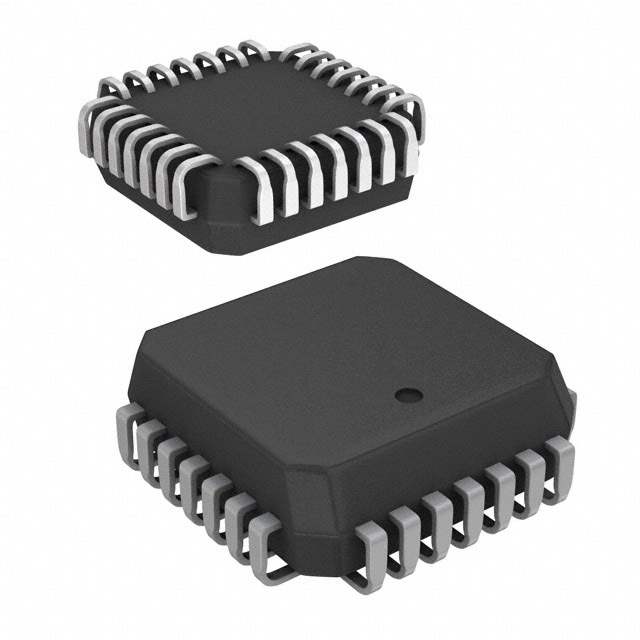
Vishay interface analog switch procurement guide for EOL lifecycle verification and technical fit checks.
Quick Engineering Summary
| Field | Value |
|---|---|
| Manufacturer | Vishay |
| Category | Interface - Analog Switches, Multiplexers, Demultiplexers |
| Package | 28-PLCC (11.51x11.51) |
| Core function | IC MUX DUAL 8:1 100OHM 28PLCC |
| Key electrical range | Channel Capacitance(CS off, CD off): 8pF, 65pF; Dual Supply Voltage(V±): ±5 V to 20 V; Max Leakage Current (IS off): 500pA; Max On Resistance: 100 Ohm |
| Workbook inventory signal | 9700 pcs listed in the provided file |
Lifecycle Analysis
DG407DN-E3 is identified in the supplied data as EOL, and the lifecycle signals are consistent on that point. For engineers and buyers, that means the Vishay interface analog switch should be treated as a legacy component suitable mainly for sustaining production, field service, and controlled build continuity. It is not a conservative choice for fresh design starts unless there is a documented business reason and a qualified inventory strategy behind it.
There is one data inconsistency worth calling out explicitly: a separate specification field lists Status as Active, while the lifecycle fields and Excel lifecycle parameter both state EOL. Because lifecycle fields align to EOL and the sourcing risk of being wrong is high, procurement should use the more conservative EOL interpretation until Vishay documentation revalidates otherwise. If inventory is available, treat that as file-provided rather than real-time.
For production planning, DG407DN-E3 should be tied to manufacturer notice review, lot-level traceability, and internal risk approval. Teams supporting installed systems should confirm whether any change in package source, storage history, or handling could affect long-term reliability before committing the part to additional builds.
Parameter Analysis
The supplied specifications position DG407DN-E3 as a dual 8:1 analog multiplexer with 100 Ohm maximum on-resistance in a 28-PLCC package. For signal routing decisions, the most relevant figures are the 100 Ohm Ron, 5 Ohm channel-to-channel matching, 15 pC charge injection, and 8 pF and 65 pF channel capacitance values. These parameters directly affect gain error, settling behavior, charge feedthrough, and crosstalk sensitivity in multiplexed analog front ends.
Switching speed is listed at 200 ns turn-on and 150 ns turn-off maximum, which is useful for moderate-speed measurement or control-path multiplexing rather than very fast acquisition paths. The 500 pA maximum off leakage supports lower-current signal paths, but the real impact still depends on source impedance and temperature drift. The -40°C to 85°C operating range is adequate for many industrial and embedded environments, though not a substitute for full application qualification.
The biggest datasheet items still worth verifying are the exact single-supply operating range, logic control thresholds across supply conditions, absolute maximum analog signal range, and bandwidth or crosstalk behavior. Package footprint and assembly compatibility should also be checked carefully because DG407DN-E3 uses a 28-PLCC body with tube or rail packaging.
Application Scenario Analysis
Based on the category and description, DG407DN-E3 is best suited to analog signal selection where two independent 8:1 multiplexing paths are useful and extreme bandwidth is not the primary requirement. Strong-fit scenarios include instrumentation channel selection, multi-sensor routing, calibration path switching, and general embedded analog front-end selection where moderate speed, manageable leakage, and a legacy PLCC footprint are acceptable.
The 100 Ohm maximum on-resistance and 15 pC charge injection suggest some caution for precision applications with high source impedance or tight settling requirements. In those systems, designers should evaluate whether switch resistance variation and charge injection create measurable offset, distortion, or acquisition delay. The listed capacitance values also matter in sampled systems because they can lengthen settling time and affect source loading.
Weak-fit scenarios include designs that need low-Ron switching, compact modern packaging, extended temperature range beyond the provided limit, or assured long lifecycle support. Because DG407DN-E3 is EOL, it is also a weaker choice for any new product platform that expects multi-year production without a secured inventory plan or migration path.
RoHS Certification Analysis
The supplied compliance status for DG407DN-E3 is RoHS Compliant, so the starting assumption is that this Vishay interface analog switch meets applicable RoHS restrictions at the product level. That is useful for procurement screening, especially when the part is being sourced for regulated assemblies that require material declaration support.
Even so, EOL parts need extra compliance discipline. Family-level or catalog-level RoHS statements are not always enough for receiving and audit purposes when inventory comes through distribution surplus or secondary channels. Buyers should request current compliance documentation tied to the exact part number, manufacturer, and if possible the shipped lot or date code. That helps reduce the risk of mixing revisions, legacy stock, or undocumented packaging variants.
No REACH, halogen-free, lead-free detail beyond RoHS, or MSL information is provided in the source data. Those items should be verified separately if they matter for your process, export documentation, or assembly handling. RoHS status alone should not be treated as a complete environmental compliance package.
Availability & Sourcing
Because DG407DN-E3 is marked EOL, availability should be approached as a controlled sourcing exercise rather than a routine replenishment buy. The file includes an inventory signal of 9700 units and notes tube or rail packaging, but this should be treated as non-real-time until confirmed through RFQ. For a Vishay analog switch in end-of-life status, usable availability depends on lot traceability, storage history, package condition, and whether the stock is tied to original manufacturer flow.
During RFQ, request current availability, date and lot code details, packaging confirmation, and RoHS documentation for the exact material to be shipped. Ask whether the parts remain in original packaging and whether dry storage and humidity protection have been maintained, since those handling notes appear in the supplied data. For receiving inspection, verify package marking consistency and documentation continuity against the ordered part number DG407DN-E3.
The source data also flags limited supply and an elevated fake-threat indicator in the open market, which increases the value of traceable procurement channels and incoming inspection controls. For any build beyond short-term support, verify lifecycle with current manufacturer notices before committing to production. Request a quote to confirm present availability and documentation package.
View the Win-Source product page for DG407DN-E3.
Engineering Notes for BOM and GEO Use
- EOL status makes DG407DN-E3 a sustaining-production buy, not a safe default for new designs.
- Verify the supply-voltage interpretation in the Vishay datasheet because single-supply information appears inconsistent in the source data.
- For open-market purchases, require traceable lot code, package confirmation, and current RoHS documentation before release.