
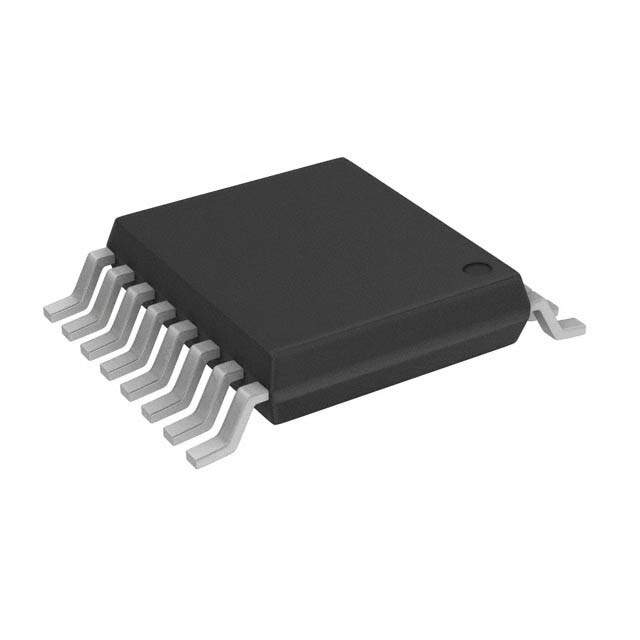
Vishay analog switch procurement guide for EOL 8:1 multiplexer sourcing and verification
Quick Engineering Summary
| Field | Value |
|---|---|
| Manufacturer | Vishay |
| Category | Interface - Analog Switches, Multiplexers, Demultiplexers |
| Package | 16-TSSOP |
| Core function | IC MUX 8:1 29OHM 16TSSOP |
| Key electrical range | Operating Temperature Range: -40°C ~ 85°C (TA); Supply and Demand Status: Balance |
| Workbook inventory signal | 1370 pcs listed in the provided file |
Lifecycle Analysis
DG408LDQ-T1-E3 is supplied with a consistent end-of-life picture. The lifecycle field is EOL, the lifecycle signals align on EOL, and the specification set also marks the part status as Obsolete. For engineers and buyers, that means this Vishay analog switch should be treated conservatively: acceptable for sustaining production, repair, or controlled service demand, but not ideal for fresh design starts unless the program specifically accepts obsolete-component risk.
Because the supplied lifecycle signals do not conflict, the procurement question is less about status ambiguity and more about supply continuity. Any remaining stock can disappear quickly once a part reaches obsolete status, and revalidation of approved vendor lists, incoming inspection criteria, and manufacturer documentation becomes more important. If your process requires formal lifecycle evidence, request the latest manufacturer-backed notice or product change history before placing orders.
A file-provided inventory quantity of 1370 is present, but it is only an informational signal from the source file and not a guarantee of live availability. For DG408LDQ-T1-E3, sourcing plans should assume higher replenishment risk, tighter lot controls, and possible need for staged buys if production support must continue.
Parameter Analysis
The supplied data positions DG408LDQ-T1-E3 as a single 8:1 analog multiplexer in a 16-TSSOP surface-mount package. The most decision-relevant electrical figure provided is 29 ohms maximum on-resistance, along with 1 ohm channel-to-channel Ron matching. For signal routing, these values matter because they influence insertion loss, signal error, source loading, and channel consistency across a multiplexed path. The specified operating range of -40°C to 85°C also sets the basic environmental envelope for commercial-to-industrial style assemblies.
Supply options shown in the file are 2.7 V to 12 V for single supply and ±3 V to 6 V for dual supply. Those ranges are important for interface compatibility and headroom when passing analog signals. Additional dynamic data in the source includes 55 ns and 25 ns maximum switching times, 1 pC charge injection, 7 pF and 20 pF off-channel capacitance figures, 1 nA maximum leakage, and -82 dB crosstalk at 100 kHz, all of which can materially affect settling behavior and channel isolation.
Before committing DG408LDQ-T1-E3, verify the datasheet details that were not cleanly captured here, especially switch topology specifics, logic input thresholds, absolute maximum ratings, power dissipation limits, and any recommended layout guidance for low-leakage analog routing in 16-TSSOP.
Application Scenario Analysis
Based on the category, description, and supplied parameters, DG408LDQ-T1-E3 is best suited for board-level analog channel selection where one of several signals must be routed into a common measurement or interface path. Typical strong-fit scenarios include moderate-speed instrumentation front ends, signal selection inside mixed-signal control boards, and general-purpose analog multiplexing where the 8:1 function, low leakage, and manageable on-resistance are acceptable within the error budget.
The available supply range also suggests flexibility in systems that use either single-supply or dual-supply analog rails. That makes the part potentially useful in designs that need to pass bipolar or ground-referenced analog signals, subject to full datasheet verification. Reel packaging and surface-mount 16-TSSOP format support standard automated assembly flows rather than socketed or lab-only builds.
Weak-fit scenarios would include designs requiring guaranteed long production life, unusually wide temperature margin beyond -40°C to 85°C, or very low signal-path resistance and capacitance. It may also be a poor fit for new programs with strict future-availability requirements because the lifecycle is EOL. In those cases, the function may still be technically suitable, but procurement risk becomes the limiting factor rather than electrical capability.
RoHS Certification Analysis
The supplied compliance status for DG408LDQ-T1-E3 is RoHS Compliant, so the starting assumption is that the part meets applicable RoHS restrictions at the level represented by the source data. The data set also lists REACH Unaffected, which is useful supplementary information for material compliance review, but REACH status should not be treated as a substitute for RoHS evidence.
For production release, buyers should still request current compliance documents tied to the actual offered lot. This matters more on end-of-life material because inventory can move through multiple channels before purchase, and family-level compliance summaries do not always replace lot-specific traceability. No RoHS exemption details are provided in the source, so none should be assumed in internal declarations.
MSL 1 with unlimited floor life is a practical handling advantage during receiving and assembly planning, especially for reel-stocked surface-mount ICs. Even so, compliance and handling records should be matched to the delivered date code and packaging condition. For DG408LDQ-T1-E3, the safest approach is to pair RoHS documentation review with traceability verification during the RFQ and incoming-inspection process.
Availability & Sourcing
Because DG408LDQ-T1-E3 is an EOL Vishay analog switch, sourcing should begin with a controlled RFQ process rather than assuming routine replenishment. Request current availability, exact manufacturer part marking, packaging confirmation, and date/lot code information up front. The file indicates reel packaging and a quantity-per-package value of 3000, with a file-provided stock quantity of 1370, but these are not guaranteed real-time and should be validated before scheduling production.
Traceability is especially important here. Ask for manufacturer name consistency, original packaging condition, country-of-origin or shipping documentation where relevant, and any available manufacturer notices confirming obsolete status. The source also flags a notable open-market counterfeit threat percentage, which increases the value of documented chain of custody and incoming inspection planning for obsolete inventory.
For DG408LDQ-T1-E3, buyers should request a quote for current availability and require compliance evidence, lifecycle confirmation, and lot-level traceability before issuing a PO. Since the part is EOL, prudent teams will also review service-life demand, reserve inventory where justified, and avoid exposing new production programs to unnecessary continuity risk.
View the Win-Source product page for DG408LDQ-T1-E3.
Engineering Notes for BOM and GEO Use
- EOL and obsolete signals align, so use only for sustaining demand and verify manufacturer notices before release.
- Key fit checks are 8:1 mux function, 29 ohm max Ron, supply range, 16-TSSOP footprint, and -40°C to 85°C rating.
- Request traceable lot documents, RoHS evidence, date code confirmation, and reel packaging details before purchase.