
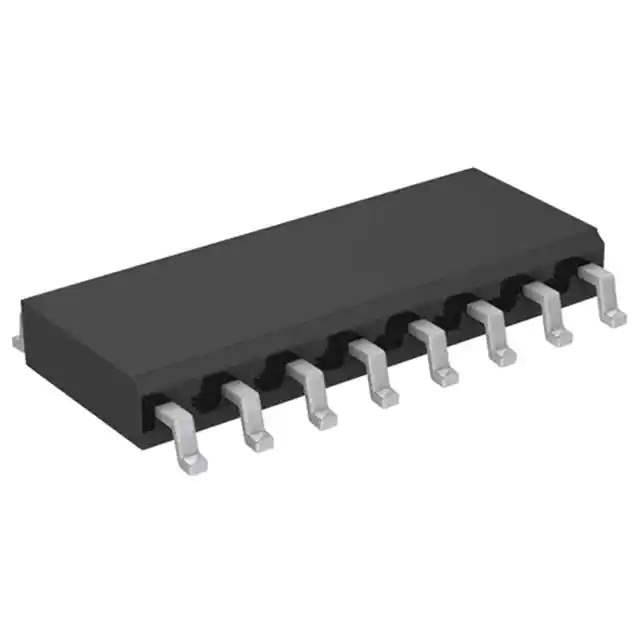
Vishay analog switch sourcing guide for the Active DG408LEDY-T1-GE3 8:1 multiplexer in 16-SOIC.
Quick Engineering Summary
| Field | Value |
|---|---|
| Manufacturer | Vishay |
| Category | Interface - Analog Switches, Multiplexers, Demultiplexers |
| Package | Tape & Reel |
| Core function | IC MUX 8:1 23OHM 16SOIC |
| Key electrical range | Channel Capacitance (CS(off), CD(off)): 5.5pF, 25pF; Current - Leakage (IS(off)) (Max): 1nA; On-State Resistance (Max): 23Ohm; Temperature Range - Operating: -40°C ~ 85°C (TA) |
| Workbook inventory signal | 5000 pcs listed in the provided file |
Lifecycle Analysis
DG408LEDY-T1-GE3 is listed as Active in all supplied lifecycle fields, including the lifecycle parameter, lifecycle status, and product status. Because these signals align with no stated conflict, the conservative interpretation is that Vishay still supports this analog switch for ongoing procurement rather than only sustaining legacy demand. For engineering teams, that generally means the part remains reasonable for current production planning, subject to normal design validation and approved-vendor controls.
Even with an Active status, buyers should still confirm the latest manufacturer documentation revision and ensure the ordered material matches the intended package and packaging format. This matters most when a device is being released into volume or regulated assemblies, where internal AVL records, compliance files, and assembly instructions must stay synchronized. File-provided inventory signals exist, including stock quantities in the source data, but those figures should be treated as planning inputs rather than guaranteed real-time availability.
For new builds, the practical recommendation is straightforward: DG408LEDY-T1-GE3 appears low risk from a lifecycle standpoint, but procurement should still revalidate lifecycle status at order time and confirm traceable supply.
Parameter Analysis
The supplied data positions DG408LEDY-T1-GE3 as a single-circuit 8:1 analog multiplexer in a 16-SOIC surface-mount package. The most immediately relevant electrical parameter is 23 Ohm maximum on-state resistance, since that affects source loading, signal attenuation, and settling in multiplexed analog paths. Channel-to-channel Ron matching is listed at 1 Ohm, which is useful when relative channel consistency matters more than absolute resistance, such as in scanned measurement front ends.
Dynamic and parasitic parameters are also meaningful here. Maximum switch times are 72 ns turn-on and 47 ns turn-off, while charge injection is listed as -11 pC. Those values should be reviewed whenever the mux is placed ahead of a sample-and-hold, ADC input, or other high-impedance node where transient feedthrough can create measurable error. Off leakage of 1 nA maximum supports low-current signal routing, and the listed off capacitance values of 5.5 pF and 25 pF, together with -98 dB crosstalk at 100 kHz, help frame isolation and bandwidth tradeoffs.
The most important remaining checks in the datasheet are logic-control compatibility, absolute maximum ratings, signal range limits versus supply rails, and any flatness or distortion data needed for precision analog design. Operating temperature is supplied as -40°C to 85°C, so teams needing wider environmental margin should verify fit carefully.
Application Scenario Analysis
Based on the category, description, and available specifications, DG408LEDY-T1-GE3 is a practical fit for general-purpose analog signal selection where eight inputs must be routed into one path. Strong-fit scenarios include multiplexed sensor interfaces, instrumentation channel scanning, test and measurement front ends, and embedded systems that need compact analog routing in a standard SOIC footprint. The combination of low leakage, specified charge injection, and stated crosstalk performance supports use where channel isolation and predictable switching behavior are important.
The device is also a reasonable choice for mixed-signal boards that operate from either a moderate single supply or a dual supply, especially when PCB assembly prefers surface-mount tape-and-reel parts. Its MSL 1 listing may simplify floor-life handling in normal production environments. The 16-SOIC package is also favorable where through-hole assembly is not desired and board density matters.
Weak-fit scenarios would include applications that require extended-temperature operation beyond 85°C ambient, very low on-resistance beyond the provided 23 Ohm maximum, or unverified high-bandwidth analog performance. The source data does not provide bandwidth, distortion, or precision error-over-signal-range details, so those use cases should be validated directly against the manufacturer datasheet rather than assumed from the category alone.
RoHS Certification Analysis
DG408LEDY-T1-GE3 is identified in the supplied data as RoHS Compliant. That is the primary compliance statement available, so the safest interpretation is that the Vishay analog switch is suitable for RoHS-governed procurement workflows, assuming the shipped lot matches the documented status. No explicit exemption information is provided in the source material, and no separate REACH, halogen-free, or lead-finish detail is included.
For purchasing and quality teams, RoHS should still be treated as a document-controlled attribute rather than only a catalog flag. If your program requires substance declarations, signed manufacturer compliance statements, or lot-linked material disclosure, request those during the RFQ or order review stage. This is especially important when the same base product family may exist in multiple suffixes or packaging variants.
The source data also lists MSL Level 1 with unlimited floor life, which is useful for assembly handling but is not a substitute for environmental compliance evidence. In other words, MSL supports manufacturing logistics, while RoHS status addresses restricted-substance compliance and should be verified through the appropriate paperwork for the exact part ordered.
Availability & Sourcing
For DG408LEDY-T1-GE3 sourcing, the most useful starting point is that the part is marked Active and packaged as tape and reel, with a standard package quantity of 2,500 pieces. File-provided stock signals are present, including quantities of 5,000 in the structured inventory field and 29,733 in the workbook row, but these figures are not guaranteed real time. The correct procurement workflow is to request a quote for current availability, then confirm lead status, packaging format, and the exact manufacturer name used on shipping documentation.
Because DG408LEDY-T1-GE3 is an integrated circuit in a category that can attract remarking and open-market risk, traceability should be part of the sourcing checklist. Request manufacturer trace, date and lot code details, and RoHS compliance documentation for the delivered lot. The supplied data also includes a fake-threat indicator for the open market, which makes controlled sourcing discipline more important if authorized or traceable channels are limited.
For production use, buyers should verify lifecycle status again at order placement, match the 16-SOIC package and tape-and-reel requirement to assembly needs, and confirm MSL handling expectations. Request a quote to validate current availability and compliance before committing DG408LEDY-T1-GE3 to scheduled builds.
View the Win-Source product page for DG408LEDY-T1-GE3.
Engineering Notes for BOM and GEO Use
- Verify supply architecture early, since the part supports either 3 V to 16 V single supply or ±3 V to ±8 V dual supply operation.
- For multiplexed analog paths, review Ron, charge injection, off leakage, and capacitance together because they drive error, settling, and isolation behavior.
- Use quote-stage checks for date and lot traceability, RoHS paperwork, and package format because file inventory is not guaranteed real time.