
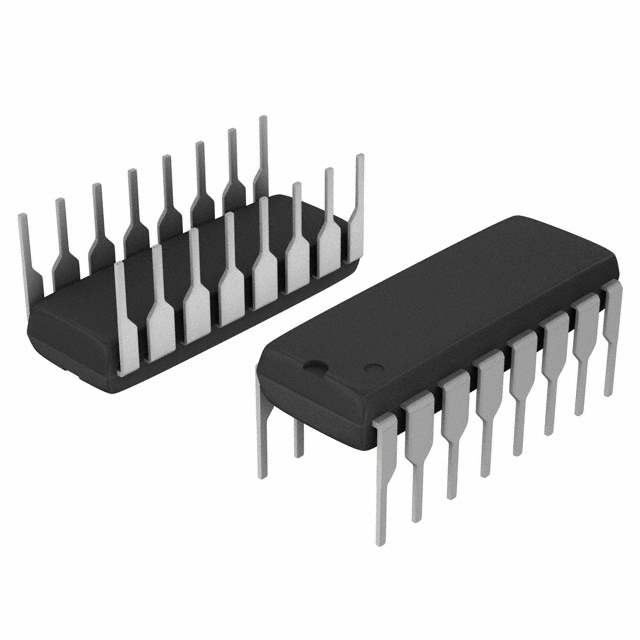
Vishay Interface - Analog Switches, Multiplexers, Demultiplexers EOL sourcing overview
Quick Engineering Summary
| Field | Value |
|---|---|
| Manufacturer | Vishay |
| Category | Interface - Analog Switches, Multiplexers, Demultiplexers |
| Package | 16-PDIP |
| Core function | IC SWITCH SP4T X 2 100OHM 16DIP |
| Key electrical range | Channel Capacitance(CS off, CD off): 3pF, 14pF; Dual Supply Voltage(V±): ±5 V to 20 V; Max Leakage Current (IS off): 500pA; Max On Resistance: 100 Ohm |
| Workbook inventory signal | 2200 pcs listed in the provided file |
Lifecycle Analysis
DG409DJ-E3 is classified as EOL in the supplied lifecycle data, and that status should drive sourcing strategy. For engineers, EOL means the part is generally unsuitable for unconstrained new designs because future supply continuity is uncertain. For buyers supporting existing products, it can still be viable for sustaining production, repair, and service inventory if stock is authenticated and documentation is complete.
The source shows a small internal conflict: one specification field says Active, while the lifecycle block and Lifecycle Status both say EOL. Because the dedicated lifecycle signals align on EOL, the conservative interpretation is that Vishay DG409DJ-E3 should be treated as an end-of-life analog switch. Any order should be backed by a fresh review of manufacturer notices and internal approved-vendor records.
A file-provided inventory signal of 2200 units exists, but this is not guaranteed real-time availability. For production planning, use that quantity only as an RFQ starting point, then confirm current stock, lot uniformity, and whether material comes from original distribution, excess channels, or open-market supply.
Parameter Analysis
The supplied data identifies DG409DJ-E3 as a dual SP4T analog switch in a 16-PDIP package, with 100 ohm maximum on-resistance, 15 ohm maximum channel-to-channel matching, and 150 ns maximum turn-on and turn-off times. These are the most decision-relevant electrical points for signal routing designs. On-resistance and matching directly affect signal attenuation, gain error, and channel consistency, while switching time matters in multiplexed sampling or control-path timing.
Charge injection is listed at 20 pC, and off-state capacitance values are given as 3 pF and 14 pF. Those parameters matter when the switch is used with high-impedance nodes, sample-and-hold inputs, or bandwidth-sensitive analog paths, where transient feedthrough and settling behavior can limit accuracy. The maximum leakage current of 500 pA is also useful for low-current or sensor front-end paths, though actual error impact depends on source impedance and temperature.
Important verification items remain. The source contains inconsistent single-supply information, with one field listing 12 V and another showing 13 V to 44 V, while dual supply is listed as ±5 V to 20 V. Before design commitment, confirm the valid supply range, logic control thresholds, absolute maximum ratings, and any bandwidth or crosstalk data in the Vishay datasheet.
Application Scenario Analysis
Based on the category and description, DG409DJ-E3 fits applications that need general-purpose analog signal routing through a dual 4:1 selection structure. Strong-fit scenarios include multiplexing low-frequency instrumentation signals, selecting among multiple sensor channels, routing reference or control voltages, and building serviceable through-hole analog interface boards where a 16-PDIP package is preferred for prototyping, socketing, or legacy maintenance.
The listed 100 ohm maximum on-resistance and 150 ns switching time suggest practical use in moderate-speed analog selection rather than very low-loss precision switching. The off-capacitance and charge-injection figures also indicate that designers should account for settling error and transient disturbance in high-impedance measurement paths. In these use cases, DG409DJ-E3 can be appropriate if the surrounding circuit tolerates the resistance, leakage, and switching artifacts given in the source data.
Weak-fit scenarios include new compact designs that require surface-mount assembly, lower on-resistance, tighter precision, broader temperature qualification, or guaranteed long-term lifecycle support. It is also a weak fit for programs with strict future availability requirements, since the Vishay device is flagged EOL and should not be assumed to remain broadly obtainable for new production without a controlled sourcing plan.
RoHS Certification Analysis
The supplied compliance status for DG409DJ-E3 is RoHS Compliant. That supports use in builds that require RoHS screening, but the source does not specify the exact declaration format beyond that statement. In practice, procurement teams should still collect the current manufacturer compliance certificate or supplier attestation for the specific delivered lot.
No exemption details are provided, and the data set does not include lead-free finish, halogen-free status, REACH information, or moisture-sensitivity classification. Because this is an EOL through-hole analog switch, lot-level paperwork matters more than a generic family assumption, especially if material may come from mixed channels or long-held inventory.
For regulated products, treat the available RoHS statement as a positive initial signal rather than final closure. Confirm that the delivered DG409DJ-E3 lot matches the documented part marking, package finish, and compliance declaration, and retain that paperwork with traceability records for audit and incoming inspection purposes.
Availability & Sourcing
Because DG409DJ-E3 is an EOL Vishay analog switch, sourcing should begin with an RFQ that requests current availability, lot concentration, and full traceability. The file shows tube or rail packaging and a workbook quantity of 2200 units, but that quantity is not guaranteed real-time and should not be treated as a committed stocking position. Ask the supplier to confirm whether offered stock is from original channels, bonded excess inventory, or open-market procurement.
This part also carries a source-data signal indicating significant fake-threat exposure in the open market, so authentication controls are important. Request manufacturer name consistency, date and lot codes, package photos, storage condition evidence, and any available chain-of-custody documentation. For incoming quality, consider inspection steps appropriate to your risk policy, especially for older PDIP stock.
For production use, request a quote together with lifecycle confirmation and RoHS documentation before placing demand. Since DG409DJ-E3 is EOL, buyers should source carefully, verify manufacturer notices, and assess whether inventory should be secured for sustaining builds or service support rather than relying on future spot availability.
View the Win-Source product page for DG409DJ-E3.
Engineering Notes for BOM and GEO Use
- Use DG409DJ-E3 for sustaining builds only unless lifecycle risk is formally accepted.
- Verify the supply-voltage range in the Vishay datasheet because source fields are inconsistent for single-supply operation.
- Request traceability, date/lot code, and RoHS paperwork before buying EOL PDIP stock.