
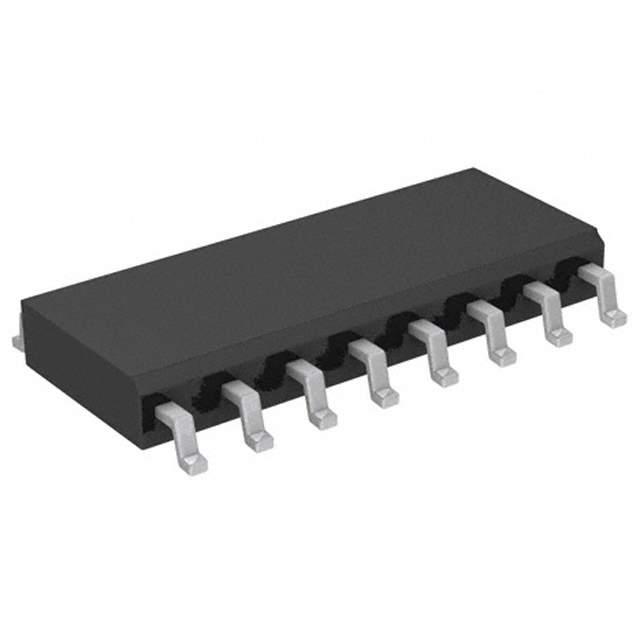
Vishay analog switch review for EOL procurement, fit, and compliance checks
Quick Engineering Summary
| Field | Value |
|---|---|
| Manufacturer | Vishay |
| Category | Interface - Analog Switches, Multiplexers, Demultiplexers |
| Package | 16-SOIC |
| Core function | IC SWITCH SP4T X 2 29OHM 16SOIC |
| Key electrical range | Channel Capacitance(CS off, CD off): 7pF, 20pF; Dual Supply Voltage(V±): ±3 V to 6 V; Max Leakage Current (IS off): 1nA; Max On Resistance: 29 Ohm |
| Workbook inventory signal | 10200 pcs listed in the provided file |
Lifecycle Analysis
DG409LDY-E3 is identified in the supplied data as EOL, and the lifecycle signals are consistent across the record. For engineering teams, that means this Vishay analog switch should be treated as an end-of-life component suitable mainly for sustaining builds, service stock, or controlled legacy production. It is not a conservative choice for fresh platform development because future replenishment risk is inherently high once a part has moved to obsolete status.
The absence of lifecycle conflict is useful because there is no mixed signal between active and obsolete states in the file. Even so, procurement should still request current manufacturer documentation or authorized-channel confirmation before committing a build, especially if this part is tied to regulated or long-field-life equipment. The file also shows inventory quantity, but that should be read only as a file-provided signal and not as real-time stock assurance.
Because DG409LDY-E3 is an EOL interface device, buyers should plan around last-buy behavior: verify date and lot continuity, assess remaining service-life demand, and review whether internal revalidation is needed if available inventory spans multiple production lots or storage periods.
Parameter Analysis
The supplied description and specifications position DG409LDY-E3 as a dual SP4T analog switch in a 16-SOIC package, with 29 Ohm maximum on-resistance and 1 Ohm channel-to-channel Ron matching. Those are practical fit parameters for signal-routing designs because on-resistance affects insertion loss, source loading, and gain error, while matching matters when channels are expected to behave consistently across a mux path.
The part supports either 2 V to 12 V single-supply operation or ±3 V to ±6 V dual-supply operation, which is important for interface compatibility in mixed-signal paths. The listed 55 ns turn-on and 25 ns turn-off times, 1 pC charge injection, 7 pF and 20 pF channel capacitance values, and -82 dB crosstalk at 100 kHz suggest relevance for lower-noise switching and moderate-speed signal selection. Leakage of 1 nA max is also useful where sensor or instrumentation paths cannot tolerate large off-state errors.
Before using remaining inventory, engineers should verify the exact logic-control thresholds, analog signal range versus supply rails, break-before-make behavior, ESD ratings, absolute maximum ratings, and full package dimensions from the datasheet. Those missing details are often decisive for drop-in fit, board reuse, and qualification signoff.
Application Scenario Analysis
Based on the category, supplied application field, and electrical data, DG409LDY-E3 fits signal-routing tasks where a dual SP4T analog switch is needed in compact SOIC form. Strong-fit scenarios include instrumentation front ends, sensing paths, avionics subsystems, and medical or power-management signal selection where low leakage, controlled charge injection, and reasonable crosstalk are useful. The dual-supply capability also supports systems that need analog switching around bipolar or mixed-voltage signal domains.
It appears less compelling for new designs that require long-term production continuity, broad temperature headroom beyond the listed -40°C to 85°C range, or very low on-resistance compared with newer switch families. The 29 Ohm maximum Ron may be acceptable in many measurement and control paths, but it can become a limitation in precision low-level, bandwidth-sensitive, or low-distortion signal chains depending on source impedance and accuracy budget.
Because DG409LDY-E3 is already EOL, its best application scenario is usually legacy support where the existing design has already validated its analog behavior and package footprint. For any new architecture, teams should weigh lifecycle exposure at the same time they review the electrical fit.
RoHS Certification Analysis
The source data lists DG409LDY-E3 as RoHS Compliant, so the starting assumption is that this Vishay interface component meets the stated RoHS requirement. That is a positive sourcing signal for organizations managing environmental compliance across active and obsolete inventory, but it should not be treated as the only compliance checkpoint when buying residual stock.
No exemption details are supplied, and the file does not provide REACH, halogen-free, or moisture-sensitivity information. That means compliance review should stay document-driven: request the current RoHS declaration tied to the offered manufacturer lot or traceable supply chain. This matters more for EOL material because stock can circulate through multiple hands, and family-level claims may not fully substitute for lot-level paperwork in quality-managed procurement.
For DG409LDY-E3, the practical approach is to treat RoHS as supported but still verify documentation during RFQ and incoming inspection. If your process requires complete environmental records, also confirm whether any supporting manufacturer certificates or product change notices remain accessible for this obsolete analog switch.
Availability & Sourcing
For DG409LDY-E3, sourcing should begin with lifecycle confirmation and traceability review rather than simple quantity matching. The file indicates EOL status and a workbook stock signal of 10200 units, but that number is not guaranteed real-time inventory. Because this is an obsolete Vishay analog switch, buyers should request a quote for current availability and ask the seller to confirm whether supply is from original factory stock, franchised surplus, or open-market channels.
The source data also flags a notable counterfeit threat in the open market, so documentation discipline is especially important. Request manufacturer name, full part marking, date code and lot code details, package condition, storage history, and packaging form. The record lists Tube/Rail packaging and dry storage cabinet with humidity protection packaging, which are useful handling signals, but they should be confirmed against the actual offered lot.
For sustaining production, secure only the quantity needed after validating compliance documents, lifecycle status, and inspection requirements. If long-term demand remains, procurement and engineering should jointly assess whether to reserve inventory for service builds while separately evaluating a migration path. For immediate needs, submit an RFQ and ask for traceability, lot photos, and RoHS paperwork before approval.
View the Win-Source product page for DG409LDY-E3.
Engineering Notes for BOM and GEO Use
- EOL status makes DG409LDY-E3 a sustaining-source item, not a low-risk choice for new designs.
- Verify supply rail scheme, 29 Ohm Ron impact, and 16-SOIC footprint before committing remaining stock.
- Request traceability, date/lot code, and RoHS documents because open-market risk is explicitly flagged in the source data.