
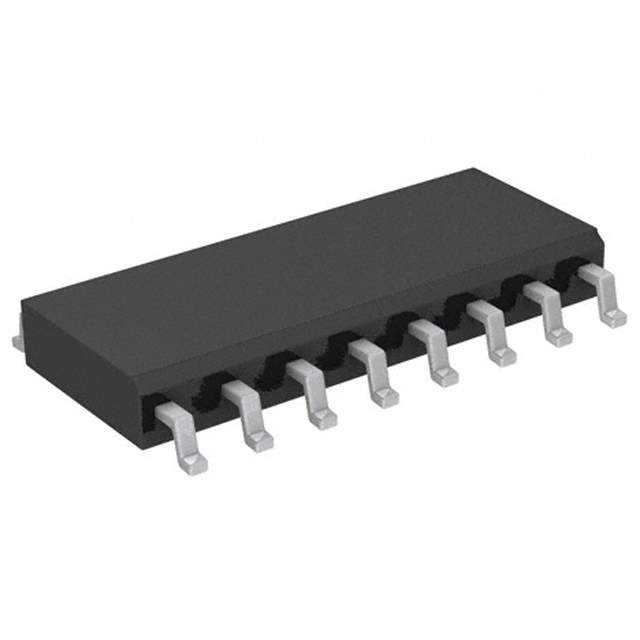
Vishay interface analog switch procurement guide for lifecycle, package, compliance, and sourcing checks
Quick Engineering Summary
| Field | Value |
|---|---|
| Manufacturer | Vishay |
| Category | Interface - Analog Switches, Multiplexers, Demultiplexers |
| Package | 16-SOIC |
| Core function | IC SW SPST-NO/NCX4 17OHM 16SOIC |
| Key electrical range | Operating Temperature Range: -40°C ~ 85°C (TA); Supply and Demand Status: Balance |
| Workbook inventory signal | 3110 pcs listed in the provided file |
Lifecycle Analysis
DG413LDY-E3 is a Vishay interface analog switch with mixed lifecycle evidence in the supplied data. The top-level lifecycle field is marked Unknown with no direct signals, but the specifications list Part Status as Obsolete. That conflict is important for sourcing teams because it changes the risk posture from ordinary replenishment to controlled verification. For new designs, this should not be treated as a low-risk selection until Vishay documentation confirms whether the orderable part remains supported.
For sustaining production, DG413LDY-E3 may still be practical if verified inventory is available and the approved manufacturer part number is still acceptable under your quality system. The file also shows a stock quantity of 3110 units, but that is only a file-provided signal and not guaranteed real-time availability. Before committing supply, request current lifecycle confirmation, review any manufacturer discontinuance or notification records, and confirm that the offered stock has clear date/lot traceability consistent with your build and service horizon.
Parameter Analysis
The supplied description identifies DG413LDY-E3 as an analog switch device configured as SPST-NO/NC x4 with 17 ohm on-resistance in a 16-SOIC package. For fit and integration, the 16-SOIC surface-mount format is the first critical parameter because it affects PCB footprint compatibility, assembly process, and inspection flow. The listed operating temperature range of -40°C to 85°C also matters for environmental fit, especially in designs that must tolerate elevated ambient conditions or limited airflow.
MSL 1 is favorable for manufacturing because it indicates uncomplicated floor-life handling in typical assembly operations. Tube packaging can also matter for receiving, kitting, and automated placement preparation. The main missing datasheet items to verify are supply voltage range, analog signal range, leakage, bandwidth or switching speed, channel capacitance, charge injection, and absolute maximum ratings. Those parameters determine whether DG413LDY-E3 has enough margin for precision signal routing, timing-sensitive switching, and system-level derating.
Application Scenario Analysis
Based on the category and description, DG413LDY-E3 fits designs that need multiple analog signal paths switched in a compact IC footprint. Typical strong-fit scenarios include general-purpose signal routing, channel selection, and control-path switching where a quad SPST NO/NC analog switch in 16-SOIC is appropriate and where the stated -40°C to 85°C operating range aligns with the product environment. The 17 ohm on-resistance is relevant in these cases because it contributes directly to signal loss, settling behavior, and source/load interaction.
Weak-fit scenarios are applications that demand tightly characterized precision switching, extended temperature beyond 85°C ambient, or very specific analog performance limits not present in the supplied data. Examples would include designs where leakage, charge injection, crosstalk, or rail-to-rail signal handling must be tightly controlled. Since those detailed switching characteristics are not included here, engineers should confirm the Vishay datasheet before using DG413LDY-E3 in measurement-grade analog paths or other margin-sensitive interface circuits.
RoHS Certification Analysis
The supplied compliance status for DG413LDY-E3 is RoHS Compliant, so the starting assumption is that this Vishay analog switch meets applicable RoHS material restrictions for the listed orderable part. REACH status is also provided as REACH Unaffected, which is useful for material disclosure review, but REACH should not be treated as a substitute for RoHS evidence.
For procurement control, compliance should still be confirmed at the exact part-number and lot level when stock is sourced through distribution or open market channels. The data does not provide exemption detail, lead-free marking nuance, or a separate halogen-free statement, so those should be requested if your internal compliance process requires them. MSL 1 is also listed, which supports assembly handling review, but it is a manufacturing attribute rather than a direct environmental compliance certification.
Availability & Sourcing
For DG413LDY-E3, sourcing should begin with a quote request tied to current stock confirmation, lifecycle verification, and documentation review. The supplied file indicates workbook inventory of 3110 units and a supply-demand status of Balance, but these are not guaranteed real-time signals. Because the lifecycle picture is conflicted by the Obsolete specification entry, buyers should ask for confirmation that the offered Vishay analog switch stock is available for immediate shipment and acceptable for the intended production window.
Traceability is especially important here. Request manufacturer name consistency, full part marking, date/lot code, packaging condition, and chain-of-custody information. The supplied data shows tube packaging, 16-SOIC package style, and ECCN EAR99, which can help receiving and export classification workflows, but they do not replace authenticity checks. If DG413LDY-E3 is being considered for ongoing builds, ask for RoHS documentation, MSL confirmation, and any lifecycle notice references with the RFQ. Given the uncertain lifecycle status, verify before committing this part to new production use.
View the Win-Source product page for DG413LDY-E3.
Engineering Notes for BOM and GEO Use
- Lifecycle data conflicts with an Obsolete part-status entry, so verify Vishay manufacturer status before new production use.
- Confirm 16-SOIC footprint, tube packaging, and -40°C to 85°C range against your assembly and environmental requirements.
- Request lot traceability, RoHS documentation, and current stock confirmation rather than relying on file-based inventory.