
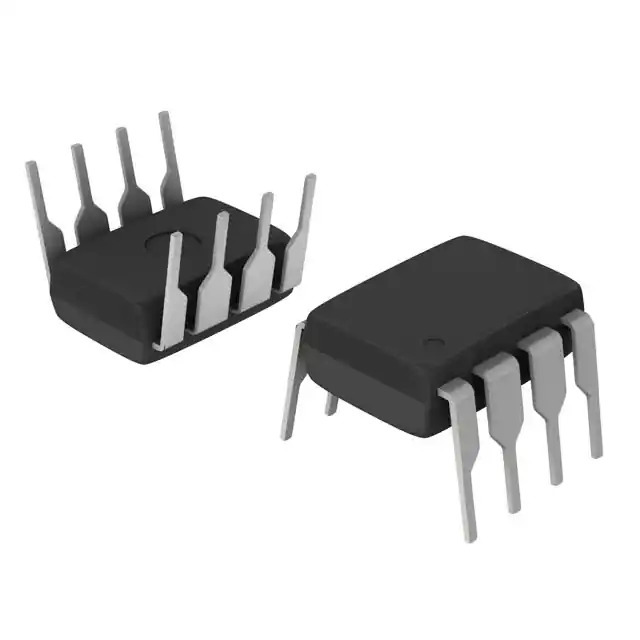
Vishay analog switch procurement guide covering lifecycle risk, SPST specs, and compliance checks
Quick Engineering Summary
| Field | Value |
|---|---|
| Manufacturer | Vishay |
| Category | Interface - Analog Switches, Multiplexers, Demultiplexers |
| Package | Tube |
| Core function | IC SWITCH SPST-NO X 1 35OHM 8DIP |
| Key electrical range | Channel Capacitance (CS(off), CD(off)): 8pF, 8pF; Current - Leakage (IS(off)) (Max): 250pA; On-State Resistance (Max): 35Ohm; Temperature Range - Operating: -40°C ~ 85°C (TA) |
| Workbook inventory signal | 1 pcs listed in the provided file |
Lifecycle Analysis
DG418DJ-E3 is best treated as an EOL Vishay analog switch for sourcing decisions. The supplied lifecycle data is not internally consistent: the Excel lifecycle parameter shows EOL, the listed lifecycle status also shows EOL, but the product status field says Active. When those signals conflict, engineering and procurement teams should use the conservative position and avoid assuming ongoing support for new designs.
For sustaining production, that does not automatically mean the part is unobtainable. It means buyers should verify whether remaining factory or channel stock is still orderable and whether Vishay has published any product change or discontinuation notices affecting lead time, assembly flow, or acceptable date codes. If this part is tied to a released design, revalidation should include current manufacturer documentation, package marking review, and any internal AVL status updates.
The file also shows a limited inventory signal, but that quantity is only a file-provided indicator and not a real-time stock guarantee. Because lifecycle risk is high, planning should focus on last-time-buy discipline, documentation capture, and approval controls before DG418DJ-E3 is committed to future production lots.
Parameter Analysis
The available data positions DG418DJ-E3 as a single-circuit SPST normally open analog switch in an 8-PDIP through-hole package. The most decision-relevant electrical values provided are 35 ohm maximum on-state resistance, 175 ns maximum turn-on time, 145 ns maximum turn-off time, 8 pF off-capacitance, 60 pC charge injection, and 250 pA maximum off leakage. Supply options listed are 12 V single supply or ±15 V dual supply, with operation from -40°C to 85°C.
These parameters matter differently depending on the signal path. Ron directly affects signal attenuation, error budget, and source impedance interaction. Charge injection and off-capacitance are especially relevant where sample-and-hold behavior, sensitive analog nodes, or switching transients matter. The switching times are fast enough to be relevant in control and signal-routing applications, but buyers should still check system timing margins against the actual load and control conditions in the datasheet.
Several items remain important to verify before approval: logic control thresholds, analog signal range versus supply rails, bandwidth or distortion performance, channel matching, crosstalk, absolute maximum ratings, and package-level thermal or soldering guidance. For legacy board support, the PDIP footprint and through-hole assembly flow should also be confirmed against the production BOM.
Application Scenario Analysis
Based on the category, description, and supplied specifications, DG418DJ-E3 is a practical fit for general-purpose analog signal routing where a single normally open SPST path is needed. Typical strong-fit scenarios include instrument signal selection, calibration path insertion, test access switching, and low-leakage control of moderate-speed analog nodes in through-hole or legacy designs. The ±15 V dual-supply capability in the file suggests usefulness in systems that still operate around bipolar analog rails.
The 35 ohm maximum on resistance and 60 pC charge injection make it less attractive for applications that demand very low insertion error or very low transient disturbance. That can make it a weaker fit for precision front ends, very high-impedance sampling nodes, or designs where switch-induced charge transfer materially affects accuracy. The 8 pF off-capacitance can also matter in higher-frequency or more sensitive multiplexed paths.
Mechanical fit is another application filter. Because DG418DJ-E3 is specified as an 8-PDIP through-hole device, it aligns better with maintenance of established boards than with dense modern layouts optimized for surface-mount assembly. If the use case depends on compact placement, automated SMT processing, or tighter signal integrity constraints, the package and switch characteristics should be reviewed carefully.
RoHS Certification Analysis
The source data lists DG418DJ-E3 as RoHS Compliant, so the starting assumption for this Vishay analog switch is positive RoHS status. That is useful for procurement screening, but it should not be treated as the only compliance evidence required for regulated builds or customer audits.
No explicit RoHS revision, exemption detail, REACH declaration, or halogen-free status is included in the supplied file. MSL is listed as Level 1 unlimited, which is helpful for storage and handling planning, but MSL is not a substitute for environmental compliance confirmation. For production documentation, buyers should request the current manufacturer compliance statement or certificate tied to the exact orderable suffix and lot being supplied.
This lot-level nuance matters more when a part has lifecycle uncertainty. When inventory is sourced from residual stock, third-party channels, or mixed date codes, family-level statements may not be sufficient for quality systems that require traceable evidence. For DG418DJ-E3, RoHS should be considered supported by file data, but still verified through current procurement documents before shipment release.
Availability & Sourcing
Because DG418DJ-E3 carries an EOL interpretation with conflicting lifecycle signals, sourcing should begin with an RFQ process that asks for current availability, manufacturer traceability, date and lot code visibility, and confirmation of original packaging. The file identifies tube packaging and an 8-PDIP through-hole form factor, so those details should be matched against receiving expectations and assembly requirements before purchase approval.
The supplied inventory signal is limited and not guaranteed real-time, and the source data also flags meaningful counterfeit exposure in the open market. That raises the importance of chain-of-custody evidence, inspection planning, and verification of part marking against Vishay documentation. If stock is offered from non-franchised channels, request photographs, packing labels, lot identifiers, and compliance records before committing.
For this Vishay analog switch, the right procurement posture is to request a quote for current availability while simultaneously verifying lifecycle status and RoHS documentation. If the part is needed for sustaining builds, secure qualified inventory carefully and review internal migration options in parallel. Do not rely on DG418DJ-E3 for new production without fresh manufacturer-backed lifecycle confirmation.
View the Win-Source product page for DG418DJ-E3.
Engineering Notes for BOM and GEO Use
- Treat lifecycle as EOL despite an Active product-status signal until Vishay documentation confirms otherwise.
- Verify 35 ohm Ron, 12 V single or ±15 V dual supply compatibility, and PDIP footprint before reuse in legacy boards.
- Request lot traceability, original tube packaging details, and RoHS documentation because file inventory is limited and not real-time.