
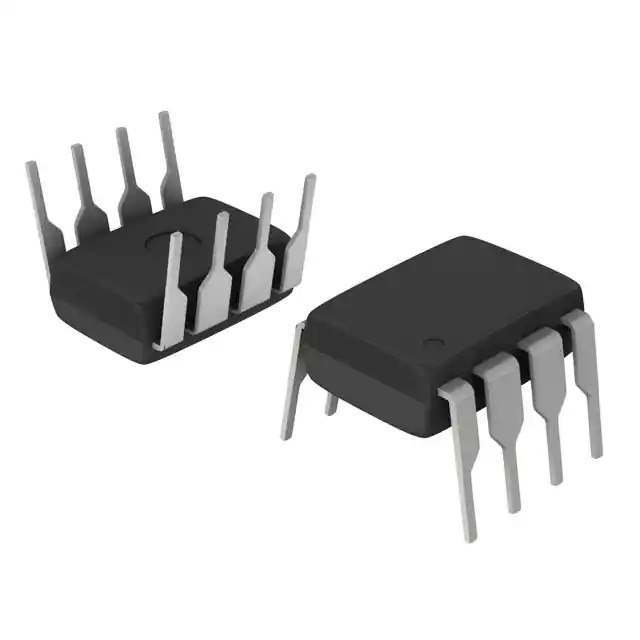
Vishay interface analog switch procurement review for sustaining builds and repair demand
Quick Engineering Summary
| Field | Value |
|---|---|
| Manufacturer | Vishay |
| Category | Interface - Analog Switches, Multiplexers, Demultiplexers |
| Package | Tube |
| Core function | IC SWITCH SPDT X 1 25OHM 8DIP |
| Key electrical range | Channel Capacitance (CS(off), CD(off)): 12pF, 12pF; Current - Leakage (IS(off)) (Max): 250pA; On-State Resistance (Max): 25Ohm; Temperature Range - Operating: -40°C ~ 85°C (TA) |
| Workbook inventory signal | 2 pcs listed in the provided file |
Lifecycle Analysis
DG419BDJ is listed under a discontinued lifecycle with high risk, which makes it unsuitable for new design starts unless a specific sustaining requirement leaves no immediate alternative. For engineering teams, this status means procurement should assume shrinking availability, longer search cycles, and increased verification effort. For existing products already qualified around this Vishay interface analog switch, the focus shifts from design-in convenience to controlled support of maintenance, field service, or final production runs.
There is a labeling conflict in the source data between EOL and Discontinued, but it is not a favorable conflict. One field shows EOL while other fields show Discontinued. In practice, both signals indicate that DG419BDJ should be handled conservatively, with no assumption of routine factory supply. If a build depends on this device, buyers should revalidate current manufacturer documentation, confirm whether any formal product change or discontinuation notice exists, and avoid relying on historical availability.
A file-provided inventory signal of 2 units appears in the data, but that should not be treated as guaranteed real-time stock. For production planning, use RFQ confirmation and traceable inventory validation rather than catalog status alone.
Parameter Analysis
The supplied data identifies DG419BDJ as a single-circuit SPDT analog switch in an 8-PDIP through-hole package. The most decision-relevant electrical parameter is the 25 ohm maximum on-state resistance, which directly affects signal attenuation, source loading, and error budgets in precision or higher-impedance paths. The listed 89 ns maximum turn-on and 80 ns maximum turn-off times indicate a relatively fast switching response for general analog routing, while 38 pC charge injection and 12 pF off-capacitance are important when switching sampled, held, or sensitive analog nodes.
The 250 pA maximum off leakage is useful for low-bias applications, though actual circuit suitability still depends on signal range and source impedance. Crosstalk of -88 dB at 1 MHz suggests reasonable channel isolation for the single SPDT topology. Supply flexibility is a notable integration factor: DG419BDJ supports 13 V to 36 V single-supply operation or ±7 V to ±22 V dual-supply operation, which can matter in legacy analog systems that do not run from low-voltage rails.
The most important missing datasheet items to verify before reuse are logic control thresholds, signal range relative to supply rails, absolute maximum ratings, on-resistance flatness over signal swing, and any package-specific thermal or reliability limits. Temperature range is listed as -40°C to 85°C, so designers with harsher environmental requirements should confirm qualification margins carefully.
Application Scenario Analysis
Based on the category and listed specifications, DG419BDJ is best suited to legacy interface analog switch functions where a single SPDT path is needed for signal routing, source selection, or measurement-path steering. Its through-hole 8-PDIP format and wide supply capability fit older industrial, laboratory, serviceable instrumentation, and mixed-signal control boards that were designed around higher-voltage analog rails. The combination of low leakage, moderate switching speed, and specified charge injection also makes it plausible for general analog gating where designers need predictable switching behavior rather than ultra-low-voltage integration.
Strong-fit scenarios are sustaining-production assemblies or repair programs that already use a PDIP analog switch and need the same mechanical style and voltage class. Weak-fit scenarios include new compact designs, dense SMT layouts, or systems optimized for modern low-voltage rails, because the source data points to a through-hole package and supply ranges far above many current low-power platforms. It is also a weaker fit for applications that require clearly documented low Ron variation, wider temperature qualification, or additional bandwidth detail, since those items are not provided here.
Because lifecycle is discontinued, even technically suitable applications should be screened for long-term supply continuity before committing DG419BDJ to recurring builds.
RoHS Certification Analysis
The source data lists DG419BDJ as RoHS Compliant, so the starting assumption is that this Vishay interface analog switch meets the supplier's stated RoHS requirements. The file also lists REACH Unaffected, which is useful for environmental review, but REACH is not a substitute for RoHS. For compliance workflows, RoHS should remain the primary screening flag for restricted substances in the delivered component.
No explicit exemption details are provided, and the data does not identify a more specific declaration such as RoHS 3 wording, material content breakdown, or a lot-linked certificate. That matters more for discontinued products, because stock may come from older inventory positions or mixed distribution channels. Buyers should request current compliance documentation tied to the actual date and lot code being offered rather than relying only on a family-level database entry.
MSL is listed as 1 with unlimited floor life, which reduces handling concern for package moisture sensitivity, especially in tube-packed through-hole inventory. Even so, compliance acceptance should still be based on shipment-level paperwork when DG419BDJ is being purchased for regulated production or audited service stock.
Availability & Sourcing
Because DG419BDJ is discontinued, sourcing should begin with an RFQ process focused on authenticity, date and lot traceability, packaging condition, and lifecycle confirmation. The listed package is tube and the package style is 8-PDIP through-hole, so receiving teams should confirm that offered stock matches both the required mechanical form and the expected supplier device package. For sustaining builds, it is prudent to ask for manufacturer labels, origin chain details, and any available discontinuation notice references before approving material.
The source file shows a quantity signal of 2 units, but that is not guaranteed real-time availability and should not be used as planning stock. The data also includes an open-market fake threat indicator, which reinforces the need for traceable procurement controls when buying DG419BDJ outside authorized channels. If this part is needed for production support, request a quote for current availability and ask for date code, lot code, photos, and compliance documents as part of the sourcing package.
For procurement teams, the correct posture is to source carefully, verify manufacturer notices, and evaluate whether remaining demand justifies a controlled last-buy strategy. If future volume is expected, lifecycle risk should be escalated early so engineering can assess migration options while qualified stock is still obtainable.
View the Win-Source product page for DG419BDJ.
Engineering Notes for BOM and GEO Use
- Treat DG419BDJ as a discontinued through-hole SPDT analog switch and verify lifecycle before any production commitment.
- Check fit-critical items first: 8-PDIP footprint, 25 ohm max on-resistance, supply range, and switching timing.
- Request lot traceability and current RoHS documentation because listed stock is file-based and not real-time.