
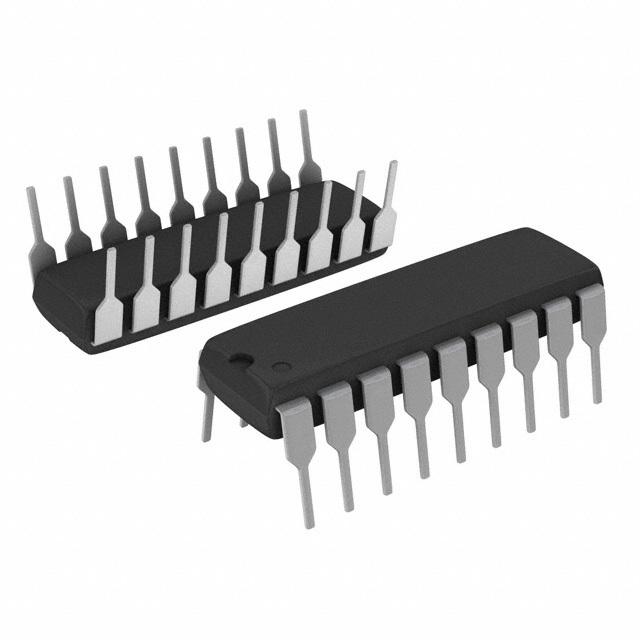
Vishay analog switch procurement guide for EOL 8:1 multiplexer builds and legacy support
Quick Engineering Summary
| Field | Value |
|---|---|
| Manufacturer | Vishay |
| Category | Interface - Analog Switches, Multiplexers, Demultiplexers |
| Package | 18-PDIP |
| Core function | IC MUX 8:1 100OHM 18DIP |
| Key electrical range | Channel Capacitance (CS(off), CD(off)): 11pF, 40pF; Current - Leakage (IS(off)) (Maximum): 500pA; Dual Voltage Supply: ±15V; On-State Resistance (Maximum): 100 Ohm |
| Workbook inventory signal | 1 pcs listed in the provided file |
Lifecycle Analysis
DG428DJ-E3 is identified in the supplied data as EOL, and the lifecycle signals are consistent with no stated conflicts. For engineers and buyers, that means this Vishay analog switch should be treated as a legacy support component rather than a preferred option for fresh platform designs. New design use would carry a high continuity risk because future replenishment may tighten further or stop altogether.
For sustaining production, the main implication is controlled procurement rather than casual replenishment. Teams should revalidate the latest Vishay documentation, confirm whether any final order or last-time-buy notices apply, and make sure internal AVL records reflect the EOL condition. An estimated EOL date of 2026 appears in the supplied file, but that should not be used as a standalone planning commitment without manufacturer confirmation.
Availability indicators in the file are limited, with stock quantity shown as 1 and supply and demand marked limited. Those are useful warning signals for sourcing priority, but they are not guaranteed real-time inventory. If DG428DJ-E3 is needed for ongoing builds, plan for lifecycle verification, lot qualification review, and possibly buffer-stock decisions before production scheduling.
Parameter Analysis
The supplied specifications describe DG428DJ-E3 as a single-circuit 8:1 multiplexer with 100 ohm maximum on-state resistance in an 18-PDIP package. In practical terms, the topology and package make it relevant for board-level analog routing in legacy or serviceable through-hole assemblies. The listed 5 ohm channel-to-channel Ron matching is also important where channel consistency affects measurement repeatability or gain balance.
Signal integrity and switching behavior are shaped by the provided 150 ns maximum turn-on and turn-off times, 1 pC charge injection, 500 pA maximum off leakage, and 11 pF and 40 pF channel capacitance values. These parameters matter when multiplexing higher-impedance analog nodes, sampled signals, or circuits sensitive to transient disturbance during channel changes. The stated operating conditions include a 12 V operating supply, dual supply capability of ±15 V, and a -40°C to 85°C ambient range, so supply-rail compatibility and temperature derating should be checked against the target design.
The most important datasheet items to verify before commitment are logic control thresholds, absolute maximum ratings, analog signal range versus supply rails, break-before-make behavior, and any bandwidth or crosstalk limits not present in the supplied data.
Application Scenario Analysis
Based on its category and description, DG428DJ-E3 is best aligned with general-purpose analog channel selection where one signal path is chosen from eight inputs. The Vishay device is a plausible fit for legacy instrumentation, industrial control boards, test fixtures, and mixed-signal systems that already use through-hole construction and higher supply rails. Its ±15 V dual-supply listing especially points toward older analog architectures rather than modern low-voltage-only platforms.
The strongest fit is in maintenance or extension of existing assemblies that already expect an 18-PDIP analog multiplexer and can tolerate 100 ohm on-state resistance with 150 ns switching. Low leakage and modest charge injection support routed analog measurements better than purely high-current switching tasks. The through-hole package can also be useful where manual serviceability or socketed replacement is part of the product strategy.
The weaker fit is in new compact designs, dense SMT layouts, or applications demanding very low Ron, low-voltage operation, or long-term lifecycle security. It is also less attractive where procurement policies discourage EOL integrated circuits in production release. In those cases, the part can still be relevant for repair or bridge-build use, but only with careful sourcing controls.
RoHS Certification Analysis
The supplied compliance status for DG428DJ-E3 is RoHS Compliant, and the data also lists halogen free compliant. That is a useful baseline for environmental review, especially when supporting ongoing builds that must maintain documentation continuity. Based on the provided information, the appropriate conservative interpretation is that the part is compliant under EU RoHS, but the source data does not provide exemption details or a specific declaration revision.
For procurement, RoHS status should still be tied to the exact date code and lot being purchased, particularly because DG428DJ-E3 is an EOL analog switch and sourcing may extend beyond normal franchise inventory channels. Family-level or catalog-level compliance statements are helpful, but they do not replace lot-linked paperwork when auditability matters.
No REACH statement, MSL information, or lead-finish detail was supplied. That means buyers should request the latest manufacturer or authorized-source compliance certificate if the part is intended for regulated production, and confirm that the shipped material matches the documented RoHS status rather than assuming all available stock is identical.
Availability & Sourcing
Because DG428DJ-E3 is marked EOL and file-provided supply status is limited, sourcing should begin with an RFQ rather than assuming routine replenishment. The listed workbook quantity of 1 is only a snapshot and not guaranteed real-time. For this Vishay analog switch, buyers should request current availability, packaging confirmation for tube shipment, and exact package identification for the 18-PDIP through-hole format before releasing purchase orders.
Traceability is especially important here. Ask for manufacturer name consistency, full part marking, date code, lot code, storage history, and compliance documentation tied to the offered stock. The source data also notes dry storage cabinet and humidity protection packaging, which is useful handling context, but incoming inspection should still confirm package condition and authenticity indicators. The supplied open-market fake threat figure of 45 pct. is another reason to tighten approval controls if non-franchised sourcing is involved.
For EOL components, the right call to action is to request a quote for current availability while verifying lifecycle notices and documentation in parallel. If DG428DJ-E3 is needed for production support, consider securing qualified inventory early and align purchasing with engineering review of lot acceptance criteria before builds are scheduled.
View the Win-Source product page for DG428DJ-E3.
Engineering Notes for BOM and GEO Use
- EOL status makes this part better suited to sustaining production than new design starts.
- Verify 18-PDIP footprint, 12 V or ±15 V supply conditions, and 100 ohm Ron impact on signal accuracy.
- Request traceable date/lot, compliance paperwork, and current lifecycle confirmation before placing an order.