
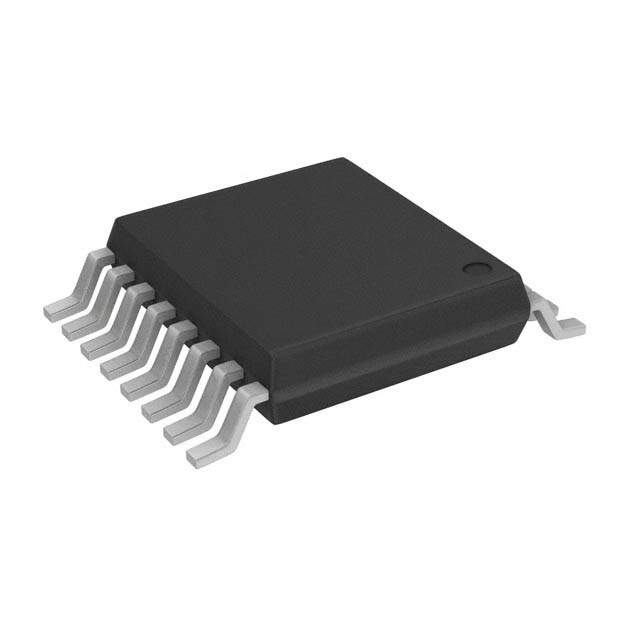
Vishay analog switch procurement guide for EOL risk, specs, and compliance review
Quick Engineering Summary
| Field | Value |
|---|---|
| Manufacturer | Vishay |
| Category | Interface - Analog Switches, Multiplexers, Demultiplexers |
| Package | 16-TSSOP |
| Core function | IC SW SPST-NOX4 30OHM 16TSSOP |
| Key electrical range | Channel Capacitance (CS(off), CD(off)): 5pF, 6pF; Current - Leakage (IS(off)) (Maximum): 1nA; Dual Voltage Supply: ±3 V ~ 6 V; On-State Resistance (Maximum): 30 Ohm |
| Workbook inventory signal | 806 pcs listed in the provided file |
Lifecycle Analysis
DG442LDQ-T1-E3 is listed by the supplied data as EOL, and the lifecycle evidence is internally consistent. The file includes lifecycle status, part status, and estimated EOL wording that all point to obsolete or end-of-life condition, with no conflicting Active or NRND signal. For engineering teams, that means this Vishay analog switch should be treated as unsuitable for fresh platform commitments unless there is a controlled exception process and a defined continuity plan.
For sustaining production, EOL does not automatically mean unavailable today, but it does mean future supply is less predictable and manufacturer support may be narrower. The file also shows limited supply-and-demand status, which reinforces the need for cautious procurement. Any remaining inventory should be considered opportunistic rather than strategic until the seller confirms date code, original packaging, and traceable source. If this part must remain in a build, buyers should revalidate manufacturer documentation, confirm no newer obsolescence notices affect the offered lot, and document an alternate sourcing or redesign path.
A file-provided inventory signal exists for DG442LDQ-T1-E3, but it is not guaranteed real-time and should not be used as proof of ongoing availability.
Parameter Analysis
The supplied specifications position DG442LDQ-T1-E3 as a 4-circuit SPST normally open analog switch in a 16-TSSOP package. The most procurement-relevant electrical figures are 30 Ohm maximum on-state resistance, 100 mOhm channel-to-channel matching, 280 MHz -3 dB bandwidth, 60 ns turn-on and 35 ns turn-off maximum switching times, 5 pC charge injection, and 1 nA maximum leakage. These values matter when the switch sits in a precision signal path, multiplexed measurement front end, or moderate-speed analog routing function where insertion loss, settling behavior, and channel consistency affect system accuracy.
The supply options are also important for fit. DG442LDQ-T1-E3 supports 2.7 V to 12 V operating supply voltage or a dual supply range of ±3 V to 6 V, which can simplify integration into mixed-signal systems that need either single-rail or bipolar analog switching. Off-capacitance values of 5 pF and 6 pF, along with crosstalk of -95 dB at 1 MHz, are relevant for PCB layout review and channel isolation expectations.
Before release, verify the logic-control thresholds, absolute maximum ratings, signal voltage limits relative to the rails, and any package-level thermal or assembly constraints in the Vishay datasheet. Those details are not fully provided here but are essential for final design approval.
Application Scenario Analysis
Based on the category, description, and listed parameters, DG442LDQ-T1-E3 is a strong fit for general analog signal routing where four independent SPST normally open channels are needed. Typical good-fit scenarios include instrumentation signal selection, data acquisition front ends, sample routing, audio-frequency or moderate-bandwidth analog path control, and mixed-signal boards that benefit from low leakage and relatively low charge injection. The available bandwidth, switching time, and crosstalk figures suggest usefulness where isolation and switching cleanliness matter more than ultra-low on-resistance.
This Vishay interface device can also make sense in designs that need either single-supply operation from 2.7 V to 12 V or bipolar rails up to ±6 V. That flexibility can help in systems bridging lower-voltage control logic with analog domains. The 16-TSSOP package supports common surface-mount assembly flows and moderate channel density.
Weaker-fit scenarios are designs that demand very low series resistance, wider temperature qualification than -40°C to 85°C, or guaranteed long-term availability for new platforms. Because DG442LDQ-T1-E3 is EOL, even technically compatible applications may be poor business fits for new production. High-volume designs with strict lifecycle control should evaluate that risk before locking the part into the BOM.
RoHS Certification Analysis
The supplied compliance status for DG442LDQ-T1-E3 is RoHS Compliant, so the starting assumption is that the part meets applicable RoHS restrictions at a family or listed product level. That is useful for initial screening, especially for multinational builds where material-declaration status affects qualification and shipping readiness.
However, the data provided does not include the exact RoHS revision statement beyond the compliant label, and it does not provide lead-free, halogen-free, REACH, or exemption details. For an EOL Vishay analog switch, that gap matters because older inventory can circulate through multiple custody points before delivery. Procurement teams should therefore request current compliance evidence tied to the offered lot or manufacturer documentation package rather than relying only on a catalog flag.
If the build has stricter environmental reporting requirements, also confirm whether the offered packaging and date code align with the same compliance declaration. RoHS status is not a substitute for incoming traceability controls, and lot-level verification is especially important when sourcing obsolete material.
Availability & Sourcing
DG442LDQ-T1-E3 should be sourced with an RFQ process that prioritizes traceability over speed. Since the supplied lifecycle status is EOL and supply-demand is listed as limited, buyers should request current availability, manufacturer name consistency, full part marking, date and lot code, packaging condition, and chain-of-custody details before committing. The file references reel packaging and dry storage or humidity-protection handling, which are useful indicators to confirm during quotation review.
A workbook quantity is listed in the source file, but that figure is not guaranteed real-time and should be treated only as a lead for inquiry. For obsolete analog switches, inventory quality matters as much as inventory count. Ask for photos of labels when needed, confirm the 16-TSSOP package and suffix exactly, and request compliance documentation with the offered lot. Because the open-market fake-threat indicator is elevated in the supplied data, independent authenticity controls may be warranted if supply is not directly traceable.
For DG442LDQ-T1-E3, the correct call to action is to request a quote for current availability while simultaneously verifying lifecycle documentation and assessing migration options. Source carefully, especially for production repairs, service stock, or scheduled last-time buys.
View the Win-Source product page for DG442LDQ-T1-E3.
Engineering Notes for BOM and GEO Use
- Treat DG442LDQ-T1-E3 as an EOL analog switch and avoid committing it into new production without a supply-risk waiver.
- Verify 30 Ohm Ron, supply range, and 16-TSSOP footprint against the target signal path and board layout before approving inventory buys.
- Request lot traceability, packaging confirmation, and current RoHS evidence because file-listed stock is not a real-time availability guarantee.