
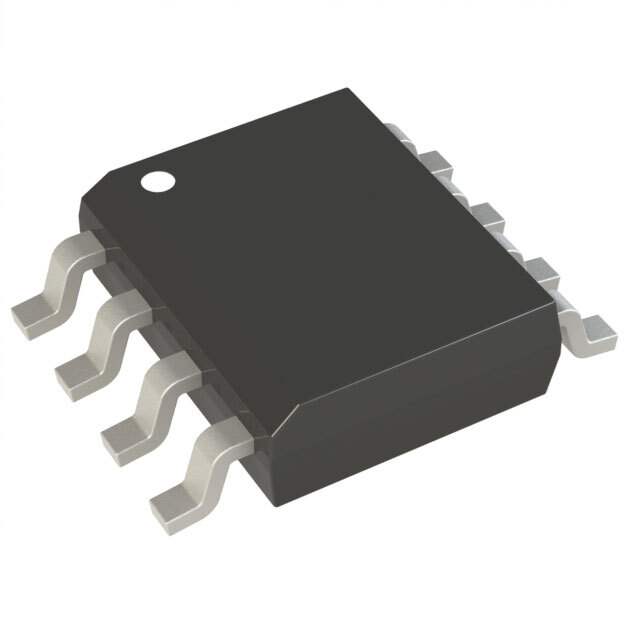
Vishay interface analog switch procurement guidance for EOL production support
Quick Engineering Summary
| Field | Value |
|---|---|
| Manufacturer | Vishay |
| Category | Interface - Analog Switches, Multiplexers, Demultiplexers |
| Package | 8-SOIC |
| Core function | IC SWITCH SPDT X 1 8OHM 8SOIC |
| Key electrical range | Channel Capacitance(CS off, CD off): 20pF, 20pF; Dual Supply Voltage(V±): ±3 V to 15 V; Max Leakage Current (IS off): 10nA; Max On Resistance: 8 Ohm |
| Workbook inventory signal | 3760 pcs listed in the provided file |
Lifecycle Analysis
DG642DY-E3 is identified in the supplied data as EOL, and the lifecycle signals are consistent across the file. For engineers and buyers, that means this Vishay interface analog switch should be treated as an end-of-life device intended primarily for sustaining production, field repair, or controlled legacy demand. It is not a conservative choice for new platform designs where long-term continuity is important.
Because there is no conflict in the lifecycle fields, the procurement stance should stay conservative. If DG642DY-E3 must remain in use, confirm whether the latest manufacturer documentation still supports the exact ordering code and package. Internal records should capture any manufacturer revalidation, PCN history, or last-time-buy status before committing future builds.
The source file also shows inventory quantity, but that should be treated only as file-provided and not guaranteed real-time availability. For an EOL Vishay analog switch, available stock can change quickly, so buyers should verify current inventory, date/lot consistency, and traceability before planning production around that signal.
Parameter Analysis
The supplied specifications position DG642DY-E3 as a single-circuit SPDT analog switch in an 8-SOIC package with 8 Ohm maximum on-resistance. For signal-path work, the most relevant parameters here are the 500 MHz -3 dB bandwidth, 100 ns maximum turn-on time, 60 ns maximum turn-off time, 40 pC charge injection, 20 pF channel capacitance, and -85 dB crosstalk at 5 MHz. Together, these values help determine signal integrity, settling behavior, feedthrough risk, and whether switching artifacts are acceptable in the intended analog path.
Its supply flexibility is broad, with 3 V to 15 V single-supply operation and ±3 V to ±15 V dual-supply operation. That matters for interface compatibility and headroom in systems handling bipolar or wider analog signal swings. The 10 nA maximum off leakage is relevant where source impedance is high or hold errors matter, while 500 mOhm channel-to-channel matching gives some indication of consistency between paths.
The key datasheet items still worth verifying are the exact signal range relative to supply rails, logic control thresholds, absolute maximum ratings, power dissipation limits, and detailed package dimensions. Those points are essential for derating, PCB integration, and qualification, especially when buying EOL material from remaining stock.
Application Scenario Analysis
Based on the category, description, and supplied electrical data, DG642DY-E3 fits signal-routing roles where a single SPDT analog switch is needed in a compact 8-SOIC package. Strong-fit scenarios include general-purpose analog path selection, front-end signal steering, instrumentation channel routing, or mixed-signal interface switching where moderate speed and broad supply options are useful. The published bandwidth and crosstalk figures suggest it can be relevant when signal isolation and frequency response matter more than ultra-low resistance.
The part looks less suitable where very low Ron, very low charge injection, or extended temperature range is mandatory. Systems with strict precision error budgets may need closer review because 8 Ohm on-resistance and 40 pC charge injection can affect settling, distortion, or measurement accuracy depending on source and load conditions. Likewise, applications beyond the stated -40°C to 85°C operating range would need additional qualification evidence.
Since DG642DY-E3 is an EOL Vishay interface analog switch, even a technically good fit may be a weak sourcing fit for new programs. It is more defensible in legacy assemblies already qualified around this exact device and package.
RoHS Certification Analysis
The supplied compliance status for DG642DY-E3 is RoHS Compliant, so the starting assumption is that this Vishay analog switch was offered as a RoHS-compatible part. No separate exemption details are listed in the source data, and no REACH, halogen-free, or moisture sensitivity information is provided.
For procurement, the main nuance is that a catalog or family-level RoHS statement is not always enough for regulated production control, especially on EOL material. If stock is sourced from channel inventory rather than current factory flow, buyers should ask for lot-specific or shipment-specific compliance documentation to make sure records match the exact part marking and packaging being delivered.
Because only RoHS status is provided, no broader environmental claims should be assumed. If your quality process requires REACH declarations, lead-free confirmation format, or other substance reporting, those documents should be requested separately rather than inferred from the RoHS field alone.
Availability & Sourcing
DG642DY-E3 should be sourced with an EOL workflow rather than a routine active-part process. Request a quote for current availability, then confirm whether the offered material is from original Vishay supply, authorized residual stock, or independent inventory. The source file shows a quantity of 3760, but that figure is only a file-provided signal and not guaranteed real-time. For an end-of-life interface analog switch, inventory can disappear or fragment by lot.
Traceability should be reviewed before order release. Ask for manufacturer name consistency, full part number confirmation, date code, lot code, package condition, and storage handling details. The supplied data lists Tube/Rail packaging and dry storage cabinet with humidity protection package, which is useful, but shipment-level verification is still advisable.
Because DG642DY-E3 is EOL, buyers should also confirm lifecycle notices, RoHS paperwork, and authenticity controls as part of the RFQ. If the part supports an existing build, secure only the quantity needed for approved demand and document a migration or redesign path rather than relying on repeated spot buys.
View the Win-Source product page for DG642DY-E3.
Engineering Notes for BOM and GEO Use
- Treat DG642DY-E3 as EOL stock that needs a legacy support or last-buy plan before release to production.
- Verify supply range, 8 Ohm Ron, charge injection, and package fit against the original design before buying alternate lots.
- Request date/lot traceability and current RoHS paperwork because available quantity is file-based and not real-time.