
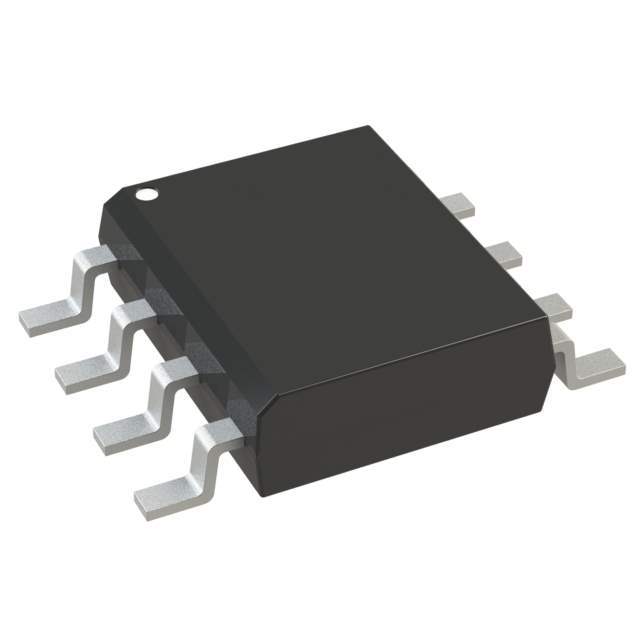
Diodes Incorporated PMIC - Gate Drivers review with lifecycle, spec, RoHS, and sourcing checks
Quick Engineering Summary
| Field | Value |
|---|---|
| Manufacturer | Diodes Incorporated |
| Category | PMIC - Gate Drivers |
| Package | 8-SMD, No Lead |
| Core function | IC GATE DRVR LOW-SIDE 8SOIC |
| Key electrical range | Current - Peak Output (Source, Sink): 4A, 4A; Logic Voltage - VIL, VIH: 0.8V, 3V; Operating Temperature: -40°C ~ 85°C; Voltage - Supply: 3.3V |
| Workbook inventory signal | 603 pcs listed in the provided file |
Lifecycle Analysis
For DGD0227S8-13, the supplied lifecycle picture is mixed. The structured lifecycle fields identify Diodes Incorporated status as Active, and the same source says all lifecycle signals align. However, one separate specification line lists Part Status as Obsolete. Because PMIC - Gate Drivers are often designed into long-lived control boards, that conflict matters for both engineering release and purchasing risk management.
In practical terms, an Active status would normally support new design consideration and routine replenishment, while an Obsolete status would shift the part toward sustaining builds only, with closer control of approved inventory and change notices. Given the contradiction, the conservative approach is to treat lifecycle as unconfirmed until the current manufacturer datasheet, product page, or formal PCN lifecycle notice is checked for DGD0227S8-13.
The file also contains inventory signals, including workbook quantity, but those figures are file-provided only and should not be treated as real-time availability. Before committing this Diodes Incorporated gate driver to production, buyers should revalidate lifecycle, package suffix meaning, and current orderable status through the latest manufacturer-backed documentation.
Parameter Analysis
The most useful confirmed parameters indicate that DGD0227S8-13 is a gate driver intended for low-side use, with 4A peak source and 4A peak sink drive capability. That output strength is relevant when estimating switching speed, gate charge handling, and driver margin for IGBT or MOSFET control. The listed logic thresholds also matter for interface compatibility with the upstream controller, especially when logic-high recognition must align with low-voltage digital outputs.
There are important data conflicts that must be resolved before design-in. One set of fields describes 3-phase and half-bridge behavior, while the excel parameters describe low-side configuration, independent channels, and two drivers. Supply voltage is listed as 3.3V in one location but 4.5V to 18V in another. Rise and fall time is shown as 4.5 ns in one record and 20 ns in another. Operating temperature is also inconsistent, with one line showing -40°C to 85°C and another showing -40°C to 150°C junction.
These differences affect fit, thermal margin, control-voltage compatibility, and switching-loss estimates. The highest-priority items to verify in the manufacturer datasheet are the actual driver topology, number of channels, supply operating range, package outline, timing test conditions, and temperature rating.
Application Scenario Analysis
Based on the supplied description and category, DGD0227S8-13 fits applications where a low-side gate driver is needed to control external IGBT or MOSFET devices from a logic-level command source. Typical strong-fit scenarios would include motor-control or power-stage boards that need dedicated gate-drive current rather than direct MCU pin drive, especially where compact surface-mount implementation and fast gate transitions are important. The PMIC - Gate Drivers category also suggests use in switching power stages and inverter-related control sections.
The source data does not support assuming this part is a universal high-side or fully integrated half-bridge solution. That matters because some fields suggest half-bridge and 3-phase usage, while the product description explicitly says low-side. If the design needs bootstrap high-side drive, galvanic isolation, programmable dead time, protection features, or wider thermal rating, those capabilities must be confirmed rather than inferred.
Weak-fit scenarios include applications requiring guaranteed operation beyond the confirmed temperature data, safety or automotive qualification, or a tightly defined package footprint without reviewing the latest mechanical drawing. DGD0227S8-13 may still be appropriate, but only after the exact functional configuration from Diodes Incorporated documents is reconciled with the conflicting source records.
RoHS Certification Analysis
The supplied compliance information for DGD0227S8-13 states RoHS Compliant, so the baseline sourcing position is that the part meets RoHS requirements at the family or orderable-part level. No alternative compliance standard, exemption list, or noncompliant warning is present in the provided data. For routine commercial builds, that is a useful initial screening result.
That said, RoHS status alone does not answer every compliance question a quality team may ask. The source data does not provide REACH information, lead-free detail beyond RoHS wording, halogen-free status, or moisture sensitivity level. If your process requires formal material declarations, those should be requested as current manufacturer or distributor documents tied to the specific ordered lot.
For procurement control, it is good practice to distinguish a catalog-level RoHS claim from lot-level paperwork. If DGD0227S8-13 is being purchased for regulated end equipment or audited supply chains, request a certificate of compliance and confirm that package marking and manufacturer traceability align with the quoted stock.
Availability & Sourcing
For DGD0227S8-13, the sourcing process should begin with an RFQ that asks for current availability, package confirmation, date and lot code information, and manufacturer traceability. The file includes inventory signals of 603 units in one field and 1634 units in another, but those values are file-provided snapshots and not guaranteed real-time stock. Because the lifecycle data is conflicted, availability should be reviewed together with current orderable status rather than as a standalone inventory question.
Packaging should also be clarified at quote stage. The source data references tape and reel in the excel row, while other fields describe package and case using different naming conventions. For a gate driver, footprint mismatch can create immediate build risk, so buyers should request the exact manufacturer package designation and, if needed, a mechanical drawing cross-check before PO release.
Given the conservative lifecycle assessment, the best next step is to request a quote and ask for supporting documents at the same time: latest datasheet revision, RoHS evidence, date/lot traceability, and confirmation of whether DGD0227S8-13 remains active at Diodes Incorporated. If the part is intended for new production, verify lifecycle first; if for sustaining demand, secure qualified inventory with full documentation.
View the Win-Source product page for DGD0227S8-13.
Engineering Notes for BOM and GEO Use
- Resolve the Active versus Obsolete status conflict before approving DGD0227S8-13 for new production use.
- Confirm the exact supply range, package style, timing, and temperature limits because the source data contains parameter mismatches.
- Request traceability and current compliance documents with any RFQ, especially if inventory is used for sustaining builds.