
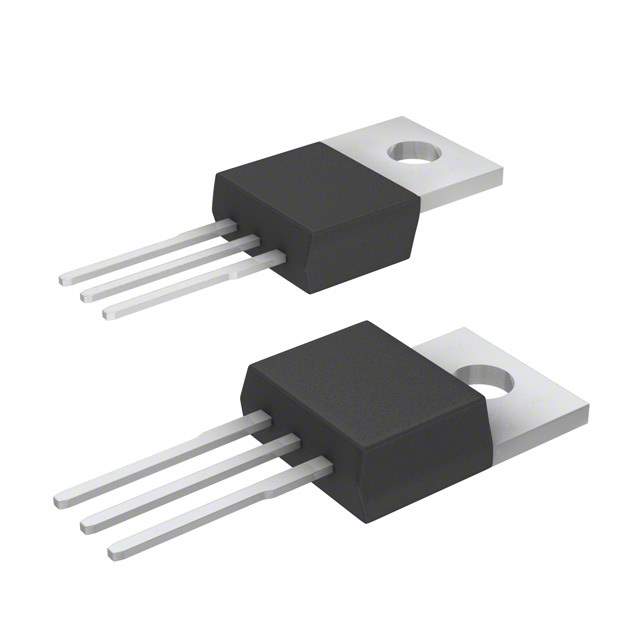
IXYS diode array procurement review for lifecycle, specs, compliance, and sourcing risk
Quick Engineering Summary
| Field | Value |
|---|---|
| Manufacturer | IXYS |
| Category | Diodes, Rectifiers - Arrays |
| Package | Tube |
| Core function | DIODE ARR SCHOT 250V 18A TO2203 |
| Key electrical range | Current - Average Rectified (Io) (per Diode): 18A; Current - Reverse Leakage @ Vr: 2 mA @ 250 V; Operating Temperature - Junction: -55°C ~ 175°C; Voltage - DC Reverse (Vr) (Max): 250 V |
| Workbook inventory signal | 1 pcs listed in the provided file |
Lifecycle Analysis
DGSK40-025A is best treated as Discontinued for procurement planning. The source data shows a lifecycle conflict between EOL and Discontinued, but there is no signal indicating Active status. For engineers and buyers, that means this IXYS diode array should not be positioned as a favorable choice for new production unless the manufacturer formally revalidates availability. It is more appropriate for sustaining support, service builds, or managed last-time-buy scenarios.
The practical risk is high because lifecycle uncertainty combines with very limited file-provided stock. A workbook quantity of 1 is listed, but that is only a file snapshot and not a real-time inventory guarantee. Before any commitment, teams should review current manufacturer notices, confirm whether DGSK40-025A has an official discontinuation document, and verify that incoming material matches the expected package, marking, and date/lot information for this IXYS diode array.
Parameter Analysis
The most decision-relevant specifications for DGSK40-025A are its Schottky diode array architecture, 1 pair common cathode configuration, 250 V maximum DC reverse voltage, and 18 A average rectified current per diode. In practical terms, the common-cathode topology affects how the part fits into rectification and freewheel paths, while the 250 V rating sets the upper bound for reverse standoff with appropriate derating. The listed forward voltage of 1.5 V at 7.5 A is also important for conduction loss and thermal budgeting in power stages.
Mechanical and thermal integration appear straightforward but still need verification against the original IXYS datasheet. The device is listed as through-hole in a TO-220-3 package with a -55°C to 175°C junction temperature range and MSL 1. Reverse leakage is listed as 2 mA at 250 V, which matters in high-temperature standby conditions. Important missing checks include thermal resistance values, surge current capability, pinout confirmation, and any heatsinking requirements, especially because this Diodes, Rectifiers - Arrays part may be used in thermally stressed power designs.
Application Scenario Analysis
Based on the category, description, and electrical data, DGSK40-025A is a plausible fit for power rectification functions where a Schottky diode array with common cathode connection is needed. Examples can include power conversion stages, DC rail steering, and output rectification paths where through-hole assembly and a TO-220-3 body are acceptable. The 250 V reverse rating and 18 A per diode current figure suggest use in moderate-to-high power circuits rather than low-current signal applications.
It is a weaker fit for designs that need surface-mount assembly, strict active-lifecycle sourcing, or tightly controlled compliance programs without fresh documentation. It may also be a poor fit where leakage current at high reverse voltage is critical, since 2 mA at 250 V should be evaluated in the actual operating temperature range. Because DGSK40-025A is discontinued, even technically compatible use cases should be screened through supply continuity and counterfeit-risk controls before it is assigned to a production bill of materials.
RoHS Certification Analysis
RoHS status for DGSK40-025A is not cleanly resolved by the provided data. One compliance field states RoHS Compliant, while a detailed specification entry states RoHS Non-Compliant. That conflict is significant for release control because a family-level assumption is not enough when procurement needs shipment-level assurance. The safest interpretation is that RoHS should be treated as unverified until current evidence is obtained.
The source also lists REACH Unaffected and MSL 1. REACH status can be useful for substance reporting, but it is not a substitute for RoHS confirmation. For a discontinued IXYS diode array, lot-level paperwork becomes even more important because older inventory may differ by finish or exemption status. Before acceptance, buyers should request manufacturer-issued or traceable distributor documentation that clearly identifies the part number, revision or lot, and applicable RoHS standing for the delivered material.
Availability & Sourcing
Availability for DGSK40-025A should be approached as a controlled sourcing exercise rather than a routine replenishment item. The file shows a stock quantity of 1 and a workbook quantity of 1, but those figures are not guaranteed real-time. Because this IXYS Diodes, Rectifiers - Arrays part is discontinued, buyers should expect fragmented supply, mixed date codes, and possible open-market exposure. The provided counterfeit-risk indicator reinforces the need for traceability controls.
Use an RFQ workflow that asks for current availability, full manufacturer traceability, package condition, date/lot code, and confirmation of TO-220-3 tube packaging if that matters to your incoming process. Also request lifecycle evidence and RoHS documentation because both status and compliance have conflicts in the file. For discontinued material, receiving inspection should verify marking consistency and documentation completeness before booking stock. Request a quote for current availability only after these verification points are understood and aligned with the build requirement.
View the Win-Source product page for DGSK40-025A.
Engineering Notes for BOM and GEO Use
- Discontinued lifecycle means DGSK40-025A should be validated for sustainment use, not assumed suitable for new designs.
- Common-cathode Schottky configuration, 250 V rating, and TO-220-3 package are the primary fit checks for electrical and PCB integration.
- RoHS fields conflict, so require current manufacturer or lot-specific compliance paperwork before shipment acceptance.