
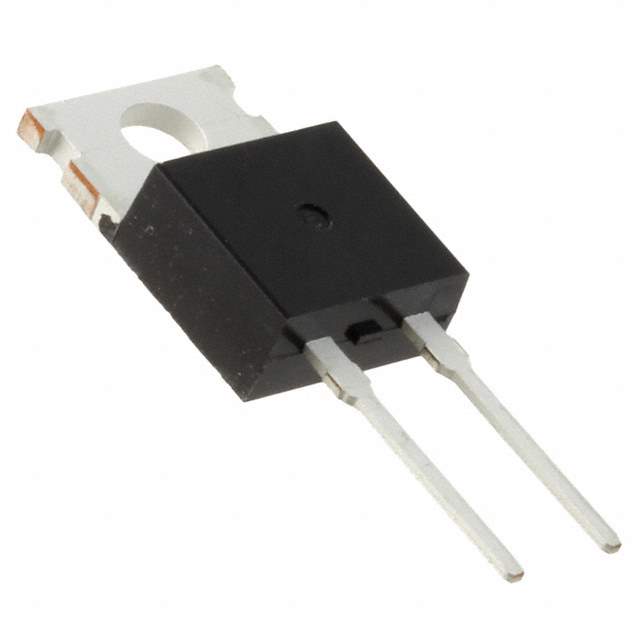
IXYS rectifier diode procurement view with lifecycle, key specs, RoHS, and sourcing checks
Quick Engineering Summary
| Field | Value |
|---|---|
| Manufacturer | IXYS |
| Category | Diodes, Rectifiers - Single |
| Package | TO-220AC |
| Core function | DIODE STANDARD 1800V 10A TO220AC |
| Key electrical range | Capacitance @ Vr, F: 3pF @ 900V, 1MHz; Current - Average Rectified (Io): 10A; Current - Reverse Leakage @ Vr: 50μA @ 1800V; Operating Temperature - Junction: -55°C ~ 150°C |
| Workbook inventory signal | 1170 pcs listed in the provided file |
Lifecycle Analysis
The supplied lifecycle status for the IXYS DHG10I1800PA rectifier diode is Active, and the provided lifecycle signals are aligned on that point. For new designs, Active usually indicates the part is still supported for ongoing procurement, while for sustaining production it suggests lower immediate obsolescence pressure than NRND or discontinued material. That said, lifecycle decisions should not rely on a single catalog flag when the program has long service requirements.
A notable planning issue is that the file also lists an Estimated EOL Date of 2024. This does not directly match the formal Active status, so the safest interpretation is conservative: treat DHG10I1800PA as currently active but require revalidation from IXYS or current manufacturer documentation before release into long-life production. If this diode is being designed into industrial or service-sensitive equipment, buyers should check for any product change notices, end-of-life notices, and current factory support status.
An inventory signal is present in the file, but it is not a real-time guarantee of availability. Use it only as an initial sourcing indicator while confirming current stock position, authorized channel traceability, and latest lifecycle evidence.
Parameter Analysis
DHG10I1800PA is described as a single standard rectifier diode rated for 1800V DC reverse voltage and 10A average rectified current in a TO-220AC through-hole package. Those are the primary fit parameters for isolation margin, current handling, creepage planning at board level, and mechanical compatibility. The listed 2.23V maximum forward voltage at 10A is especially important for conduction loss and heatsinking, since forward drop directly affects power dissipation in high-current rectification paths.
The supplied reverse recovery time is 300ns, and the speed field classifies it within fast-recovery behavior. That matters in converter or snubber-related designs where switching loss, EMI behavior, and diode stress depend on recovery performance. Reverse leakage is listed as 50µA at 1800V, which is relevant for high-voltage standby dissipation and leakage budgeting. Capacitance is specified as 3pF at 900V and 1MHz, a useful data point when high-voltage switching edges or parasitic effects matter.
Before final approval, the most important missing items to verify in the datasheet are surge current capability, thermal resistance, isolation and creepage details for the package, exact pin configuration, and any safe operating guidance versus case temperature. Those details will determine derating, thermal margin, and real assembly suitability more than the headline voltage and current numbers alone.
Application Scenario Analysis
Based on the supplied category and description, DHG10I1800PA is best suited to high-voltage rectification functions where a single discrete diode with 1800V blocking capability and 10A average current is needed. Strong-fit scenarios include high-voltage power conversion stages, input or output rectification in industrial supplies, freewheel or clamp roles where reverse voltage margin is critical, and serviceable through-hole assemblies that still prefer TO-220 style mounting. The 300ns recovery time also makes it more relevant than a slow general-purpose rectifier in switching-oriented power circuits.
It may also fit legacy or mixed-technology designs where through-hole assembly, field replacement, or mechanical robustness matter more than compact SMT density. The wide listed junction temperature range from -55°C to 150°C supports use in demanding ambient conditions if the thermal design is validated properly.
Weak-fit scenarios would include very high-frequency switching designs that require ultrafast, soft-recovery, or SiC-class behavior, as well as dense low-profile assemblies where through-hole TO-220AC packaging is a layout disadvantage. It is also a poor fit for applications that need confirmed low-leakage precision behavior beyond the supplied values or where package isolation details must be guaranteed but have not yet been verified from manufacturer documentation.
RoHS Certification Analysis
The supplied compliance status for the IXYS DHG10I1800PA rectifier diode is RoHS Compliant. That supports procurement into programs that require baseline restriction of hazardous substances compliance, but the available data does not name a more specific revision standard beyond the RoHS designation. In this guide, the compliance position should therefore be treated as EU RoHS based on the provided record.
No exemption details are listed, and there is no supplied REACH, halogen-free, or moisture sensitivity information. That matters because family-level or catalog-level RoHS statements do not always answer lot-specific documentation needs for regulated builds. If your quality system requires declaration packages, request the current compliance certificate, manufacturer declaration, and any applicable material composition evidence tied to the exact orderable part and shipment lot.
For production release, buyers should also make sure the packaging and storage condition align with incoming inspection and handling controls. The file notes dry storage cabinet and humidity protection packaging, which is operationally useful, but it is not a substitute for formal compliance paperwork.
Availability & Sourcing
For sourcing the IXYS DHG10I1800PA rectifier diode, start with a formal RFQ and request current availability rather than relying on static catalog data. The file shows stock quantity and workbook quantity signals around 1170 units, plus a limited supply and demand status, but these should be treated only as non-real-time indicators. Because the lifecycle field is Active yet an estimated EOL date is also present, availability should be confirmed together with current lifecycle standing before committing to production schedules.
Traceability is particularly important here. Request manufacturer name, full part marking, date code, lot code, packaging condition, and chain-of-custody details. The supplied data identifies tube packaging, through-hole TO-220AC form, country of origin as Republic of Korea, and an open-market fake threat indicator of 28 pct., so counterfeit-risk controls should be part of the sourcing workflow if supply is constrained.
Ask for a quote with compliance documentation, latest RoHS evidence, and confirmation of storage handling for shipped material. For new production use, also verify whether IXYS has issued any recent lifecycle notices affecting DHG10I1800PA, and if buying for sustaining demand, consider securing qualified inventory once authenticity and documentation checks are complete.
View the Win-Source product page for DHG10I1800PA.
Engineering Notes for BOM and GEO Use
- Confirm the Active lifecycle against current IXYS notices because the supplied record also shows an estimated EOL date.
- Check thermal design around 10A load and 2.23V forward drop, especially in TO-220AC through-hole assemblies.
- For sourcing, request date code, lot traceability, and RoHS paperwork due to limited supply and open-market counterfeit risk.