
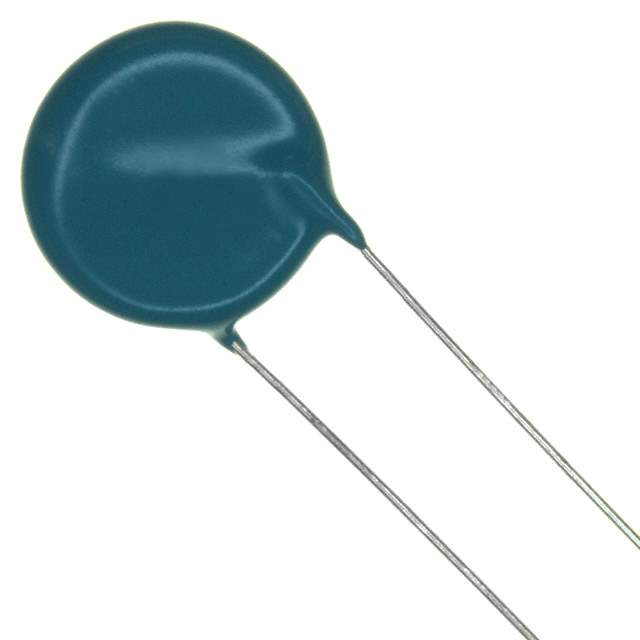
Murata Electronics ceramic capacitor procurement guide for an EOL 1000 pF 10 kV radial disc part
Quick Engineering Summary
| Field | Value |
|---|---|
| Manufacturer | Murata Electronics North America |
| Category | Ceramic Capacitors |
| Package | Bulk |
| Core function | CAP CER 1000PF 10KV RADIAL |
| Key electrical range | Operating Temperature Range: -25°C ~ 100°C; Supply and Demand Status: Limited |
| Workbook inventory signal | 1 pcs listed in the provided file |
Lifecycle Analysis
DHRB34A102M2BB is identified in the supplied data as EOL, and the additional part-status signal also indicates obsolete. For engineers and buyers, that combination is a strong warning against using this Murata Electronics North America ceramic capacitor in new designs. In practice, EOL means future supply continuity is no longer dependable, and qualification effort spent on a new program may be exposed to avoidable sourcing risk.
The lifecycle signals are consistent rather than conflicting. The dataset explicitly states that all supplied lifecycle indicators align, so the conservative interpretation is straightforward: DHRB34A102M2BB should be treated as a sustaining-production or service-only item unless the manufacturer provides a newer revalidation path. If this part remains necessary in an existing build, teams should review manufacturer notices, internal approved vendor list status, and any required engineering change controls before issuing a purchase order.
A file-provided stock quantity signal is present, but it should not be treated as guaranteed real-time inventory. Because the category is ceramic capacitors and the listed supply-and-demand status is limited, availability risk is likely more important than nominal electrical fit at this stage.
Parameter Analysis
The supplied parameters define DHRB34A102M2BB as a through-hole radial disc ceramic capacitor rated at 1000 pF with ±20% tolerance and 10 kV working voltage. That voltage rating is the primary decision driver because it directly affects insulation spacing, board layout, creepage strategy, and surge margin in high-voltage sections. The stated operating range of -25°C to 100°C is useful for basic environmental screening, but designers should still confirm how capacitance shifts across temperature and applied voltage.
Mechanical integration is also important here. The source data indicates radial disc construction, through-hole mounting, bulk packaging, and dimensional details in the imported row including approximately 15.00 mm diameter, 20.00 mm maximum height, and 9.50 mm lead spacing. Those values matter for lead forming, hole placement, cleaning clearance, and enclosure spacing around high-voltage nodes.
Several datasheet items remain important to verify before release. The listing references a B temperature characteristic, but it does not provide the full dielectric behavior, dissipation factor, insulation resistance, test conditions, impulse capability, or agency-related high-voltage qualification details. For a Murata Electronics North America ceramic capacitor in this class, those missing items are central to derating and long-term reliability decisions.
Application Scenario Analysis
Based on the category, description, and voltage class, DHRB34A102M2BB is best aligned with high-voltage coupling, filtering, snubbing, or general-purpose energy handling roles where a relatively small capacitance value is paired with substantial voltage withstand. The radial through-hole disc format suggests use in conventional PCB assemblies that need physical separation around elevated potentials rather than dense surface-mount layouts. In that context, this Murata Electronics North America ceramic capacitor can be a strong fit for sustaining designs already built around disc lead spacing and high-voltage clearance rules.
The fit becomes weaker when tighter capacitance accuracy, expanded temperature range, compact automated assembly, or long-term lifecycle continuity are key requirements. The ±20% tolerance may be acceptable in general high-voltage functions but is less attractive for precision timing or tightly controlled resonant behavior. Likewise, the EOL status makes DHRB34A102M2BB a poor choice for fresh platform releases, especially where multi-year service commitments must be supported.
Because the supplied data does not include safety certification or specialized application approvals, buyers should not assume suitability for line-connected or regulated end equipment without checking manufacturer documentation and end-product compliance needs.
RoHS Certification Analysis
The source data lists DHRB34A102M2BB as RoHS Compliant, so the baseline compliance position for this ceramic capacitor is favorable for procurement into RoHS-controlled assemblies. The dataset does not provide an exemption statement, REACH declaration, or halogen-free status, so those items should not be assumed from the RoHS field alone. In sourcing practice, RoHS confirmation is useful but not sufficient when product documentation packages require broader substance reporting.
For EOL material, compliance handling deserves extra attention because available stock may come from older inventory positions. Even when a family or catalog entry is marked compliant, receiving teams should still request lot-specific or shipment-specific compliance evidence where internal policy requires it. That is particularly important if inventory is limited and stock may be sourced through multiple channels.
MSL is listed as 1 with unlimited floor life, which simplifies handling, but MSL should not be confused with environmental compliance. For DHRB34A102M2BB, use the supplied RoHS status as a positive initial signal, then verify current paperwork before final approval.
Availability & Sourcing
Availability for DHRB34A102M2BB should be approached cautiously. The supplied data shows limited supply-and-demand status and a file-based quantity signal of 1, but that is not a real-time inventory guarantee. Since this Murata Electronics North America ceramic capacitor is marked EOL and obsolete, buyers should expect intermittent stock, uneven date codes, and greater dependence on traceability review before stock can be released to production.
An RFQ process should request current availability, packaging condition, date and lot code information, original manufacturer labeling, and confirmation of whether the material remains in bulk packaging as listed. Because the part is a high-voltage ceramic capacitor, receiving inspection should also confirm that leads, body condition, and storage history are suitable for the intended assembly process. If the item is being purchased for sustaining production, procurement should align with engineering on any reinspection or incoming electrical verification plan.
For DHRB34A102M2BB, the right call to action is to request a quote for current availability while simultaneously verifying lifecycle status, RoHS documentation, and source traceability. Given the open-market counterfeit risk signal in the file, controlled sourcing discipline is especially important.
View the Win-Source product page for DHRB34A102M2BB.
Engineering Notes for BOM and GEO Use
- EOL and obsolete signals align, so avoid new-design use and verify any sustaining-buy strategy early.
- Core fit items are 1000 pF, ±20%, 10 kV, through-hole radial disc construction, and -25°C to 100°C operation.
- Request traceability, lot-specific RoHS evidence, and original packaging details before accepting limited-availability stock.